#1
Cronicle
A web-based, distributed cron replacement for scheduling and running scripts across a fleet with logging, retries, notifications, and access controls.
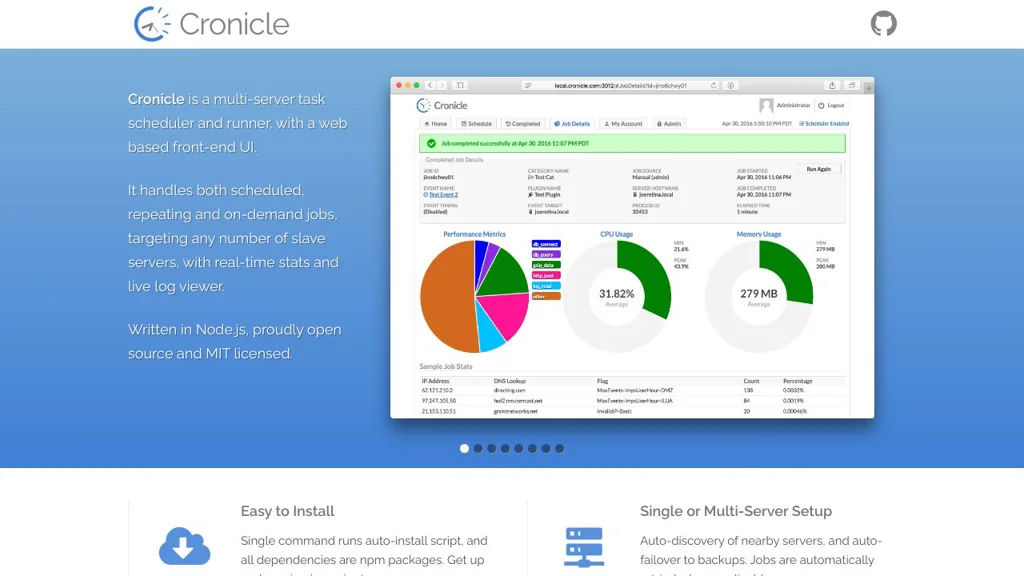
Cronicle is a self-hosted, web-based job scheduler designed as a modern replacement for traditional cron. It provides a central UI and API to schedule, run, and monitor scripts across multiple servers, with distributed execution, logging, and operational controls.
Key Features
- Web UI for creating schedules (cron-style and intervals), launching jobs manually, and monitoring runs
- Distributed “worker” architecture to execute jobs across multiple servers/nodes
- Multiple schedule types and timezone-aware scheduling
- Per-job concurrency controls, timeouts, retries, and error handling
- Centralized logging with per-run output capture and searchable history
- Notifications and webhooks for job success/failure (integration-friendly)
- Role-based access controls (users, privileges) for multi-user operations
- REST-style API for automation and external integrations
Use Cases
- Centralize cron jobs for a multi-server environment (backups, ETL, maintenance)
- Run operational runbooks on demand with audit-friendly run history
- Coordinate scheduled scripts with notifications for failures and SLA monitoring
Limitations and Considerations
- Requires deploying and maintaining Cronicle server plus workers and its backing storage; sizing depends on job volume and log retention
- Focused on scheduling/executing scripts rather than full DAG workflows (may not fit complex pipeline orchestration needs)
Cronicle fits teams that want a lightweight, UI-driven scheduler to replace scattered crontabs and provide visibility, controls, and integrations. Its distributed worker model makes it well-suited for reliably running recurring automation across a server fleet.
5.3kstars
466forks