Cloudflare WAF

Best Self Hosted Alternatives to Cloudflare WAF

A curated collection of the 4 best self hosted alternatives to Cloudflare WAF.

Cloudflare WAF protects websites, APIs and applications from web attacks (OWASP top risks, SQLi, XSS, bots) using managed and custom rulesets, edge enforcement, and integration with Cloudflare's CDN and DDoS protection for real-time global security and performance.

Alternatives List

#1
Caddy

Caddy

Fast, extensible web server and reverse proxy with automatic TLS certificates, simple configuration, HTTP/3 support, and production-ready observability features.
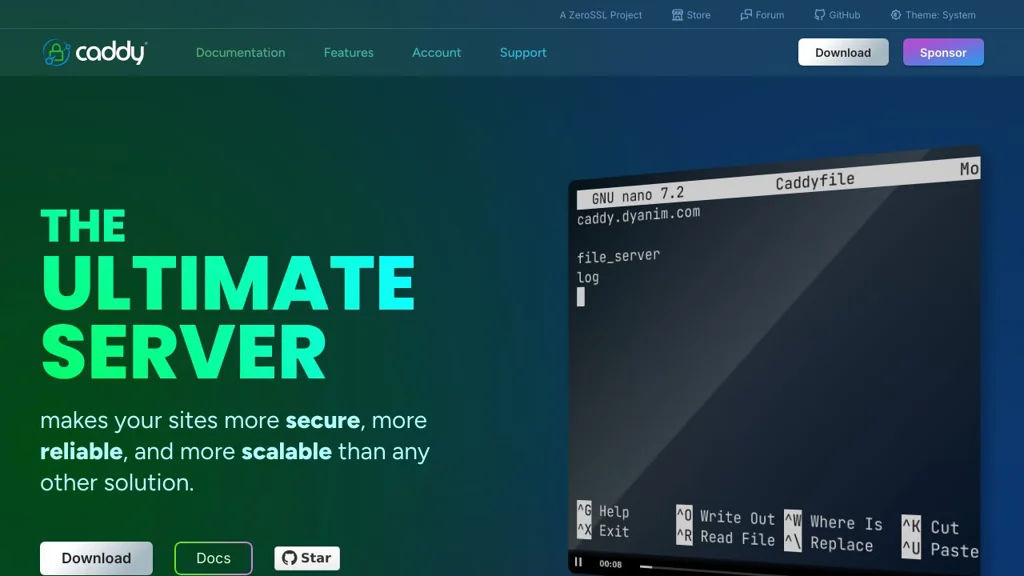
Caddy screenshot

Caddy is a modern, production-grade web server and reverse proxy focused on secure defaults and operational simplicity. It is commonly used as an edge server in front of apps, APIs, and containers, with automatic HTTPS enabled by default.

Key Features

  • Automatic HTTPS (ACME) with certificate issuance and renewal; supports on-demand TLS workflows
  • Reverse proxy and layer-7 load balancing with health checks, retries, timeouts, and multiple upstream policies
  • Native HTTP/2 and HTTP/3 (QUIC) support
  • Flexible request handling pipeline with matchers, handlers, and rich routing
  • Multiple configuration methods: Caddyfile (human-friendly) and JSON (full API-driven config)
  • Dynamic configuration via admin API; hot reload without dropping connections
  • Built-in observability: structured logs, access logs, metrics integrations via ecosystem modules
  • Extensible module system (plugins) for auth, DNS providers for DNS-01 challenges, additional handlers, and storage backends

Use Cases

  • Secure reverse proxy in front of web apps (Docker/Kubernetes or bare metal) with automatic TLS
  • Edge gateway for APIs with routing, header manipulation, and rate/timeout controls
  • Static site hosting with modern protocol support (HTTP/2/3) and straightforward TLS management

Limitations and Considerations

  • Some advanced capabilities (e.g., specific auth methods, WAF features, DNS providers, metrics exporters) may require third-party modules and a custom build.

Caddy is well-suited for teams that want a secure-by-default web server with minimal TLS operational burden and a clean configuration model. Its extensibility and modern protocol support make it a strong choice for both simple deployments and complex edge routing setups.

69kstars
4.6kforks

#2
Traefik

Traefik

Traefik is a dynamic reverse proxy and load balancer for Docker, Kubernetes, and microservices with automatic service discovery, routing, and TLS/ACME support.

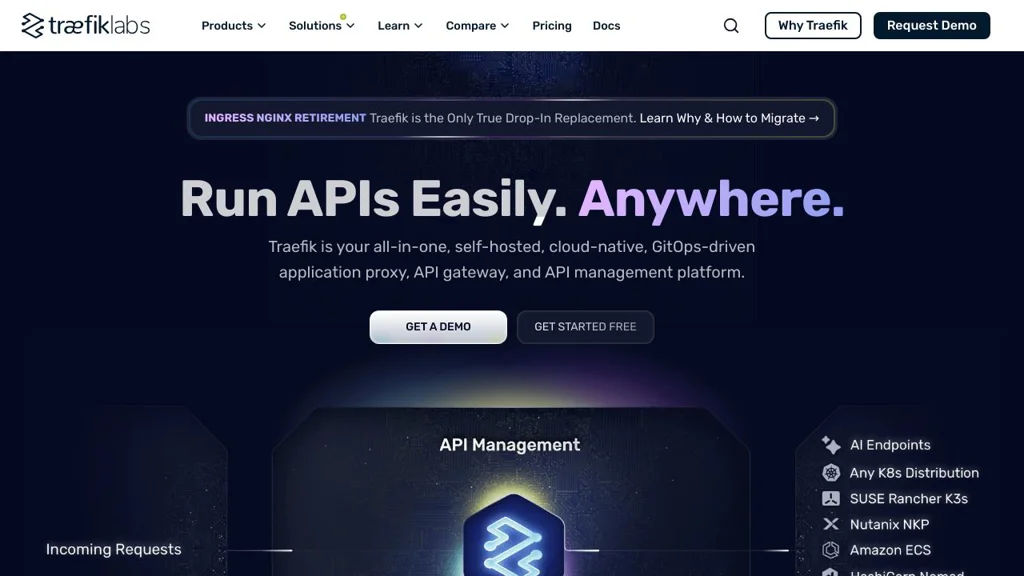
Traefik screenshot

Traefik is a cloud-native reverse proxy and load balancer designed for modern microservices and container platforms. It automatically discovers services from orchestrators and configures routing, TLS, and middlewares with minimal manual configuration.

Key Features:

  • Dynamic configuration via providers (e.g., Docker, Kubernetes, Consul, etcd, file) with automatic service discovery
  • HTTP/HTTPS routing with host/path rules, priorities, and weighted load balancing
  • Automatic TLS with ACME (e.g., Let’s Encrypt), including certificate management and renewal
  • Middleware pipeline for common edge concerns (redirects, headers, basic auth, IP allow/deny, rate limiting, retries, circuit breakers)
  • TCP and UDP routing for non-HTTP workloads
  • Integrated observability: access logs, metrics (Prometheus/others), tracing (OpenTelemetry/Jaeger/Zipkin depending on setup)
  • Traefik dashboard/API for inspecting routers, services, middlewares, and health
  • Canary/blue-green style rollouts via traffic splitting and weights

Use Cases:

  • Ingress/controller for Kubernetes clusters to expose services securely with automated TLS
  • Reverse proxy for Docker Compose homelabs to route multiple apps by hostname
  • Edge gateway for microservices needing centralized routing, auth/headers, and rate limiting

Limitations and Considerations:

  • Several advanced capabilities (e.g., richer policy/governance, enterprise-grade features) are offered in Traefik’s commercial products rather than the core proxy

Traefik is widely adopted as a default edge component for containerized environments, reducing manual proxy configuration through provider-driven discovery. It fits particularly well where services are frequently added/removed and TLS and routing rules need to be managed declaratively.

61kstars
5.8kforks
#3
SafeLine

SafeLine

SafeLine is an open-source web application firewall (WAF) that protects web apps and APIs from common attacks using HTTP traffic inspection, rules, and management UI.

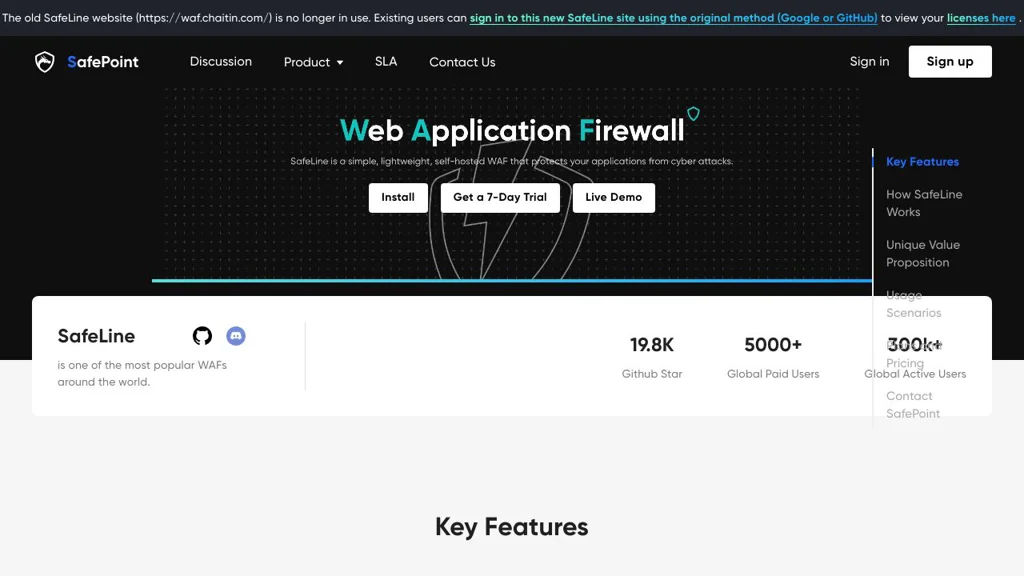
SafeLine screenshot

SafeLine is an open-source Web Application Firewall (WAF) by Chaitin Technology designed to protect web applications and APIs by inspecting HTTP(S) traffic and blocking malicious requests. It is typically deployed in front of your apps as a reverse proxy/gateway and provides a management UI for configuring protected sites and security policies.

Key Features

  • Reverse-proxy WAF deployment in front of web apps and APIs
  • Protection against common web attacks (e.g., SQL injection, XSS, path traversal, command injection)
  • Rule/policy-based request inspection and blocking for HTTP traffic
  • Web console for configuring sites, policies, and viewing security events
  • Access logs and security event visibility to aid investigation and tuning
  • Containerized deployment (commonly via Docker/Docker Compose)

Use Cases

  • Protect a self-hosted website or admin panel from automated scans and exploit attempts
  • Add a security layer in front of internal business apps exposed to the internet
  • Shield API endpoints from injection attacks and suspicious request patterns

Limitations and Considerations

  • As with most WAFs, tuning policies may be required to reduce false positives for complex applications
  • Advanced enterprise features (e.g., large-scale centralized management) may not be present depending on the edition

SafeLine fits teams that want a deployable, self-managed WAF to reduce exposure to common web threats. It is especially useful when placed at the edge in front of multiple services to standardize inbound traffic inspection and blocking.

20kstars
1.3kforks
#4
BunkerWeb

BunkerWeb

Self-hosted WAF and reverse proxy built on NGINX, with a web UI, ModSecurity/OWASP rules, automatic HTTPS, and hardened defaults for securing web apps.

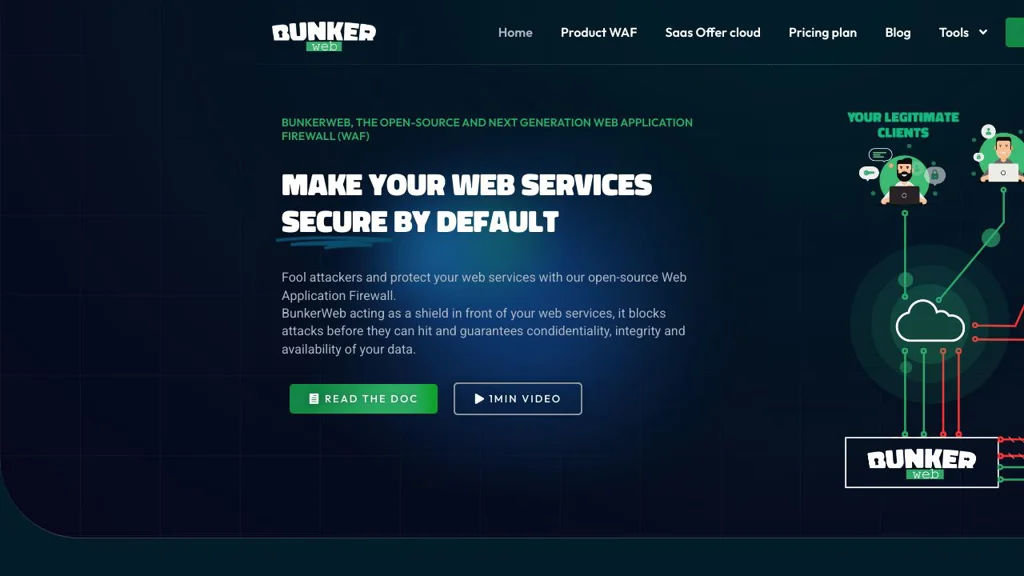
BunkerWeb screenshot

BunkerWeb is a security-focused web server and reverse proxy designed to protect web applications with a built-in Web Application Firewall (WAF) and hardened defaults. It is typically deployed in front of one or more HTTP applications (as a reverse proxy) and can be managed via a web-based UI and configuration templates.

Key Features

  • NGINX-based reverse proxy/web server with security-first default configuration
  • Integrated WAF capabilities (commonly deployed with ModSecurity + OWASP Core Rule Set)
  • Web UI for configuration and operational management
  • Automated TLS certificate management (ACME/Let’s Encrypt) for HTTPS enablement
  • IP/geo-based access controls and request filtering features (e.g., allow/deny lists)
  • Rate limiting and protections targeting common OWASP Top 10 attack patterns
  • Container-friendly deployment options (Docker) for homelabs and production setups

Use Cases

  • Put a WAF in front of self-hosted services (e.g., dashboards, CMS, admin panels)
  • Centralize HTTPS and security controls for multiple internal web applications
  • Add request filtering, rate limiting, and hardened headers to legacy apps

Limitations and Considerations

  • Full protection depends on correct rule tuning (WAF rules can cause false positives)
  • Advanced scenarios may require NGINX/WAF knowledge for optimal configuration

BunkerWeb is a practical option for teams and self-hosters who want an NGINX-based reverse proxy with an integrated WAF and a management UI. It focuses on providing common web security controls in a deployable package while keeping compatibility with typical reverse-proxy architectures.

9.7kstars
555forks

Why choose an open source alternative?

  • Data ownership: Keep your data on your own servers
  • No vendor lock-in: Freedom to switch or modify at any time
  • Cost savings: Reduce or eliminate subscription fees
  • Transparency: Audit the code and know exactly what's running