
DrawSQL

Best Self Hosted Alternatives to DrawSQL

A curated collection of the 2 best self hosted alternatives to DrawSQL.

DrawSQL is a cloud-based tool for designing, visualizing and sharing database schemas (ER diagrams). It offers collaborative editing, versioning, SQL generation and export across SQL dialects to help teams plan and document database structure.

Alternatives List

#1
ChartDB

ChartDB

ChartDB generates interactive ER diagrams by introspecting your SQL database schema, helping teams document, explore, and share table relationships and metadata.
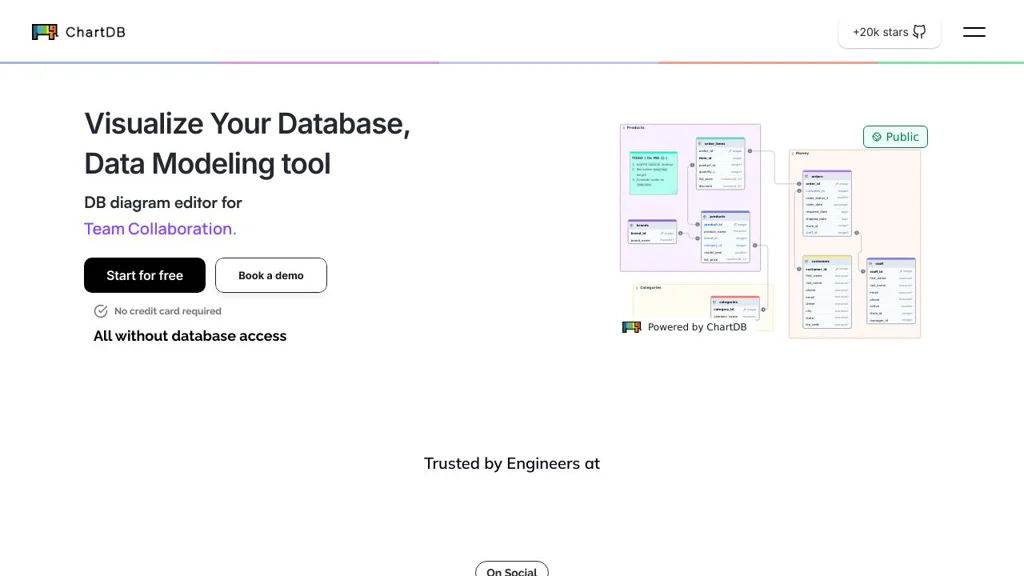
ChartDB screenshot

ChartDB is a web app for turning an existing SQL database into an ER diagram you can explore and share. It connects to a database, introspects tables/columns/keys, and renders an entity-relationship view to help you understand and document data models.

Key Features

  • Schema introspection to discover tables, columns, indexes, and relationships
  • Interactive ERD visualization for navigating database structure
  • Supports multiple relational databases via connection configuration
  • Diagram organization features for clearer, shareable schema documentation
  • Designed for quick onboarding and understanding of legacy databases

Use Cases

  • Document a production database schema for engineering and analytics teams
  • Speed up onboarding by providing a visual map of tables and relationships
  • Review and communicate schema changes during refactors or migrations n ChartDB is a practical tool for teams that need a fast, visual understanding of relational schemas. By generating diagrams directly from the source database, it reduces manual documentation effort and keeps schema knowledge easier to maintain.
20.8kstars
1.2kforks

#2
draw.io (diagrams.net)

draw.io (diagrams.net)

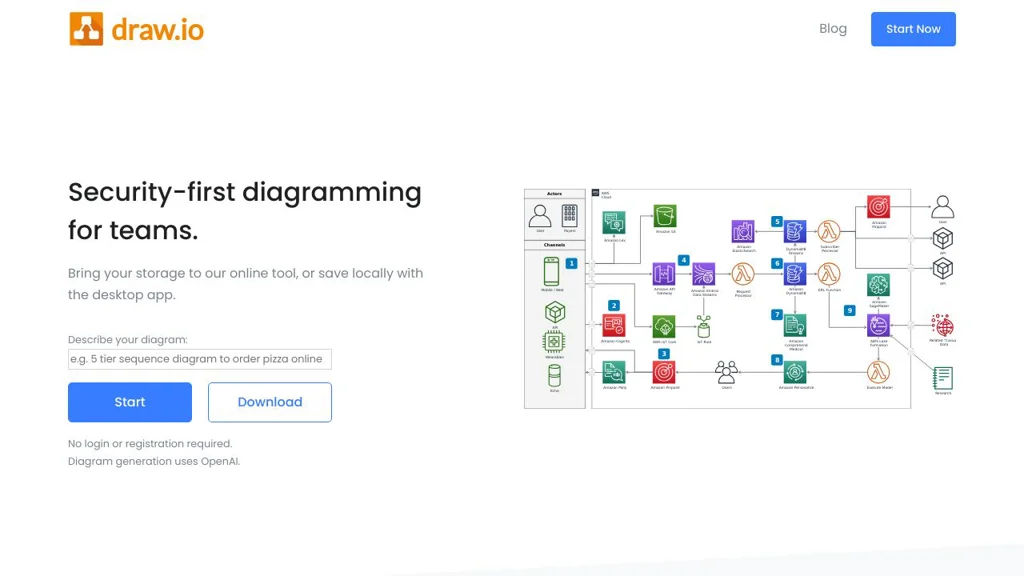
diagrams.net (draw.io) is a web-based diagramming tool for flowcharts, UML, ER diagrams, and more, with integrations and offline/desktop options.

draw.io (diagrams.net) screenshot

diagrams.net (formerly draw.io) is a diagramming and flowcharting application for creating technical and business diagrams in the browser. It focuses on fast editing, broad diagram types, and easy export/sharing, with integrations commonly used in engineering documentation workflows.

Key Features

  • Drag-and-drop editor with extensive shape libraries (flowcharts, UML, BPMN, network diagrams, org charts, etc.)
  • Diagram-as-a-file approach: save as .drawio/XML and import/export across environments
  • Export to PNG/JPEG/SVG/PDF and embed diagrams into documents and wikis
  • Connectors, layers, groups, alignment tools, and style controls for precise layouts
  • Templates and reusable custom libraries for standardized diagramming
  • Integrations and embedding options commonly used with platforms like Confluence/Jira and Git-based documentation
  • Desktop app availability (Electron) for offline editing and local file workflows

Use Cases

  • Software architecture diagrams (C4-style), UML, and sequence/flow diagrams for engineering teams
  • Network/topology diagrams and infrastructure documentation
  • ER diagrams and process maps for product, operations, and compliance documentation

Limitations and Considerations

  • Real-time multi-cursor collaboration depends on the chosen integration/storage backend; the core editor is primarily file-centric.
  • Large/complex diagrams can become heavy in the browser depending on client resources.

A major advantage of diagrams.net is its lightweight, file-based model and wide export compatibility, making it easy to adopt in existing documentation pipelines. It suits both ad-hoc diagramming and repeatable, standardized diagram creation through templates and libraries.

3.3kstars
583forks

Why choose an open source alternative?

  • Data ownership: Keep your data on your own servers
  • No vendor lock-in: Freedom to switch or modify at any time
  • Cost savings: Reduce or eliminate subscription fees
  • Transparency: Audit the code and know exactly what's running