Evernote

Best Self Hosted Alternatives to Evernote

A curated collection of the 19 best self hosted alternatives to Evernote.

Evernote is a cross-platform note-taking and organization service that lets users capture, organize, and search notes, web clippings, files, and tasks, sync across devices, and collaborate with others.

Alternatives List

#1
Joplin

Joplin

Cross-platform note-taking and knowledge management app with Markdown, attachments, Web Clipper, offline-first sync, and optional end-to-end encryption.
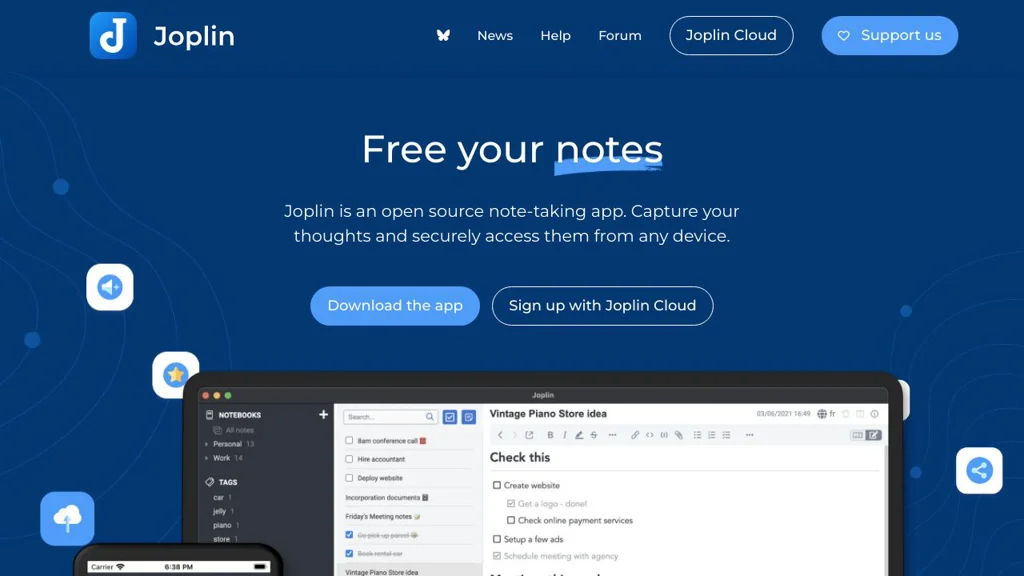
Joplin screenshot

Joplin is a cross-platform note-taking and personal knowledge management application for creating and organizing notes in Markdown with attachments. It is designed for offline-first use and can sync across devices via multiple backends, with optional end-to-end encryption.

Key Features

  • Markdown editor with preview (and rich-text editing mode) for notes
  • Notebook and sub-notebook organization, tagging, and search
  • Web Clipper to save web pages and screenshots into notebooks
  • File attachments (images, PDFs, and other files) and inline rendering where supported
  • End-to-end encryption for synced data (E2EE)
  • Multiple sync targets: Joplin Server, WebDAV, Dropbox, OneDrive, and local filesystem
  • Cross-platform clients: desktop (Windows/macOS/Linux), mobile (Android/iOS), and CLI
  • Plugin system for extending desktop features (themes, editors, integrations)
  • Note history/restore (note revisions) and conflict handling
  • Import/export options (including ENEX and Markdown) for migration

Use Cases

  • Personal knowledge base with searchable Markdown notes and tags
  • Research collection using Web Clipper to archive articles and references
  • Team or multi-device note syncing using Joplin Server or WebDAV with E2EE

Limitations and Considerations

  • Real-time multi-user collaborative editing is not a core feature; sharing/collaboration depends on Joplin Server capabilities and workflow
  • Some advanced features (plugins, certain editor capabilities) are primarily available on desktop

Joplin fits users who want a privacy-focused, offline-capable notes system with flexible sync options and extensibility. It is especially suitable when Markdown, attachments, and encryption are key requirements while keeping data portable via import/export.

52.9kstars
5.7kforks

#2
Memos

Memos

Lightweight self-hosted note-taking and micro-journaling app with Markdown, tags, full-text search, and a clean timeline UI for personal knowledge capture.

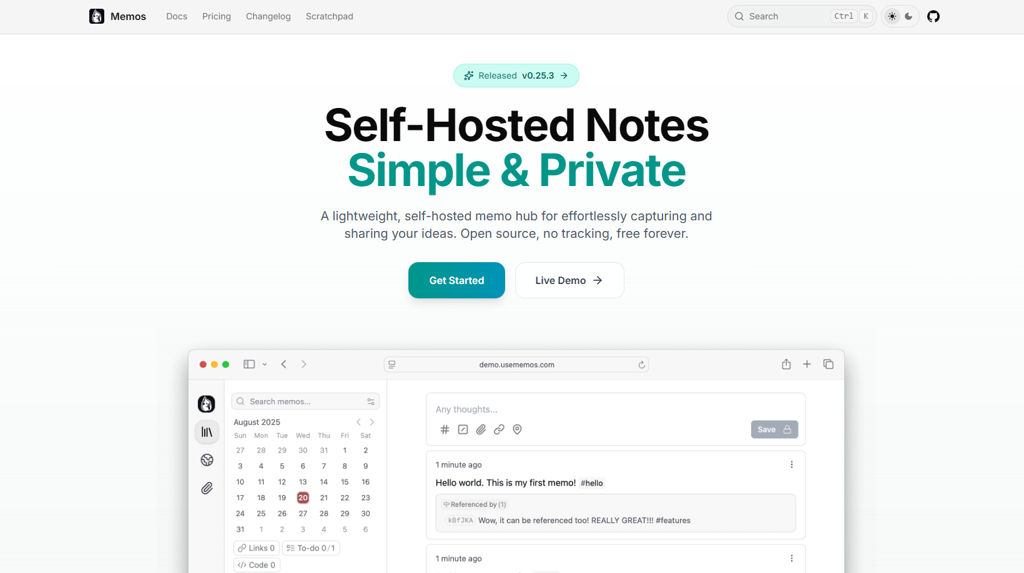
Memos screenshot

Memos is a lightweight, self-hosted note-taking app designed for quickly capturing ideas, daily logs, and snippets in a timeline-style feed. It focuses on fast writing, simple organization, and ownership of your notes, with a web UI and API for integrating with other workflows.

Key Features

  • Timeline-based “memo” feed optimized for quick capture and review
  • Markdown editor with code blocks and rich text formatting
  • Tags and filtering for lightweight organization
  • Full-text search across memos
  • Pinned memos for keeping important notes visible
  • Attachments support (e.g., images/files) for enriching notes
  • Multi-user support with authentication
  • Public sharing for selected memos/pages (share links / visibility controls)
  • REST-style API for automation and integrations
  • Database options including embedded SQLite for simple deployments

Use Cases

  • Personal micro-journal for daily work notes and reflections
  • Team scratchpad for lightweight shared notes and announcements
  • “Second brain” inbox for quick capture before moving content to a larger PKM system

Limitations and Considerations

  • Intentionally minimal compared to full PKM suites (e.g., complex databases, advanced document structures)

Memos is a good fit when you want a fast, low-friction note feed with Markdown, search, and tags rather than a heavy workspace platform. It balances simplicity with practical features like sharing, attachments, and an API, making it useful as both a personal capture tool and a lightweight internal notes hub.

52.6kstars
3.8kforks

#3
SiYuan

SiYuan

Self-hostable note app with Markdown, block references, backlinks, and local-first sync for building a personal knowledge base and wiki-like docs.

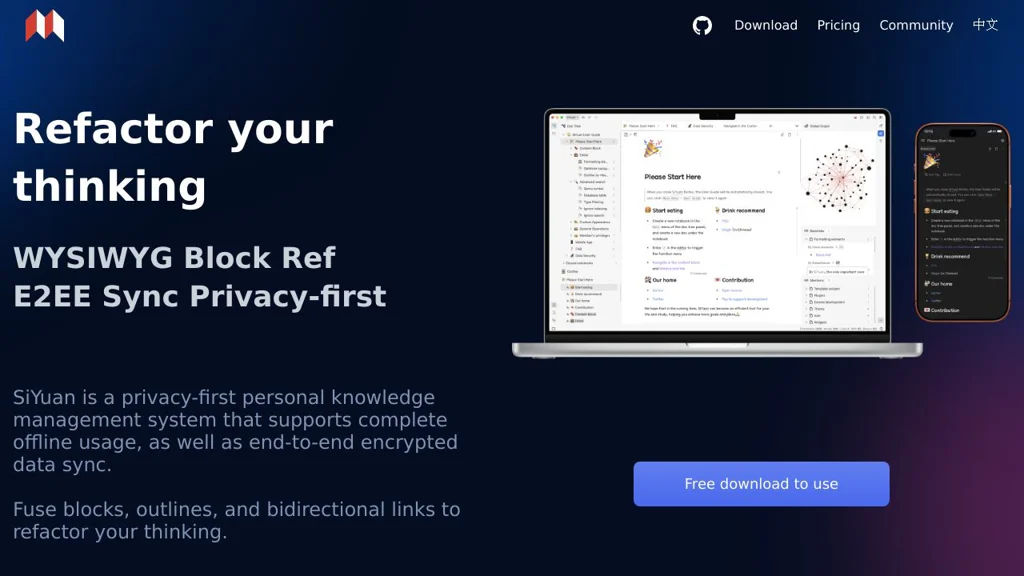
SiYuan screenshot

SiYuan is a local-first note-taking and personal knowledge management app designed around “blocks” (paragraph-level units) that can be referenced, embedded, and linked across documents. It supports Markdown editing, backlinks, and graph-style knowledge navigation, and can be run as a self-hosted service for web access and multi-device usage.

Key Features

  • Block-based editor with block references, block embeds, and bi-directional links
  • Markdown support with rich editing (tables, code blocks, math/LaTeX, etc.)
  • Backlinks and knowledge graph views for navigating connected notes
  • Full-text search across notebooks and documents
  • Organize content with notebooks, folders, tags, and templates
  • Web access via the built-in server for using SiYuan in a browser
  • Data stored locally and designed for offline-first workflows

Use Cases

  • Building a personal knowledge base (Zettelkasten/PKM) with backlinks and block references
  • Maintaining project notes, meeting logs, and technical documentation as Markdown
  • Creating a lightweight personal wiki with cross-page embeds and references

Limitations and Considerations

  • Some advanced features and the overall UX can differ from mainstream SaaS note apps; evaluating the editor model (block-based) is recommended before migrating large note sets.

SiYuan is a strong fit for users who want a local-first knowledge system with granular block linking and Markdown-centric writing. It combines wiki-style navigation with an editor model optimized for reusing and connecting content across notes.

40.4kstars
2.5kforks
#4
Paperless-ngx

Paperless-ngx

Self-hosted document management system that ingests scans and emails, performs OCR, extracts metadata, and provides fast full-text search with tags and workflows.

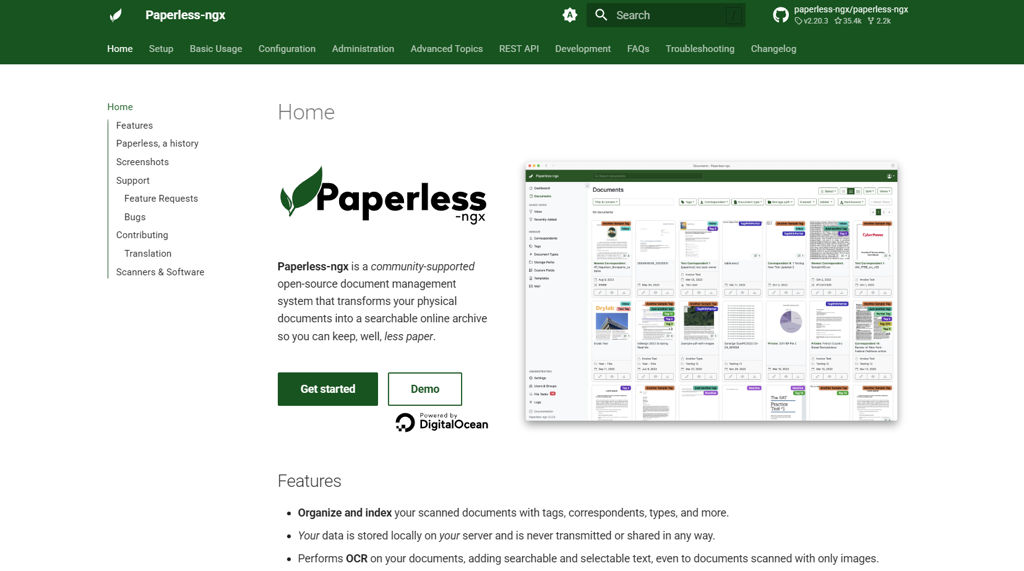
Paperless-ngx screenshot

Paperless-ngx is a self-hosted document management system (DMS) focused on turning paper and digital files into searchable, organized records. It ingests documents from multiple sources, runs OCR and text extraction, and provides a web UI and API to manage, find, and automate document handling.

Key Features

  • Automated ingestion (“consume” folder) plus upload via web UI and REST API
  • OCR and text extraction for searchable PDFs/images (typically via Tesseract)
  • Full-text search with filters (tags, correspondents, document types, dates, fields)
  • Metadata model: correspondents, document types, tags, custom fields, and rules
  • Email ingestion (IMAP) to automatically import attachments and assign metadata
  • Document workflows: matching rules, automatic tagging, and metadata assignment
  • Multi-user support with permissions/roles and an admin interface
  • Preview and download originals/archived PDFs; versioned/organized storage
  • Integrations via API and container-first deployment (Docker/Compose)

Use Cases

  • Personal “paperless” home archive for bills, receipts, manuals, and letters
  • Small office record-keeping with consistent naming, tagging, and search
  • Automatic import pipeline from scanner + email for invoices and statements

Limitations and Considerations

  • OCR quality and language support depend on installed OCR language packs and scan quality
  • Accurate auto-classification relies on well-tuned matching rules and consistent inputs

Paperless-ngx is well-suited for users who want reliable OCR-backed search, structured metadata, and automated ingestion to maintain a long-term, searchable archive. Its strong import options and rule-based processing make it practical for both home and small-team document workflows.

35.5kstars
2.2kforks
#5
Trilium Notes

Trilium Notes

Self-hostable personal knowledge base with a tree-structured notebook, rich-text and code notes, backlinks, full-text search, and scripting/automation.

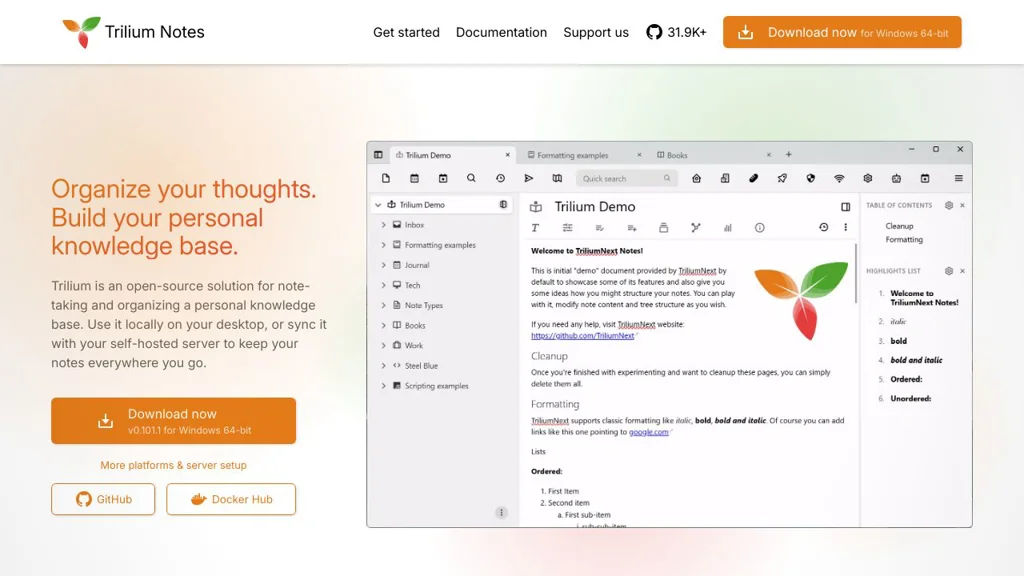
Trilium Notes screenshot

Trilium Notes is a personal knowledge base for organizing notes in a hierarchical tree while also supporting cross-linking between notes. It combines a fast web UI, rich editing (including code and Markdown), and powerful search to manage large, interlinked knowledge collections.

Key Features

  • Tree-structured notebooks with cloning (same note in multiple places)
  • Rich-text (WYSIWYG) editing plus code notes with syntax highlighting
  • Markdown import/export and other bulk import/export options
  • Bidirectional links and backlinks; note relations/attributes and tagging
  • Full-text search with filtering to navigate large note collections
  • Versioning/revision history for notes
  • Web clipper for capturing content into notes
  • Scripting/automation (JavaScript) and custom widgets for extending behavior

Use Cases

  • Personal knowledge management (Zettelkasten-style linking, research notes)
  • Technical documentation and “second brain” for projects (snippets, runbooks)
  • Journaling and structured life logs organized by a timeline/tree

Limitations and Considerations

  • Collaboration features are limited compared with team-first tools (e.g., comments, real-time multi-user editing)
  • The data model (tree + clones + attributes) can require a learning period for new users

Trilium is well-suited for users who want a fast, local-first feeling knowledge base with a strong hierarchy, links, and extensibility. It is commonly used as a private alternative to commercial note and knowledge apps while retaining advanced organization and automation capabilities.

33.9kstars
2.3kforks
#6
Blinko

Blinko

Self-hosted notes and personal knowledge base for capturing, tagging, and organizing thoughts with markdown support and fast search.

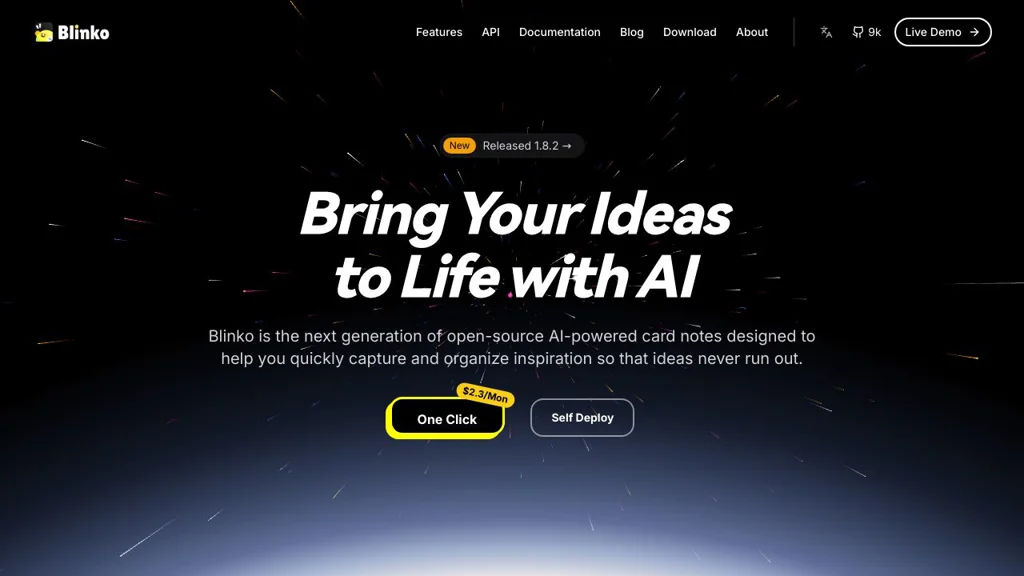
Blinko screenshot

Blinko is a self-hosted note-taking and personal knowledge management (PKM) app focused on quickly capturing ideas and organizing them into a searchable knowledge base. It provides a clean web UI for writing notes, categorizing with tags, and retrieving information later.

Key Features

  • Markdown-based note editor for fast writing and formatting
  • Tagging and organization to build a personal knowledge base over time
  • Full-text search to quickly find notes
  • Web-based UI designed for quick capture and browsing
  • Multi-user capable deployments (account-based access)

Use Cases

  • Personal PKM system to store notes, ideas, and snippets
  • Lightweight alternative to hosted note apps for private journaling and work notes
  • Team-shared scratchpad/knowledge space for small groups

Limitations and Considerations

  • Feature set is primarily focused on notes/PKM; advanced wiki-style structures and complex collaboration workflows may be limited compared to larger platforms

Blinko fits users who want a straightforward, self-hosted notes app with tagging and search rather than a heavy project management or document suite. It is suitable as a private, always-available web notebook that grows into a personal knowledge base.

9.1kstars
640forks
#7
TiddlyWiki

TiddlyWiki

A highly customizable personal wiki/knowledge base that runs in the browser, supports plugins and transclusion, and can be saved as a single HTML file or hosted via Node.js.

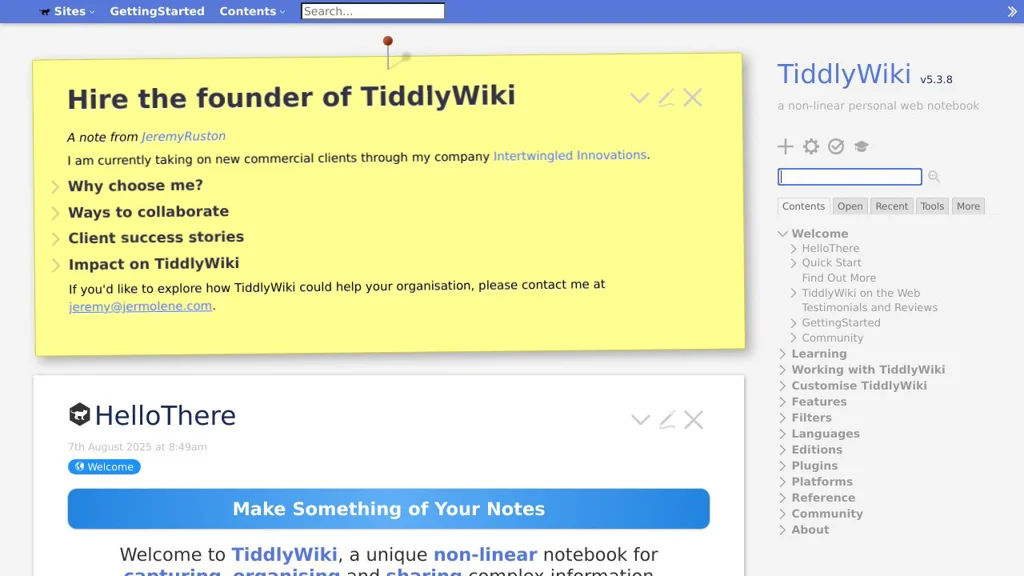
TiddlyWiki screenshot

TiddlyWiki is a non-linear personal wiki designed to be flexible, portable, and heavily customizable. It can run entirely in the browser as a single self-contained HTML file (easy to carry, backup, and open anywhere), or it can be hosted using Node.js for multi-page/server-based workflows.

Key Features

  • Single-file wiki mode that stores the app and your content together in one HTML file
  • Non-linear note model (“tiddlers”) with powerful linking, tagging, and organization
  • Transclusion and “wikitext” templating to reuse and compose content across pages
  • Built-in search, filtering, and dynamic lists powered by a rich filter language
  • Extensible plugin architecture (themes, macros, widgets, custom renderers)
  • Multiple saving/hosting options (classic file saving, Node.js server, and adapters)
  • Import/export and inter-wiki sharing via core import tools and plugin ecosystem

Use Cases

  • Personal knowledge management (Zettelkasten-style notes, research notebooks)
  • Lightweight documentation and project wikis (run locally or on a server)
  • Building custom, form-like tools and dashboards using templates/widgets

Limitations and Considerations

  • Collaboration is not a primary design focus in classic single-file mode; multi-user editing typically requires additional server/storage choices.
  • The learning curve can be steep for advanced customization (filters, widgets, macros).

TiddlyWiki is a strong fit for users who want an offline-friendly knowledge base with deep customization and composable content. Its single-file mode makes it uniquely portable, while Node.js hosting enables more traditional server-backed deployments when needed.

8.5kstars
1.2kforks
#8
CryptPad

CryptPad

Privacy-focused collaborative office suite with end-to-end encryption for docs, spreadsheets, forms, and file storage.

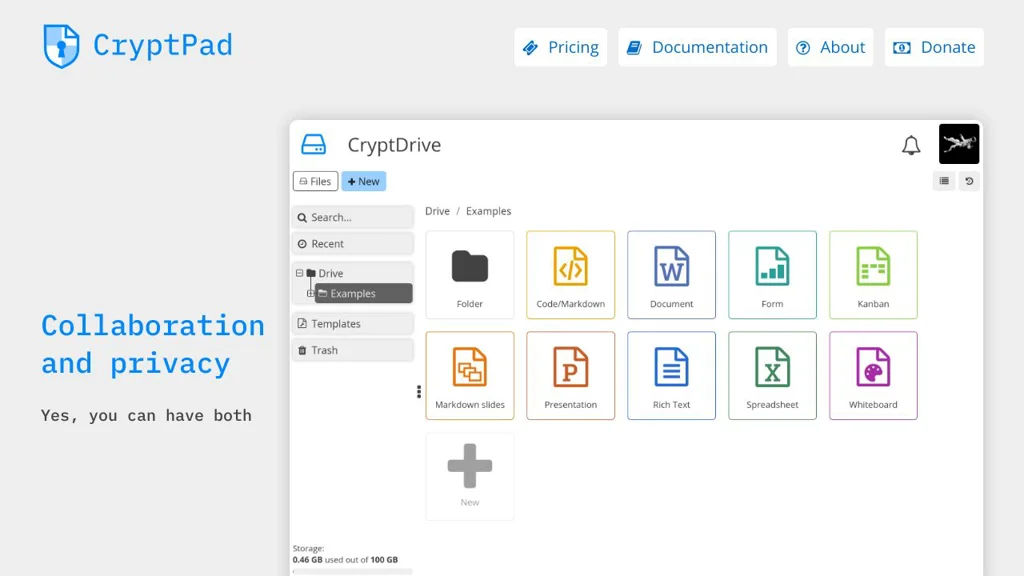
CryptPad screenshot

CryptPad is a privacy-first collaborative workspace for creating and editing documents online with end-to-end encryption. It provides a browser-based suite of office-style apps plus encrypted file storage, designed so the server cannot read your content.

Key Features

  • End-to-end encrypted collaboration where document contents are encrypted in the browser
  • Real-time co-editing with share links and granular sharing options (e.g., view/edit)
  • Multiple app types: rich text documents, spreadsheets, presentations, kanban boards, code/markdown, whiteboard, forms, and polls
  • Encrypted Drive for organizing files and documents (folders, uploads, and shared content)
  • Optional accounts; supports sharing without requiring recipients to sign up
  • Version history and change tracking features (vary by app)
  • Team/shared spaces for organizing collaborative work
  • Import/export options for common formats (varies by app)

Use Cases

  • Collaborative writing and internal documentation for privacy-sensitive teams
  • Collecting responses using encrypted forms/polls without exposing content to the server
  • Secure project coordination using kanban/notes with share-by-link access

Limitations and Considerations

  • Feature parity with mainstream office suites varies by app (advanced formatting and compatibility can be limited)
  • Search/indexing of content is constrained by the encryption model

CryptPad is a strong fit for organizations and communities that want practical online collaboration while minimizing trust in the hosting server. It combines a broad set of document tools with encrypted storage and link-based sharing for flexible collaboration workflows.

7.2kstars
791forks
#9
HedgeDoc

HedgeDoc

Self-hosted, real-time collaborative Markdown editor for teams, with note sharing, history, and flexible publishing via links and permissions.

HedgeDoc screenshot

HedgeDoc is a web-based, collaborative Markdown note editor designed for teams to write together in real time. It focuses on fast note creation, easy sharing, and flexible publishing, while still supporting structured organization and access control.

Key Features:

  • Real-time collaborative editing for Markdown documents
  • Markdown preview and formatting helpers, including syntax highlighting for code blocks
  • Multiple sharing and publishing modes (private notes, shared links, published notes)
  • Note history/revisions to track and restore changes
  • User accounts and team collaboration features (permissions depend on configuration)
  • External authentication support via common identity providers (e.g., LDAP/OAuth/OIDC depending on setup)
  • Export/share notes in common formats (e.g., Markdown) and embed-friendly published views

Use Cases:

  • Collaborative meeting notes, sprint notes, and incident write-ups
  • Lightweight internal documentation and how-to pages for teams
  • Publishing announcements or public notes with shareable URLs

Limitations and Considerations:

  • Advanced wiki-style information architecture (hierarchical pages, strong interlinking, graph views) is not the primary focus compared to dedicated wiki platforms.

HedgeDoc is well-suited when you want a simple, fast, multi-user Markdown editor with real-time collaboration and straightforward ways to share or publish notes. It fits teams that value “write together now” workflows over heavyweight document management.

6.8kstars
516forks
#10
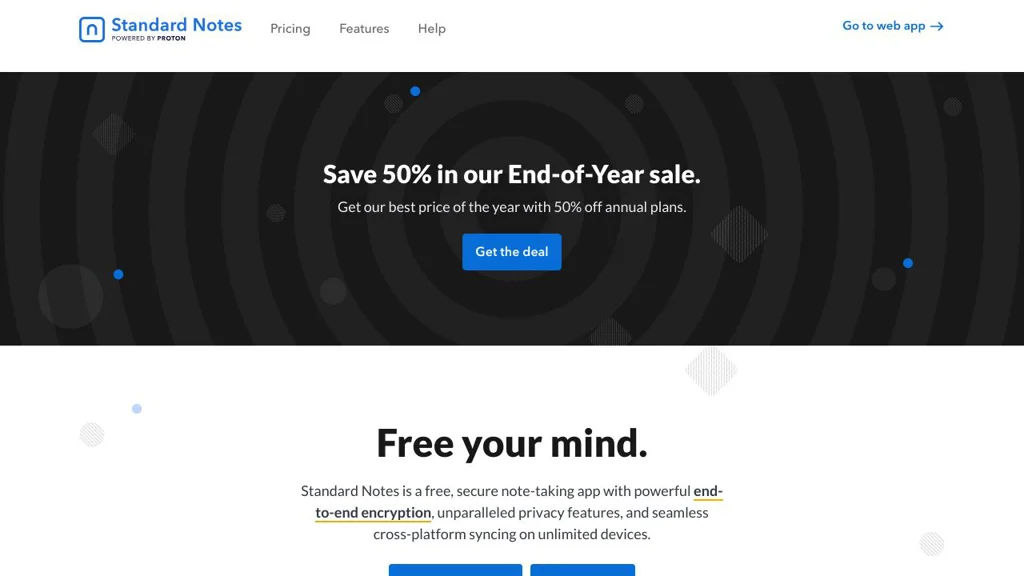
Standard Notes

Standard Notes

Privacy-focused notes app with end-to-end encryption, cross-platform sync, offline access, and optional editors/extensions for rich workflows.

Standard Notes screenshot

Standard Notes is a cross-platform note-taking application focused on long-term privacy and durability. It provides end-to-end encrypted syncing across devices, with optional editors and extensions to tailor the writing experience.

Key Features

  • End-to-end encryption for note content and synced data
  • Cross-platform apps (web, desktop, mobile) with account-based sync
  • Offline access (notes remain available without a network connection)
  • Extension system for additional editors (e.g., Markdown/rich text) and tools
  • Revision history features available via extended functionality
  • Data portability with export options to back up or migrate notes

Use Cases

  • Private personal journaling and daily notes that should remain confidential
  • Managing technical notes (e.g., Markdown) across multiple devices
  • Keeping a secure knowledge base with optional enhanced editors/workflows

Limitations and Considerations

  • Some advanced editors/tools and features are provided via add-ons/paid plans rather than the minimal core editor

Standard Notes is a solid choice for users who prioritize encryption and cross-device note syncing. Its modular editor/extension approach lets you keep a simple, durable core while enabling richer writing and organization when needed.

6.2kstars
511forks
#11
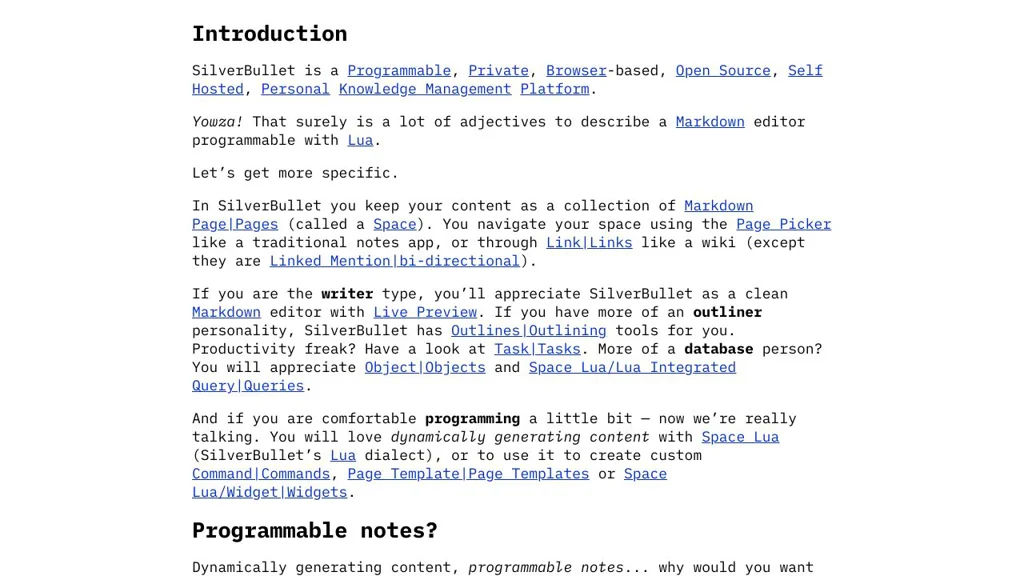
SilverBullet

SilverBullet

Self-hosted, markdown-based personal knowledge base with backlinks, full-text search, and a programmable extension system for automations and custom commands.

SilverBullet screenshot

SilverBullet is a markdown-first personal knowledge base (PKM) and wiki that runs in your browser with a server-backed file store. It focuses on fast note navigation (links, backlinks, search) and on extensibility: you can automate workflows and customize behavior using scripts and plug-ins.

Key Features

  • Markdown-based pages stored as plain files, editable in a web UI
  • Wiki-style linking with backlinks for knowledge graph-style navigation
  • Full-text search across pages
  • Extensible architecture: plug-ins and user scripts to add commands, panels, and behaviors
  • Built-in command palette for quick navigation and actions
  • Templates/snippets and metadata via frontmatter for structured notes
  • Multi-device access via the web interface (single server, many clients)

Use Cases

  • Personal wiki for meeting notes, project journals, and daily logs
  • Team “lightweight wiki” for documentation where plain markdown files are preferred
  • Power-user note system with custom commands (e.g., automations, page generators)

Limitations and Considerations

  • Extension power comes with a learning curve (scripting/plug-ins) for advanced customization
  • Best suited to wiki/PKM workflows; not a full project management suite

SilverBullet is a good fit if you want a browser-based markdown wiki that stays file-oriented while still being highly customizable. Its link-centric navigation and programmable extension model make it especially useful for users who want to tailor their note-taking system to their own workflows.

4.5kstars
330forks
#12
Personal Management System

Personal Management System

A self-hosted personal organizer to manage notes, tasks, projects, time tracking, and related personal data in one web application.

Personal Management System (PMS) is a web-based personal organizer designed to centralize everyday planning and personal information management. It combines task/project planning with note-taking and time tracking, aiming to replace scattered tools with a single, self-managed dashboard.

Key Features

  • Notes/knowledge organization with rich text/structured entries
  • Task management with statuses and prioritization for personal workflows
  • Project-oriented organization to group tasks and related information
  • Time tracking for work sessions and reporting/overview
  • Calendar-style planning views for organizing activities over time
  • Data management features such as search, filtering, and basic reporting

Use Cases

  • Manage personal projects with tasks, notes, and time logs in one place
  • Track time spent on learning/work and review summaries for productivity
  • Keep a private personal knowledge base alongside actionable task lists

Limitations and Considerations

  • Feature set and UX are oriented toward a single-user “personal organizer” workflow rather than team collaboration features.

PMS is a good fit for individuals who want an integrated personal productivity suite with local control of their data. It focuses on combining core planning modules (tasks/projects/calendar) with notes and time tracking to support day-to-day organization.

3.8kstars
305forks
#13
Papra

Papra

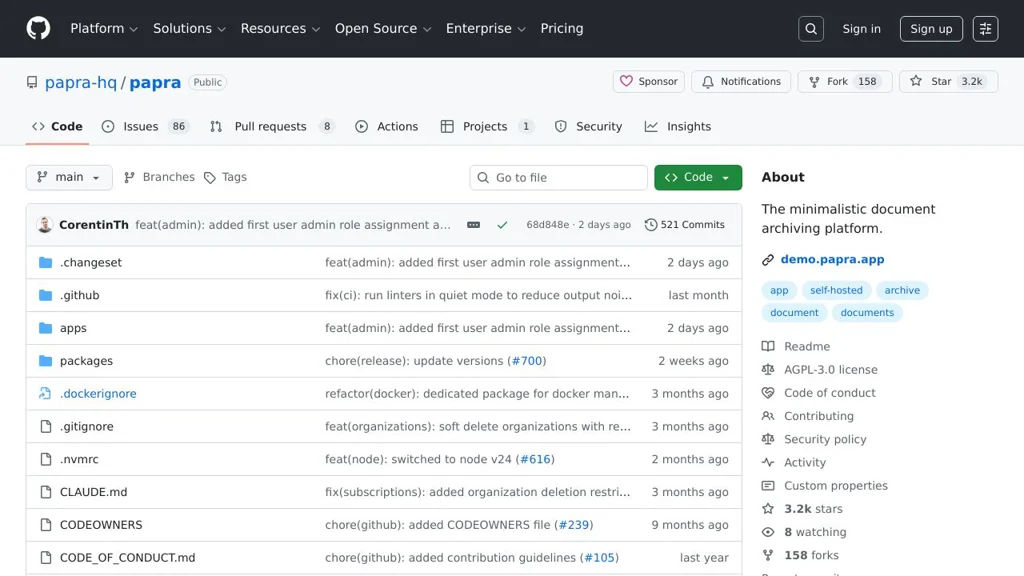
Papra is a self-hosted document management app for organizing scanned documents with OCR, tagging, and full‑text search in a clean web UI.

Papra screenshot

Papra is a document management system focused on turning scanned paperwork into a searchable, well-organized archive. It provides a web interface to upload/import documents, extract text with OCR, and find files quickly using metadata and search.

Key Features

  • Upload and manage documents in a web UI (designed for personal/household paperwork)
  • OCR text extraction to make scanned PDFs/images searchable
  • Full-text search across extracted content
  • Metadata organization (e.g., titles/dates) and tagging/labels for browsing
  • Document preview and structured library views for quick retrieval
  • Docker-based deployment for straightforward installation and updates

Use Cases

  • Digitize and archive household paperwork (invoices, letters, contracts) with fast search
  • Store and search scanned records (receipts, warranties, medical/insurance documents)
  • Maintain a personal “paperless” archive with tags and OCR for retrieval

Limitations and Considerations

  • Feature set is oriented toward individual/personal workflows; advanced enterprise DMS features (complex workflows, retention policies, e-signature) may be limited.

Papra is a practical choice if you want a lightweight DMS centered on scanning + OCR + search rather than heavy enterprise document workflows. It fits well for building a private, searchable archive of everyday documents.

3.2kstars
158forks
#14
Papermerge

Papermerge

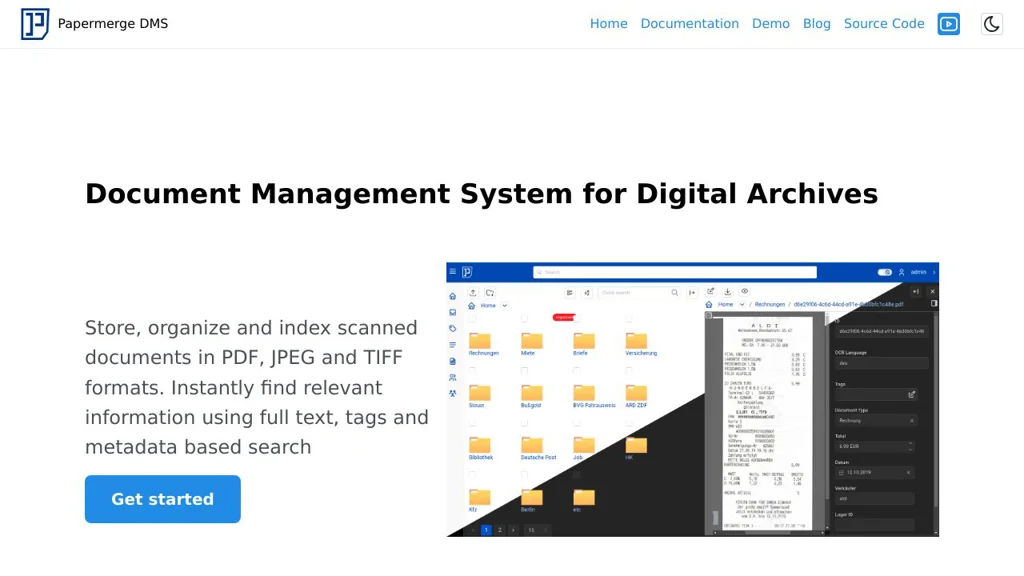
Self-hosted document management system that imports scans/PDFs, performs OCR, and provides full-text search, tagging, and folder-based organization for a paperless workflow.

Papermerge screenshot

Papermerge is a document management system (DMS) designed for building a “paperless” archive from scanned documents and PDFs. It focuses on automated OCR and search so you can quickly find documents by their content, then organize them with folders, tags, and metadata.

Key Features

  • OCR processing for PDFs/images and extraction of searchable text
  • Full-text search across your document library
  • Folder-based organization with tags for flexible classification
  • Document import/upload workflow optimized for scanned paperwork
  • Multi-user support with access controls for shared instances
  • Web UI for browsing, previewing, and managing documents

Use Cases

  • Home “paperless” archiving for bills, receipts, manuals, and letters
  • Small team document repository with searchable scans and tagging
  • Back-office digitization of incoming mail with OCR-based retrieval

Limitations and Considerations

  • OCR quality depends on scan quality/language models and may require tuning

Papermerge is a practical choice if your primary need is OCR-driven search and straightforward organization of scanned documents. It fits individuals and small organizations aiming to replace manual filing with searchable digital archives.

2.8kstars
301forks
#15
Grimoire

Grimoire

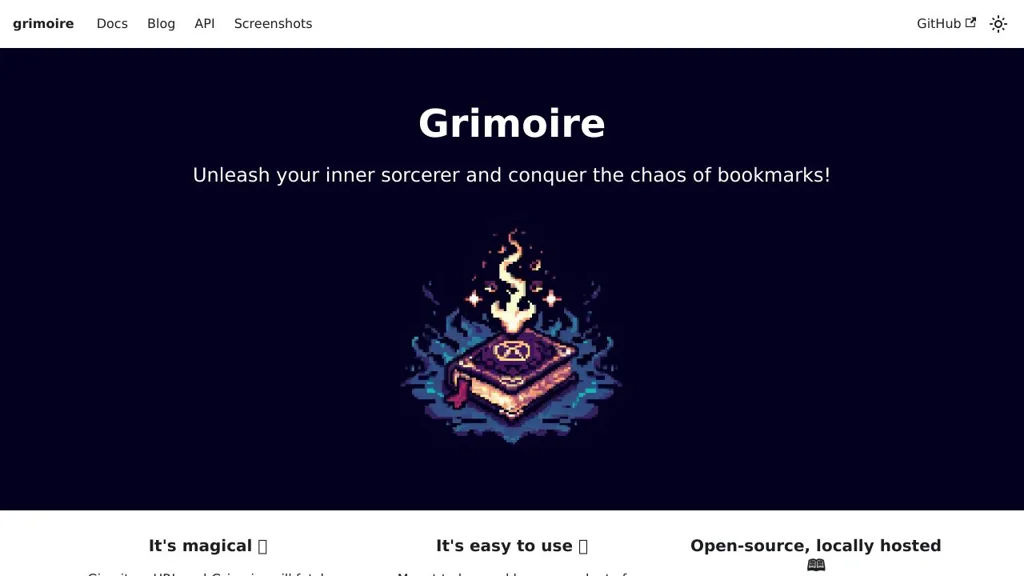
Grimoire is a self-hosted personal knowledge base for organizing Markdown notes with tags, backlinks, and fast full-text search via a web UI.

Grimoire screenshot

Grimoire is a self-hosted personal knowledge base (PKM) focused on storing and organizing Markdown notes in a simple web interface. It is designed for individuals who want a lightweight, private alternative to hosted note apps, while keeping notes in a portable, text-first format.

Key Features

  • Markdown-based notes with a web UI for browsing and editing
  • Tagging and organization features to group and filter notes
  • Backlinks / note linking to build connections between pages
  • Full-text search to quickly find content across the knowledge base
  • Designed around a straightforward, minimal workflow (create, link, search)

Use Cases

  • Maintain a personal “second brain” for research notes, references, and daily logs
  • Document internal processes/runbooks for a small team in a lightweight wiki-like way
  • Keep a private journal or reading notes in a searchable, interlinked archive

Limitations and Considerations

  • Compared to mature wiki/PKM platforms, integrations and advanced collaboration features may be limited.

Grimoire is a good fit if you want a compact, text-first PKM with linking and search, without committing to a heavyweight wiki suite. It emphasizes portability and simplicity for personal or small-scale knowledge management.

2.7kstars
81forks
#16
Flatnotes

Flatnotes

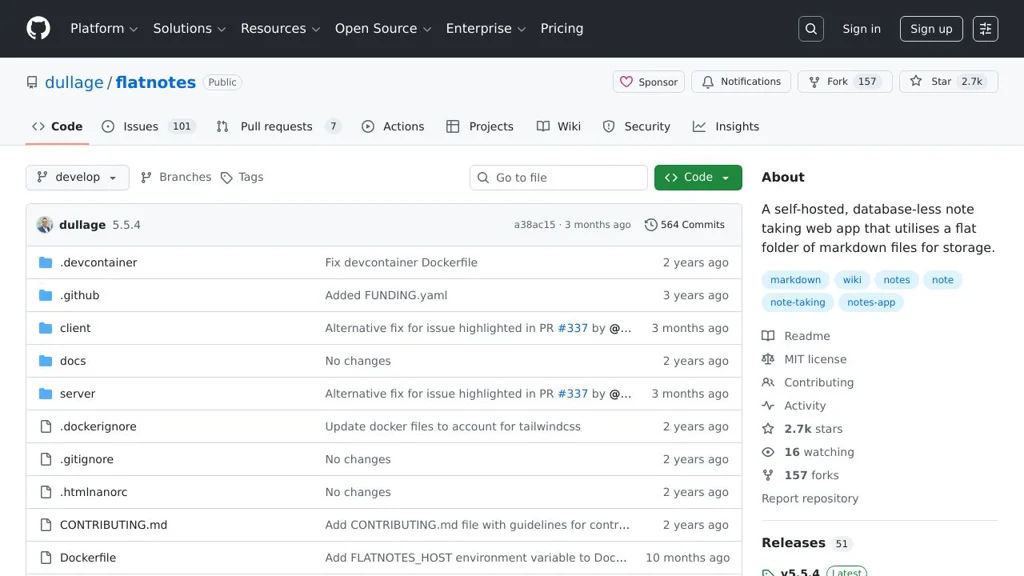
Flatnotes is a lightweight web app for managing Markdown notes stored as plain text files, with tag support and fast full-text search.

Flatnotes screenshot

Flatnotes is a minimalist, self-contained web application for writing and organizing notes as local Markdown files (a “flat-file” notebook). It focuses on speed and simplicity: you edit notes in the browser, while the source of truth remains a folder of plain-text files.

Key Features

  • Flat-file storage: notes are plain Markdown files on disk (easy to back up and sync externally)
  • Web-based editor for creating, editing, and deleting notes
  • Fast full-text search across all notes
  • Tagging and tag-based filtering (tags derived from note metadata/content)
  • Simple navigation UI designed for quick capture and retrieval
  • Docker-first deployment (commonly run as a single container)

Use Cases

  • Personal knowledge base using a local Markdown folder
  • A lightweight “notes inbox” for quick capture with later organization via tags/search
  • Self-hosted alternative for users who want notes to stay as files rather than in a database

Limitations and Considerations

  • Primarily designed for personal/single-user workflows; advanced multi-user collaboration features are not a focus
  • Feature set is intentionally minimal compared with full PKM suites (e.g., graph views, rich backlinks)

Flatnotes is a good fit when you want a fast web UI on top of a directory of Markdown notes, keeping data portable and easy to manage with existing filesystem-based tooling. Its opinionated simplicity makes it easy to deploy and maintain while still providing the essentials: editing, tags, and search.

2.7kstars
157forks
#17
Docspell

Docspell

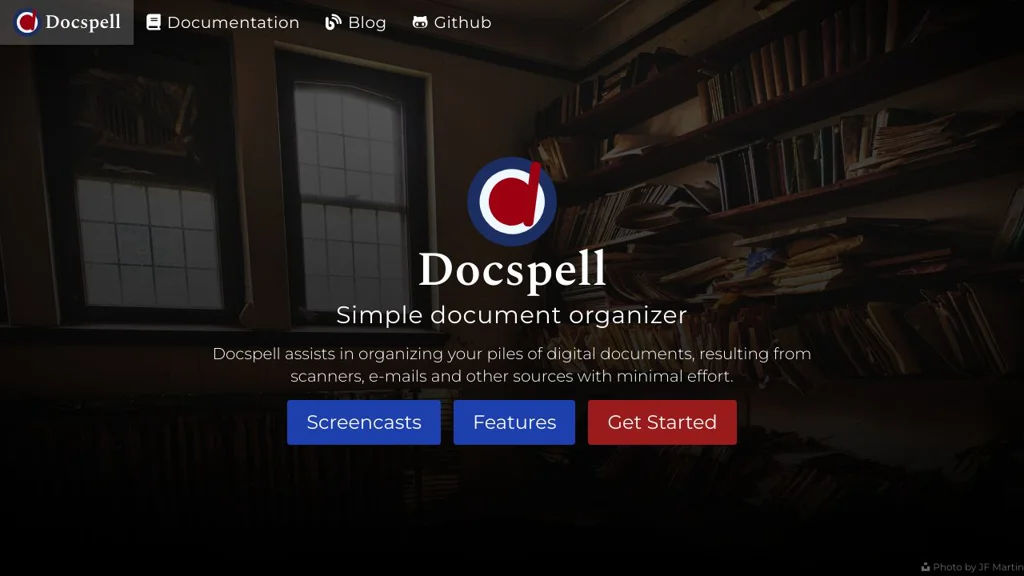
Docspell is a document management system that organizes scanned/imported files with OCR, metadata extraction, tagging, and full-text search, plus automated ingest workflows.

Docspell screenshot

Docspell is a self-hosted document management system focused on collecting, organizing, and finding documents such as scans, invoices, letters, and PDFs. It provides OCR, metadata extraction, and a workflow-oriented “collect/organize” model with powerful search.

Key Features

  • Ingest documents through multiple channels (web upload and automated “collective”/watch-folder style imports)
  • OCR pipeline for searchable text (commonly via Tesseract) and extraction of document text
  • Full-text search across OCR and document metadata
  • Tagging, custom metadata, and structured organization (e.g., correspondents, document dates)
  • Duplicate detection support (hash-based) to avoid storing the same document twice
  • Email-based workflows/notifications are supported via integrations and job execution (depending on setup)
  • REST API for automations and integration with other tools
  • Multi-user support with accounts/collections separation

Use Cases

  • Paperless home archive: scan mail and receipts, auto-OCR, then search later by content
  • Small business bookkeeping support: store invoices/contracts and quickly retrieve by vendor/date
  • Team document repository for shared operational documents with consistent tagging

Limitations and Considerations

  • OCR quality depends heavily on input scans and the configured OCR engine/language packs
  • Feature set is oriented toward document intake/search rather than full collaborative editing

Docspell fits users who want a robust pipeline from “incoming documents” to “indexed, searchable archive” with automation-friendly ingestion. It’s particularly strong when paired with a scanner or watch-folder/import workflow to minimize manual filing effort.

2kstars
154forks
#18
bewCloud

bewCloud

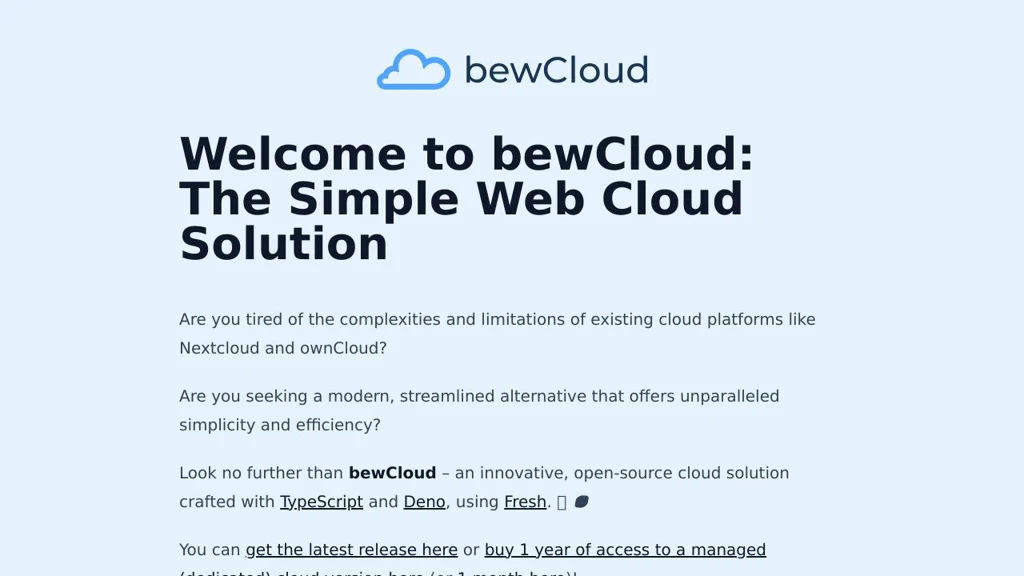
bewCloud is a self-hosted personal cloud that combines file storage, photo management, notes, and sharing in a single lightweight web app.

bewCloud screenshot

bewCloud is a lightweight personal cloud server that provides a unified web interface for storing and organizing files, managing photos, and keeping simple notes. It is designed as a minimal, easy-to-run alternative to heavier “all-in-one” cloud suites.

Key Features

  • Web-based file manager for uploading, downloading, browsing, and organizing content
  • Photo library with basic browsing and album-style organization
  • Built-in notes for quick personal documentation
  • Sharing via public links for files/folders (useful for ad-hoc collaboration)
  • User accounts for separating personal spaces (where configured)

Use Cases

  • Replace a basic Dropbox-style personal file space on your own server
  • Host a private photo library for family devices and backups
  • Keep lightweight notes alongside your documents in the same web portal

Limitations and Considerations

  • Feature scope is intentionally minimal compared to full groupware suites (e.g., fewer collaboration and office features)

bewCloud fits individuals and small households that want a clean, single-purpose personal cloud with straightforward file and media organization. It is a practical option when you want something simpler than large platforms while still offering web access and link sharing.

1.1kstars
50forks
#19
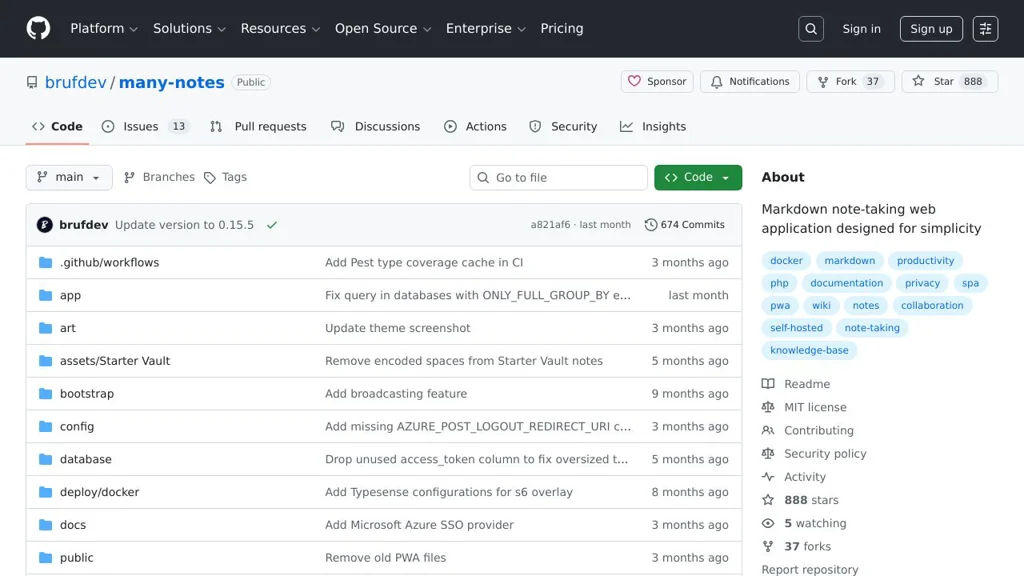
Many Notes

Many Notes

A simple, self-hostable notes web app for writing Markdown notes, organizing them with folders and tags, and searching your knowledge base.

Many Notes screenshot

Many Notes is a lightweight web application for creating and managing personal notes in a clean browser UI. It focuses on fast Markdown writing, simple organization, and easy deployment for running your own private notes space.

Key Features:

  • Markdown editor for writing and formatting notes
  • Notes organization with folders/collections
  • Tagging support to categorize and filter notes
  • Search to quickly find notes by content/title
  • Responsive web UI intended for everyday note-taking

Use Cases:

  • Personal knowledge base for tech notes, snippets, and documentation
  • Journaling or daily notes with simple categorization via tags
  • Team-internal scratchpad for lightweight documentation (small groups)

Limitations and Considerations:

  • Collaboration features (real-time co-editing, comments, permissions) appear limited compared to full collaborative suites
  • Feature set is intentionally minimal; advanced PKM workflows (graph view, backlinks) may not be available

Many Notes is a good fit if you want a minimal, web-based Markdown notebook with basic organization and search. It prioritizes simplicity and an easy workflow over heavyweight knowledge-management features.

889stars
37forks

Why choose an open source alternative?

  • Data ownership: Keep your data on your own servers
  • No vendor lock-in: Freedom to switch or modify at any time
  • Cost savings: Reduce or eliminate subscription fees
  • Transparency: Audit the code and know exactly what's running