
Instatus

Best Self Hosted Alternatives to Instatus

A curated collection of the 4 best self hosted alternatives to Instatus.

Instatus provides simple, customizable status pages and incident communication tools. It lets teams publish uptime dashboards, real-time incident updates, scheduled maintenance notices, and subscriber notifications to keep customers informed.

Alternatives List

#1
Uptime Kuma

Uptime Kuma

Self-hosted uptime monitoring for websites, APIs, and services with status pages, rich notifications, and multi-protocol checks.
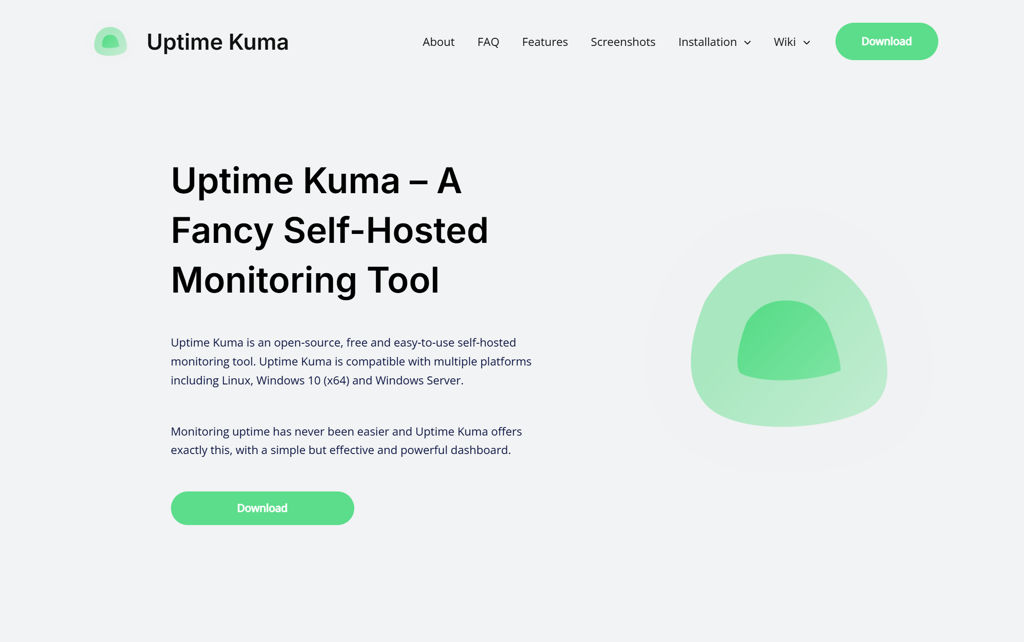
Uptime Kuma screenshot

Uptime Kuma is a self-hosted uptime monitoring tool for tracking availability and latency of websites, APIs, and network services. It provides a web dashboard to manage monitors, view history, and receive notifications when checks fail.

Key Features

  • Multiple monitor types (HTTP(s), TCP port, Ping, DNS, keyword search, etc.) to fit common availability checks
  • Configurable intervals, retries, timeouts, and status history for each monitor
  • Alerting via many notification providers (e.g., email/SMTP, Telegram, Discord, Slack, Webhooks, and more)
  • Public or private status pages with custom branding and incident-style visibility for selected monitors
  • TLS/SSL certificate expiry monitoring for HTTPS endpoints
  • Multi-user support with authentication and session management
  • Docker-based deployment support and lightweight standalone operation

Use Cases

  • Monitor public websites and APIs and alert on downtime or slow responses
  • Track internal services (databases, NAS, homelab apps) via TCP/Ping and centralize alerts
  • Publish a simple external status page for customers or internal stakeholders

Limitations and Considerations

  • It is primarily an availability/health checker and does not replace full observability stacks (logs/traces/metrics)

Uptime Kuma is a practical choice for individuals and teams needing an easy-to-operate monitoring dashboard with broad notification support. It suits homelabs and small-to-medium deployments where quick setup and clear uptime history are priorities.

81kstars
7.2kforks

#2
Dashy

Dashy

Dashy is a configurable self-hosted start page for organizing apps, links, widgets, and status checks with themes, auth, and integrations.

Dashy screenshot

Dashy is a self-hosted dashboard/start page for organizing links, applications, and widgets in a single web UI. It is designed for homelabs and teams who want a highly customizable “homepage” with sections, icons, search, and status information.

Key Features

  • YAML-driven configuration with UI-based editing for pages, sections, and items
  • Built-in widgets (e.g., clock, weather, system info, RSS, custom HTML/iframe embeds)
  • App/endpoint health checks and status indicators for links and services
  • Theming and layout customization (multiple themes, icons, grid options)
  • Authentication options (including basic auth / configurable auth integrations depending on deployment)
  • Search and quick navigation across all configured items
  • Multi-page support for separating environments (home, work, monitoring, etc.)
  • Docker-first deployment with simple upgrades and environment-based config

Use Cases

  • Homelab start page to launch and monitor self-hosted apps from one place
  • Team portal for internal tools, documentation links, and service status
  • Wallboard/kiosk dashboard for a NOC-style display of important endpoints

Limitations and Considerations

  • Not intended to be a full monitoring suite; health checks are lightweight and dashboard-oriented
  • Advanced authentication/SSO setups typically require additional reverse-proxy configuration

Dashy provides a practical, flexible landing page that can consolidate navigation, basic status, and informational widgets. It fits well as a lightweight “control center” alongside existing monitoring and management tools.

23.6kstars
1.7kforks
#3
Kener

Kener

Kener is a self-hosted status page that tracks service uptime, incidents, and maintenance with a clean UI and configurable monitors, notifications, and public pages.

Kener screenshot

Kener is a status page application for publishing real-time availability information about your services. It helps teams communicate outages and maintenance clearly, with configurable components, incident updates, and historical uptime views.

Key Features

  • Public status page with components/services, overall status, and historical uptime views
  • Incident management: create incidents, post updates, and resolve with timelines for transparency
  • Maintenance windows to announce planned downtime and reduce support load
  • Monitoring checks for endpoints (e.g., HTTP/HTTPS) with configurable intervals and timeouts
  • Notifications and integrations (commonly via webhooks) to broadcast incident changes
  • Configuration-driven setup (environment/config files) suitable for reproducible deployments

Use Cases

  • Publish a public status page for SaaS/apps/APIs to reduce “is it down?” support requests
  • Internal status dashboard for infrastructure components (databases, queues, key APIs)
  • Transparent incident communication during outages and planned maintenance

Limitations and Considerations

  • Feature depth may be smaller than enterprise hosted offerings (advanced analytics/SLO tooling varies by version)
  • Integration breadth depends on available built-in providers and webhook support

Kener is a lightweight way to communicate service health with a modern UI and straightforward operations. It fits teams that want a clear, hosted status presence while keeping configuration and deployment under their control.

4.7kstars
235forks
#4
Statping-ng

Statping-ng

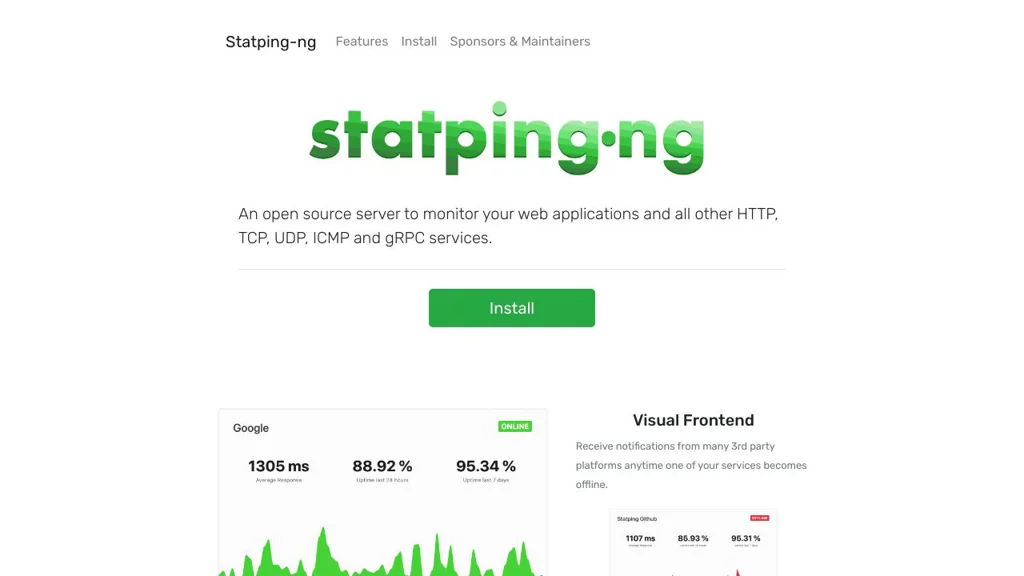
Statping-ng is an uptime monitoring and status page platform for tracking HTTP and other service checks, sending alerts, and publishing incident updates.

Statping-ng screenshot

Statping-ng is a self-hosted uptime monitoring service with a built-in public status page. It runs scheduled health checks against your services, stores results, and can notify you when incidents occur, making it suitable for small teams and homelabs.

Key Features

  • Public status page with service groups, incident posts, and historical uptime
  • Scheduled health checks (primarily HTTP/HTTPS; additional check types available depending on configuration/version)
  • Notification/alerting integrations (e.g., email and common chat/push providers)
  • Multi-user administration with roles/permissions
  • Metrics and charts for response time and uptime history
  • API for managing services/checks and status content
  • Runs in a single binary/container with support for common databases

Use Cases

  • Publish a public status page for customer-facing services and APIs
  • Monitor internal services (reverse proxies, apps, endpoints) and alert on downtime
  • Track SLA/uptime history for infrastructure changes and maintenance

Limitations and Considerations

  • Feature set and integrations can vary across releases/forks; verify supported check types and notifiers for your target version.

Statping-ng is a practical option when you want both uptime checks and a simple status page in one deployable service. It focuses on lightweight monitoring, incident communication, and straightforward alerting rather than full observability.

1.9kstars
181forks

Why choose an open source alternative?

  • Data ownership: Keep your data on your own servers
  • No vendor lock-in: Freedom to switch or modify at any time
  • Cost savings: Reduce or eliminate subscription fees
  • Transparency: Audit the code and know exactly what's running