
Last.fm

Best Self Hosted Alternatives to Last.fm

A curated collection of the 2 best self hosted alternatives to Last.fm.

Last.fm is a music discovery and listening service that tracks users' listening habits (scrobbling), offers personalized recommendations, charts and artist pages, and social features for discovering and sharing music.

Alternatives List

#1
Maloja

Maloja

Maloja is a self-hosted music scrobbling server that stores plays from multiple clients and provides privacy-friendly statistics, charts, and an API for personal listening analytics.
Maloja screenshot

Maloja is a self-hosted scrobbling server and listening-history database. It collects plays (“scrobbles”) from compatible clients, stores them locally, and provides a web interface and API for analyzing your listening habits without relying on third-party services.

Key Features

  • Stores scrobbles in your own database and provides a web UI for browsing history and statistics
  • Multiple ingestion options: compatible scrobble clients and integrations via an HTTP API (for custom scripts/tools)
  • Rich personal analytics: charts, timelines, artists/albums/tracks rankings, and period-based breakdowns
  • User/library features designed for personal deployments (single-user focus with lightweight administration)
  • Data export/backup options to keep ownership of your listening history
  • Integrations intended as alternatives to hosted scrobble ecosystems (e.g., replacing Last.fm-style tracking)

Use Cases

  • Track and visualize personal listening history across players/devices in one place
  • Build your own “Spotify Wrapped”-style yearly/monthly reports from locally stored scrobbles
  • Feed scrobble data into custom dashboards or scripts using the API

Limitations and Considerations

  • Primarily oriented toward personal/small deployments; not a full social scrobbling network

Maloja fits users who want a private, durable listening-history store with useful stats and an API. It’s a practical replacement for hosted scrobble tracking when you prefer to keep your data under your control and accessible for custom analysis.

1.6kstars
80forks

#2
Multi-Scrobbler

Multi-Scrobbler

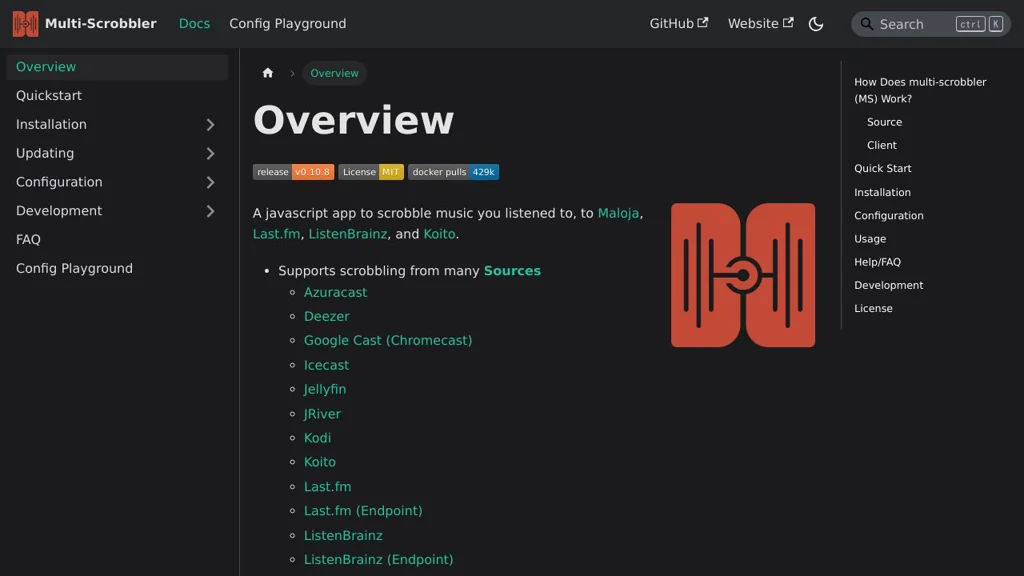
A web app and API that lets you scrobble (track) your music listens to multiple scrobbling services simultaneously, with per-user accounts and flexible source support.

Multi-Scrobbler screenshot

Multi-Scrobbler is a self-hosted web application that forwards “now playing” updates and scrobbles (listens) to multiple scrobbling backends from a single place. It’s designed for users who want redundancy (eg, Last.fm plus another service) or who use multiple music sources and want consistent tracking.

Key Features

  • Multi-target scrobbling: send the same listen to multiple scrobble services (eg, Last.fm and compatible endpoints)
  • Web UI for configuring users, connections, and scrobble targets
  • API endpoints intended to be called by players, scripts, or other services to submit now-playing/scrobble events
  • User-based configuration (multiple accounts) so different people can use the same instance
  • Optional Docker-based deployment for easier installation and updates

Use Cases

  • Scrobble your listens to Last.fm and a second service in parallel for backup/migration
  • Centralize scrobbling from multiple devices/players by pointing them at one endpoint
  • Run a household instance where each user maps their players to their own scrobble accounts

Limitations and Considerations

  • Depends on the capabilities and rate limits of the configured scrobble providers; some providers may not support all metadata fields equally

Multi-Scrobbler is a practical “hub” for listen tracking when you want one submission point but multiple destinations. It works well alongside self-hosted music setups and automation scripts to keep scrobble history consistent across services.

855stars
31forks

Why choose an open source alternative?

  • Data ownership: Keep your data on your own servers
  • No vendor lock-in: Freedom to switch or modify at any time
  • Cost savings: Reduce or eliminate subscription fees
  • Transparency: Audit the code and know exactly what's running