
Lokalise

Best Self Hosted Alternatives to Lokalise

A curated collection of the 3 best self hosted alternatives to Lokalise.

Lokalise is a cloud-based localization and translation management platform for apps, websites, and digital content. It streamlines translation workflows with collaborative editors, translation memory, machine translation, APIs and integrations to accelerate software localization.

Alternatives List

#1
LibreTranslate

LibreTranslate

LibreTranslate is an open-source translation API and web UI for private, self-hosted machine translation with offline models and optional API keys/limits.
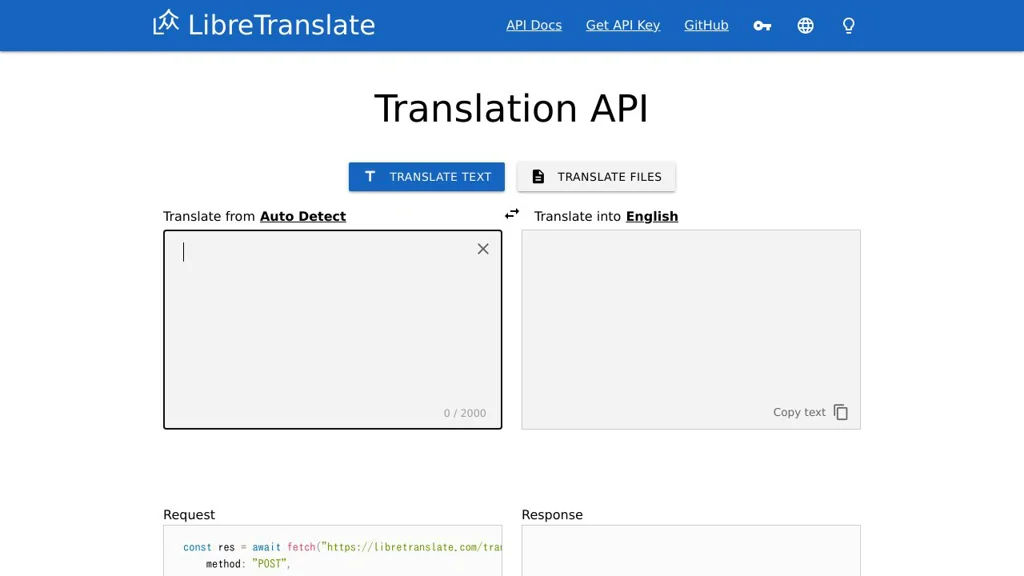
LibreTranslate screenshot

LibreTranslate is an open-source machine translation service that provides a REST API (and a simple web UI) for translating text without sending data to third-party providers. It can run fully offline using local models and is commonly deployed as an internal translation endpoint for apps, websites, and automation.

Key Features

  • REST API for text translation with language detection support
  • Web UI for manual translation/testing
  • Runs locally/offline using open translation models (no external provider required)
  • API key support and rate limiting options for controlled access
  • CORS support for browser-based clients
  • Docker-based deployment and configuration via environment variables

Use Cases

  • Private translation endpoint for internal tools, helpdesks, and knowledge bases
  • Add translation to web/mobile apps without sending content to third parties
  • Automations (e.g., workflows/scripts) that need programmatic translation

Limitations and Considerations

  • Translation quality and supported language pairs depend on the bundled/installed models
  • Running models can be CPU/RAM intensive; performance varies by hardware and load

LibreTranslate is a practical choice when you need a simple translation API you can control, especially in privacy-sensitive environments. It provides a straightforward HTTP interface, a lightweight UI, and deployment options that fit both small servers and containerized infrastructure.

13.5kstars
1.4kforks
#2
Weblate

Weblate

Self-hosted translation management platform with Git-based workflows, web UI, team collaboration, and machine-translation support for software localization.

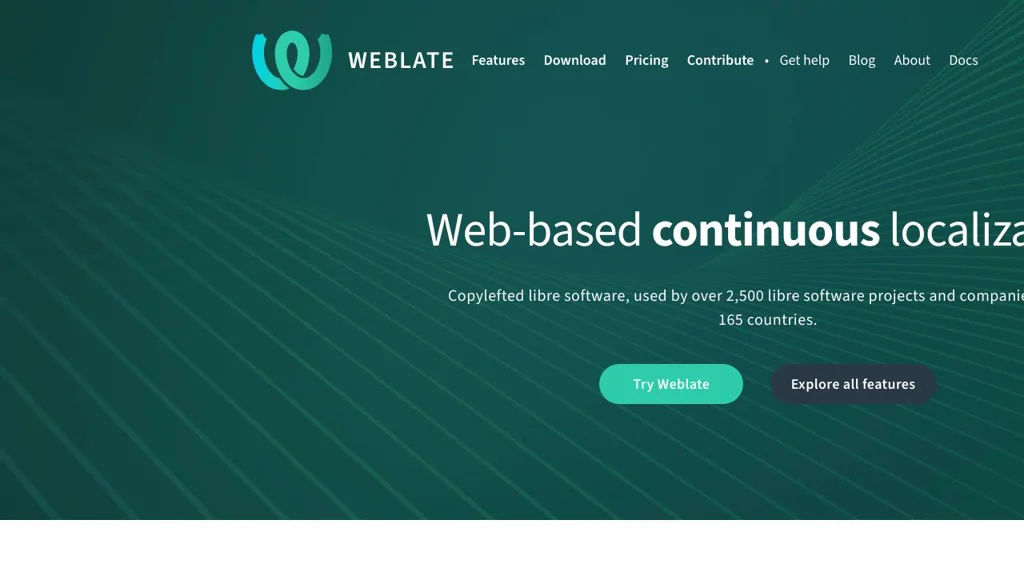
Weblate screenshot

Weblate is a web-based translation management system (TMS) designed for software localization. It integrates tightly with Git/VCS repositories so translations are reviewed and delivered through the same workflow as code changes.

Key Features

  • Native Git integration (pull/push, branches) to keep translations versioned with source code
  • Web UI for translating with suggestions, checks, and context to improve quality
  • Support for many localization formats (e.g., Gettext PO, JSON, YAML, XLIFF, Android strings, iOS strings)
  • Built-in quality checks (placeholders, punctuation, consistency) and configurable review workflows
  • Collaboration features: roles/permissions, reviews, comments, and activity history
  • Machine translation and translation memory integration to speed up work
  • APIs and webhooks for automation and CI/CD integration
  • Project organization for multiple components/languages, with permissions per project/component

Use Cases

  • Localize a SaaS or desktop/mobile app while keeping translations synchronized with Git repositories
  • Run a community translation portal for an open-source project with review and quality gates
  • Automate localization updates in CI pipelines (pull source strings, push translated files)

Weblate fits teams that want a Git-backed, collaborative localization workflow with strong format support and quality checks. It is commonly used for both internal product localization and community-driven translation projects.

5.7kstars
1.2kforks
#3
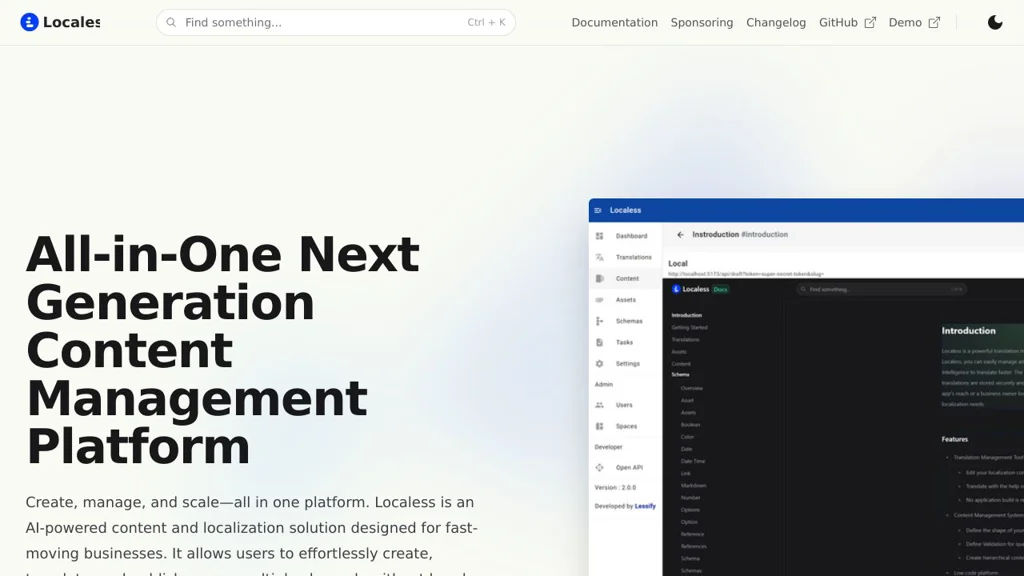
Localess

Localess

Localess is an open-source, self-hosted localization management platform to manage translation keys, languages, and team translation workflows for software projects.

Localess screenshot

Localess is an open-source localization management system (LMS) designed to help teams manage translations for applications and websites in one place. It centralizes translation keys and language files, providing a workflow for adding languages, translating strings, and keeping projects in sync.

Key Features

  • Project-based organization for translation content (apps/sites per project)
  • Manage languages/locales and translation keys/strings in a unified UI
  • Import/export of translation resources for integrating with application codebases
  • Web-based interface for translators and developers to collaborate on copy updates
  • Designed for self-hosting to keep product copy and localization data under your control

Use Cases

  • Maintain UI translations for a SaaS or web app across multiple locales
  • Coordinate translators and developers when copy changes frequently
  • Centralize and version exportable locale files for multiple products

Limitations and Considerations

  • Feature set and integrations may be lighter than mature hosted L10n suites; validate supported file formats and workflow fit before migrating

Localess fits teams that want a straightforward, self-run localization hub rather than relying on third-party translation management services. It is particularly useful when you need a single source of truth for translation strings and repeatable import/export workflows to your repositories.

68stars
20forks

Why choose an open source alternative?

  • Data ownership: Keep your data on your own servers
  • No vendor lock-in: Freedom to switch or modify at any time
  • Cost savings: Reduce or eliminate subscription fees
  • Transparency: Audit the code and know exactly what's running