
Medium

Best Self Hosted Alternatives to Medium

A curated collection of the 4 best self hosted alternatives to Medium.

Medium is an online publishing platform where writers, journalists, and publications publish essays, articles, and stories. It provides content discovery, reader engagement and curation, plus a membership model for monetization and access to premium content.

Alternatives List

#1
Ghost

Ghost

Modern publishing platform for creators and teams, with a powerful editor, themes, memberships, and email newsletters via Ghost Admin and a headless API.
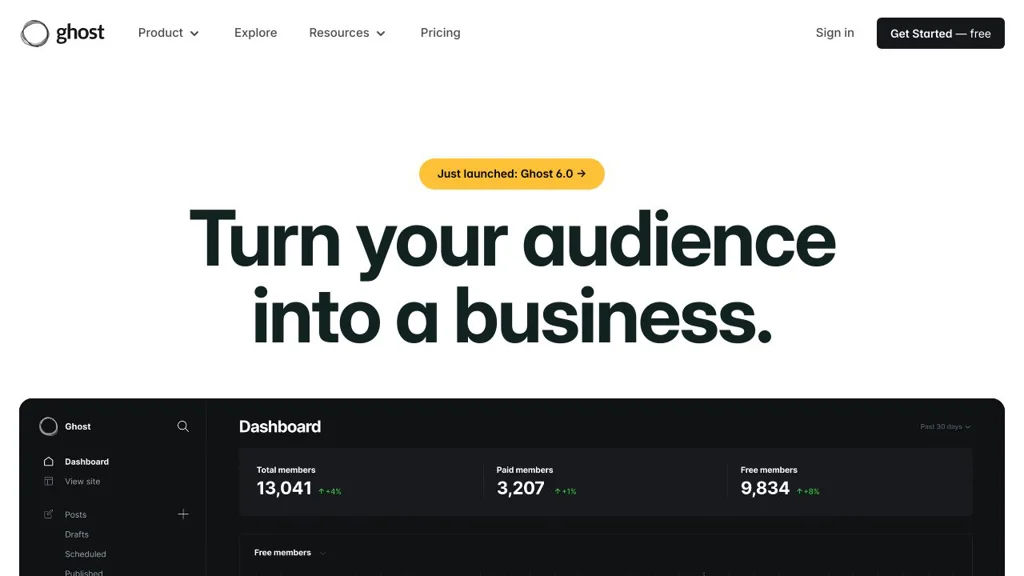
Ghost screenshot

Ghost is an open-source publishing platform for building and running blogs, magazines, and creator publications. It combines a writing-focused editor with theme-based websites, a headless content API, and tools for memberships and email newsletters.

Key Features

  • Content editor for posts and pages with Markdown support and rich embeds
  • Theme-based site building with Handlebars themes, routing, and dynamic templates
  • Built-in membership management (free and paid tiers) with signup/signin flows
  • Email newsletters: compose, schedule, and send to member segments
  • Payments via Stripe for subscriptions and one-time paid offerings (where supported)
  • Admin UI for managing content, staff, roles, tags, navigation, and site settings
  • Headless CMS capabilities via JSON REST Content API and Admin API
  • Integrations via webhooks, Zapier/automation hooks, and custom integrations using APIs
  • SEO features (metadata, canonical URLs, sitemaps) and performance-focused output

Use Cases

  • Run a company blog or product publication with editorial workflows and themes
  • Operate a paid newsletter or membership community with Stripe billing
  • Use Ghost as a headless CMS feeding a custom frontend via the Content API

Limitations and Considerations

  • Paid membership and subscription features depend on Stripe availability/region and require configuring email delivery for newsletters.
  • Theme customization requires knowledge of Ghost’s Handlebars theme system and routing configuration.

Ghost is suited to teams and creators who want a clean publishing workflow with first-class newsletters and memberships. It also works well as a headless CMS when paired with a custom frontend using the Content API.

51.5kstars
11.3kforks

#2
WordPress

WordPress

WordPress is a PHP/MySQL CMS for building and managing websites, blogs, and content-rich applications with themes, plugins, and a built-in editor.

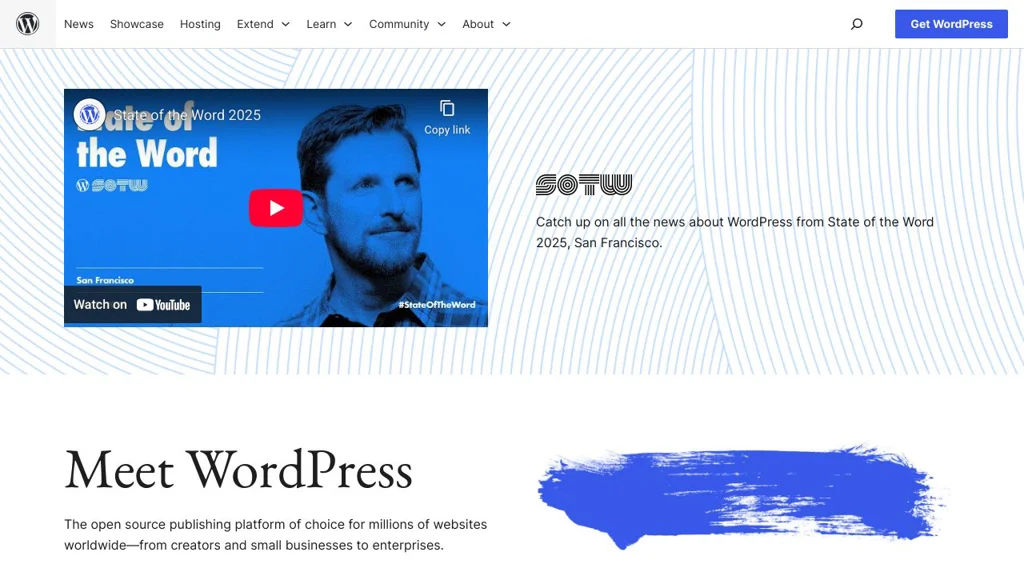
WordPress screenshot

WordPress is an open-source content management system (CMS) for creating and managing websites, blogs, and other content-driven experiences. It provides an admin interface, a block-based editor, and an extensible architecture built around themes and plugins.

Key Features

  • Block editor (Gutenberg) for composing pages and posts with reusable content blocks
  • Theme system for controlling site appearance, including custom themes and template hierarchy
  • Plugin architecture enabling site functionality extensions (SEO, forms, e-commerce, caching, etc.)
  • Media library for managing images and other uploads, with built-in image handling
  • User roles and capabilities for multi-user publishing workflows
  • Built-in comments system with moderation tools
  • Permalinks and URL routing for human-readable URLs
  • REST API for integrating WordPress content with external services and headless/front-end apps
  • Multisite mode to run multiple sites from a single installation (optional)

Use Cases

  • Company websites, marketing sites, and landing pages managed by non-technical editors
  • Blogging and online publishing with editorial workflows and scheduled posts
  • Headless CMS back end powering a separate front-end (e.g., SPA/static site)

Limitations and Considerations

  • Security and performance depend heavily on theme/plugin choices and update hygiene
  • Complex sites can accumulate plugin dependencies that increase maintenance overhead

WordPress is widely used for both simple sites and complex publishing platforms due to its mature ecosystem and extensibility. With careful theme/plugin selection and regular updates, it can serve as a flexible foundation for many web publishing needs.

20.8kstars
12.9kforks
#3
WriteFreely

WriteFreely

Self-hosted, privacy-focused publishing platform for blogs and multi-user instances, with a distraction-free editor, optional federation, and theming.

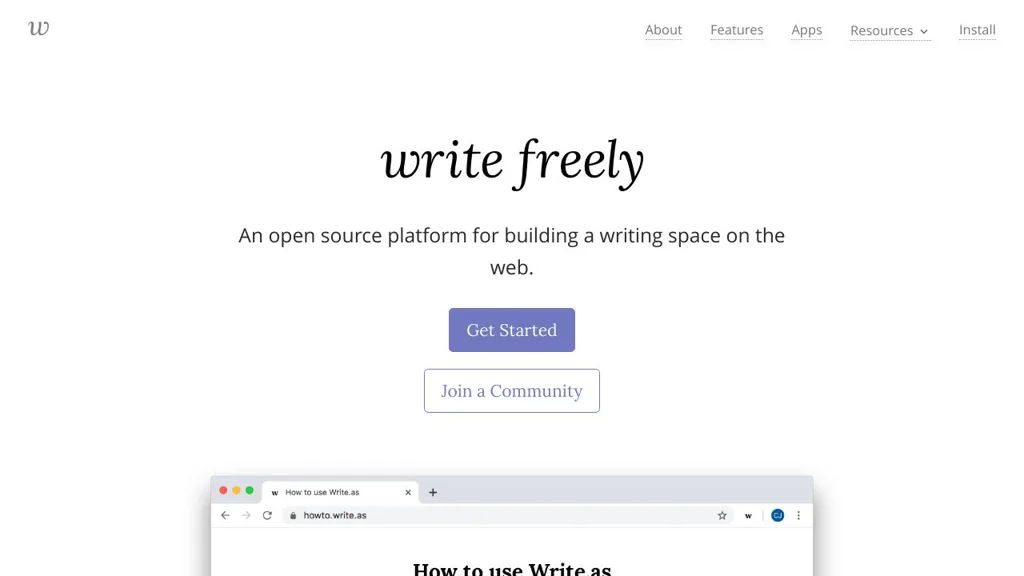
WriteFreely screenshot

WriteFreely is a lightweight publishing platform for creating blogs or hosting a community of writers. It focuses on a clean reading and writing experience, while providing the essentials for running a modern publication—from multi-user instances to optional federation.

Key Features

  • Distraction-free editor with Markdown support
  • Single-user blogs or multi-user “instance” mode with admin controls
  • Optional federation support (ActivityPub) to follow and be followed from the fediverse
  • Customizable themes and branding (including custom domains)
  • Draft/publish workflow with post organization (collections/blogs)
  • Import/export and API/CLI tooling for administration and automation

Use Cases

  • Personal blog with a minimal UI and Markdown-first writing
  • Community writing instance for a team, group, or small publication
  • Federated “micro-publication” that can interact with fediverse accounts

Limitations and Considerations

  • Designed for minimalism; advanced CMS workflows (page builders, complex roles, rich plugins) are intentionally limited

WriteFreely is well-suited for writers and small communities that want a focused publishing experience without a full traditional CMS. It balances simplicity with practical admin features and optional federation for broader reach.

5kstars
368forks
#4
Friendica

Friendica

Self-hostable federated social network for long-form posts, groups, forums, and cross-network connectivity via ActivityPub and other protocols.

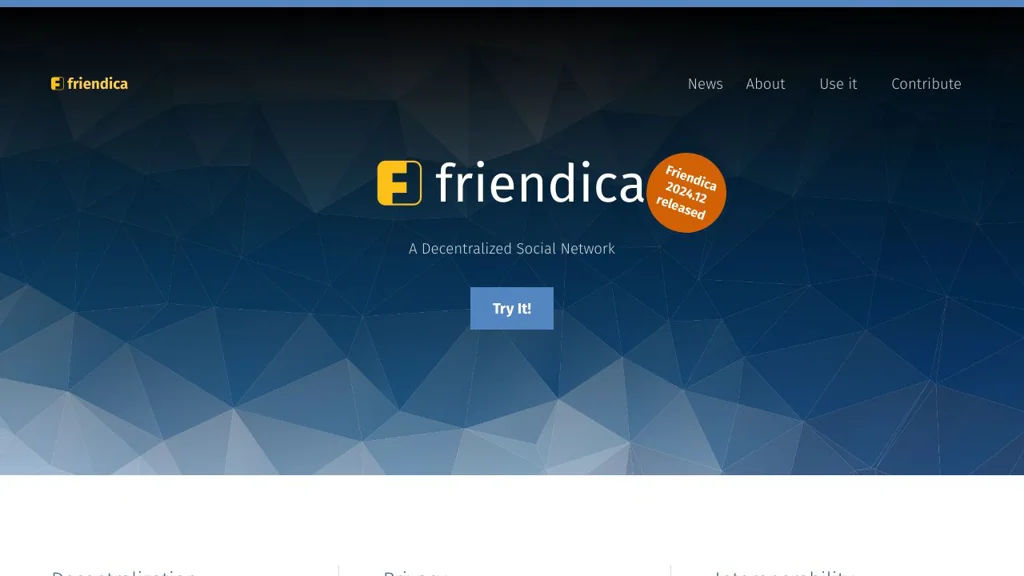
Friendica screenshot

Friendica is a self-hostable, decentralized social networking server that lets you run your own community while still interacting with people across the Fediverse. It focuses on privacy controls, rich social features (profiles, groups, events), and broad federation/bridge support.

Key Features

  • Federates with other networks via ActivityPub and additionally supports legacy protocols (where available) such as OStatus/DFRN for wide interoperability
  • Granular privacy controls for posts (public, friends, circles/ACLs) and per-contact permissions
  • Groups and community spaces, including forum-style “groups” accounts for discussions
  • Rich content: long-form posts, attachments/media, link previews, and threading/conversations
  • Built-in directory/discovery features (server/user directories, contact discovery)
  • Extensible via addons/plugins and themes; supports multiple languages

Use Cases

  • Host a private community that can still follow/interact with Mastodon/other Fediverse users
  • Replace centralized social platforms for organizations, clubs, or interest groups
  • Provide a “social hub” server to aggregate conversations across multiple federated services

Limitations and Considerations

  • Interoperability varies by protocol/remote platform features; not every feature maps cleanly across the Fediverse
  • Some bridge/protocol capabilities depend on addons and may require additional configuration

Friendica is a strong option if you want a feature-rich social network with fine-grained privacy controls and broad federation support. It suits both small private communities and public instances that want to participate in the wider Fediverse.

1.6kstars
367forks

Why choose an open source alternative?

  • Data ownership: Keep your data on your own servers
  • No vendor lock-in: Freedom to switch or modify at any time
  • Cost savings: Reduce or eliminate subscription fees
  • Transparency: Audit the code and know exactly what's running