
Microsoft Exchange Online

Best Self Hosted Alternatives to Microsoft Exchange Online

A curated collection of the 12 best self hosted alternatives to Microsoft Exchange Online.

Microsoft Exchange Online is a cloud-hosted email, calendar, contacts and tasks service in Microsoft 365 that delivers business-class email, shared calendars, anti-malware/anti-spam protection, mobile/desktop access, admin controls, and compliance features.

Alternatives List

#1
Mail-in-a-Box

Mail-in-a-Box

Turn a fresh Ubuntu server into a complete mail server with webmail, DNS, spam filtering, automatic TLS, and an easy-to-use admin control panel.
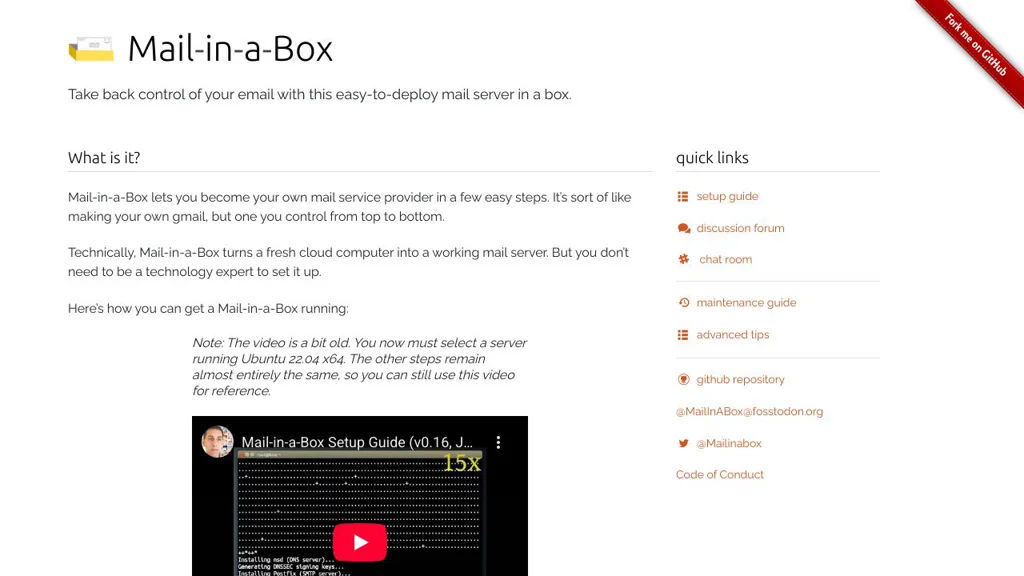
Mail-in-a-Box screenshot

Mail-in-a-Box is an opinionated all-in-one setup that turns a fresh Ubuntu server into a working email system for your domain(s). It bundles the core components needed to run mail reliably (sending/receiving, security, spam filtering, DNS, and webmail) and manages them through a simple web-based control panel.

Key Features

  • One-command installation on a supported Ubuntu release (designed for a clean VPS)
  • Admin control panel for users, aliases, domains, and service status
  • Integrated webmail (Roundcube) plus IMAP/SMTP support for desktop/mobile clients
  • Built-in DNS server/management to publish required records (MX, SPF, DKIM, DMARC, etc.)
  • Automatic TLS certificates via Let’s Encrypt (ACME) for HTTPS/IMAPS/SMTPS
  • Spam filtering and basic anti-abuse tooling (e.g., greylisting/antispam integration)
  • Contact/calendar sync support via CardDAV/CalDAV (via bundled groupware components)

Use Cases

  • Host email for a personal domain or small organization without outsourcing to a provider
  • Replace hosted email suites for basic mail + webmail needs
  • Provide mailboxes and aliases for multiple domains from a single server

Limitations and Considerations

  • Opinionated stack and OS support: intended for a specific Ubuntu version on a clean server
  • Advanced enterprise features (large-scale clustering, complex compliance tooling) are not the primary focus

Mail-in-a-Box is a practical choice when you want a complete, integrated mail setup with sane defaults and a straightforward admin experience. It emphasizes simplicity and a cohesive configuration over modular, pick-and-choose assembly.

15.1kstars
1.5kforks

#2
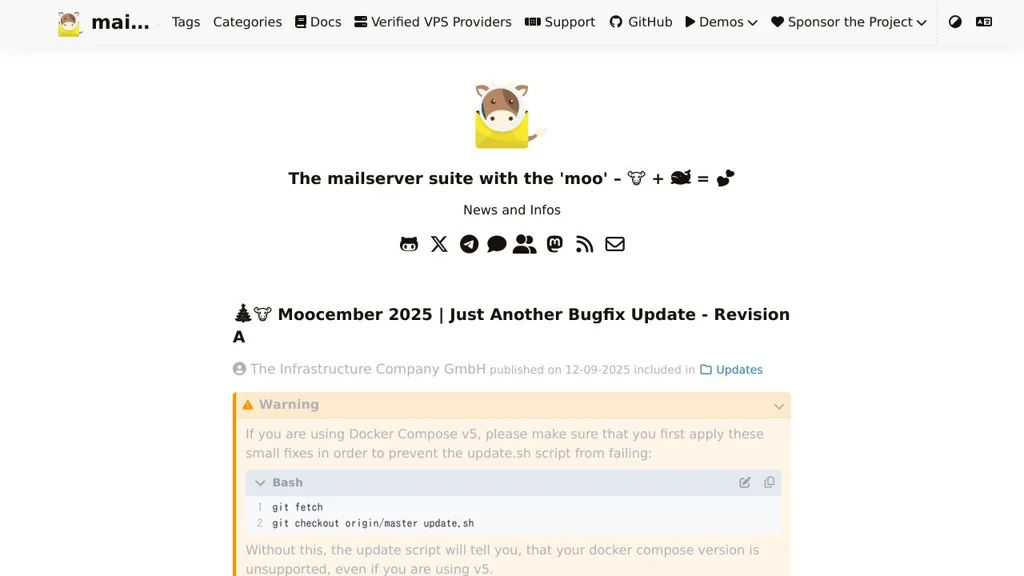
Mailcow

Mailcow

All-in-one, Docker-based email server stack with SMTP/IMAP, anti-spam, web UI administration, DKIM, and automated TLS via ACME.

Mailcow screenshot

Mailcow is an integrated mail server suite that bundles the components required to run a modern email system behind a single Docker Compose deployment. It provides a web-based administration interface to manage domains, mailboxes, aliases, and policies while shipping a pre-integrated stack for delivery, IMAP access, security, and monitoring.

Key Features:

  • Full mail stack via Docker Compose (SMTP, IMAP, web UI, filtering, databases, caches)
  • Web admin UI for domains, mailboxes, aliases, forwards, and quotas
  • Anti-spam and anti-virus pipeline (Rspamd + ClamAV integration)
  • DKIM signing and DMARC reporting support (stack-integrated)
  • Automated TLS certificates via ACME/Let’s Encrypt and integrated reverse proxy
  • SOGo groupware/webmail integration (calendar/contacts/groupware capabilities)
  • Rate limiting and policy controls to help protect against abuse
  • Built-in logging/metrics components for basic observability of mail services

Use Cases:

  • Host email for one or multiple custom domains with mailbox and alias management
  • Replace managed email hosting for small organizations needing administrative control
  • Provide an integrated mail + groupware stack for teams (mail, calendars, contacts)

Limitations and Considerations:

  • Operational complexity is higher than “SMTP relay only” solutions; correct DNS (SPF/DKIM/DMARC, rDNS) and deliverability tuning are required.
  • The stack is tightly coupled to Docker Compose; advanced customization may require deeper familiarity with the containerized components.

Mailcow is suitable for operators who want a pre-wired, production-oriented email stack with a central admin UI and common security features included. It focuses on integrating proven mail components into a cohesive deployment rather than reinventing the underlying protocols and servers.

11.9kstars
1.6kforks
#3
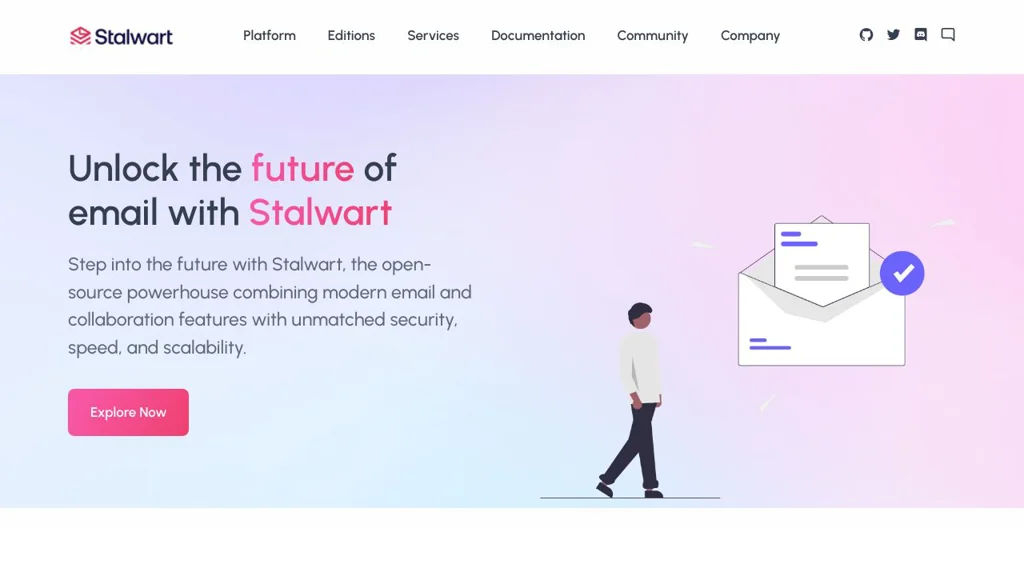
Stalwart Mail Server

Stalwart Mail Server

Stalwart is an all-in-one mail server (SMTP/IMAP/JMAP) with built-in anti-spam/DMARC, web admin UI, and flexible routing for running your own email infrastructure.

Stalwart Mail Server screenshot

Stalwart is a modern, self-contained email server designed to run a complete mail stack (sending, receiving, and mailbox access) with strong security controls and built-in filtering. It aims to simplify operating mail infrastructure by bundling protocols, authentication, policy, and anti-abuse features into a single service with an administrative UI.

Key Features:

  • Supports core mail access and transport protocols including SMTP and IMAP, with JMAP support for modern clients
  • Built-in anti-spam and policy enforcement with rules, reputation controls, and content filtering
  • Email authentication features such as DKIM signing and DMARC/SPF evaluation to improve deliverability and prevent spoofing
  • Flexible message routing, domain/user management, and multi-domain support for organizations
  • Web-based administration interface for configuration and operational management
  • TLS support and modern security defaults oriented toward safer deployments

Use Cases:

  • Run a private email service for a personal domain or small organization
  • Replace a hosted mailbox provider while keeping control of deliverability and anti-spam
  • Operate multi-tenant email for multiple domains with centralized management

Stalwart provides a cohesive, security-focused approach to running email by combining protocols, filtering, and administration in one package. It is well-suited for operators who want a modern mail stack with fewer external components to integrate and maintain.

11.1kstars
598forks
#4
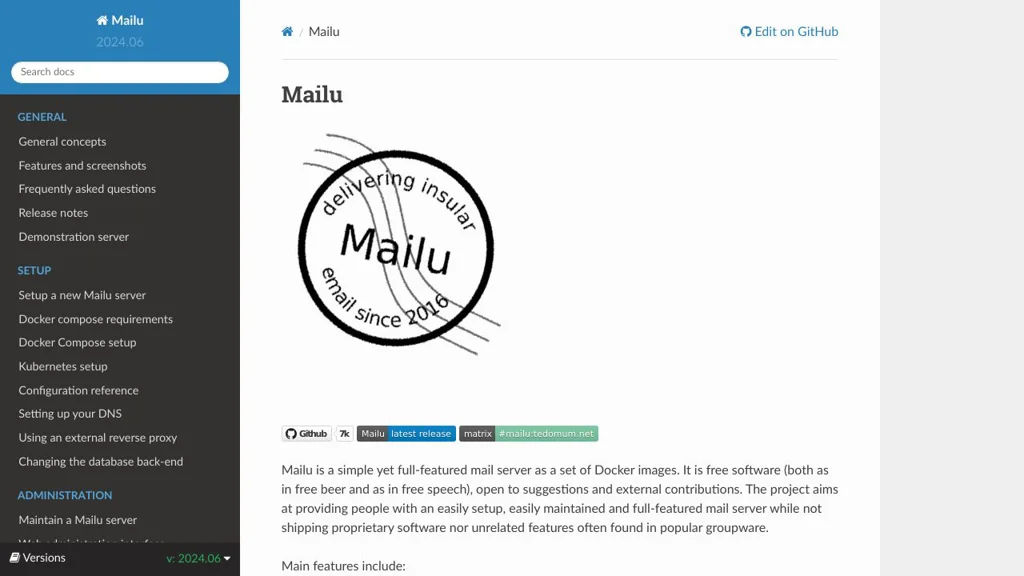
Mailu

Mailu

Mailu is an all-in-one email server stack (SMTP/IMAP/webmail) packaged for Docker, with anti-spam/AV, DKIM/DMARC support, and a web admin interface for domains and mailboxes.

Mailu screenshot

Mailu is a full mail server stack distributed as a set of Docker containers, providing SMTP and IMAP services plus webmail and administration. It aims to make running a secure, standards-compliant email server easier by bundling the common components and exposing a web UI for daily management.

Key Features

  • Complete mail stack in containers: SMTP (Postfix), IMAP (Dovecot), and web front-end services
  • Web administration interface to manage domains, users/mailboxes, aliases, and credentials
  • Built-in anti-spam and content filtering using Rspamd (with milter integration)
  • Optional antivirus scanning via ClamAV
  • Email authentication support (e.g., DKIM signing via OpenDKIM; DMARC-related configuration documented)
  • Webmail via Roundcube (optional) and support for additional services depending on deployment profile
  • Multiple deployment options and profiles (e.g., docker-compose; behind reverse proxies such as Traefik)

Use Cases

  • Self-managed email hosting for a personal domain (mailboxes and aliases)
  • Small organization mail service with web-based administration and spam/virus filtering
  • Lab/home server mail stack for learning and testing SMTP/IMAP, DKIM, and anti-spam configuration

Limitations and Considerations

  • Operating a deliverable email service requires correct DNS configuration (MX, SPF, DKIM, DMARC) and ongoing reputation/anti-abuse management
  • Some features depend on optional containers/services (e.g., webmail, antivirus), increasing resource usage and operational complexity

Mailu provides an integrated, container-first approach to email hosting that combines the core MTAs/IMAP server with a management UI and anti-spam/AV components. It is a practical choice when you want a cohesive, well-known mail stack with minimal manual wiring between services.

7kstars
957forks
#5
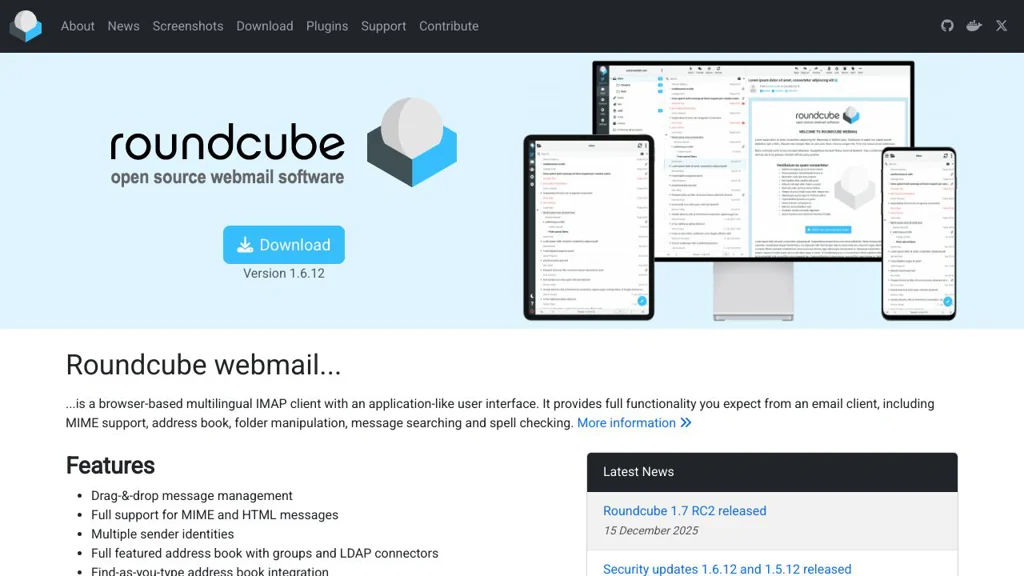
Roundcube

Roundcube

Self-hosted webmail client for IMAP accounts with address book, message search, identities, and an extensible plugin/skin system.

Roundcube screenshot

Roundcube is a browser-based IMAP email client designed to provide a full-featured webmail experience on top of existing mail servers (IMAP/SMTP). It focuses on a clean UI, standards-based email handling, and extensibility via plugins and skins.

Key Features

  • IMAP webmail UI with message list, conversation-style viewing, and folder management
  • SMTP sending with support for multiple sender identities and per-identity settings
  • Address book with groups and LDAP integration via plugins (commonly deployed)
  • Powerful search and message filtering capabilities (server-dependent; supports standard IMAP search)
  • MIME and HTML email rendering with attachment handling
  • Sieve / ManageSieve integration via plugin for server-side mail filtering rules
  • Extensible architecture: plugin API, skinning system, localization, and theming
  • PGP support available through plugins (e.g., Enigma/PGP-related plugin ecosystems depending on deployment)

Use Cases

  • Provide webmail access for a Postfix/Dovecot-based email domain without outsourcing to hosted webmail
  • Offer a lightweight, user-friendly mailbox interface for small organizations, ISPs, and homelabs
  • Add server-side filtering (Sieve) management to an existing IMAP service via plugins

Limitations and Considerations

  • Not a full groupware suite by default; calendars/contacts sync and advanced collaboration typically require plugins and/or external services
  • Feature depth depends on IMAP server capabilities and installed plugins (e.g., Sieve, LDAP)

Roundcube is a mature, widely deployed webmail client that integrates with standard mail server stacks. Its plugin and theming ecosystem makes it adaptable for many email hosting scenarios while keeping the core focused on webmail.

6.7kstars
1.7kforks
#6
Mox

Mox

All-in-one SMTP/IMAP mail server with web admin, spam filtering, DKIM/DMARC, and automatic TLS via ACME—designed for simpler, safer email hosting.

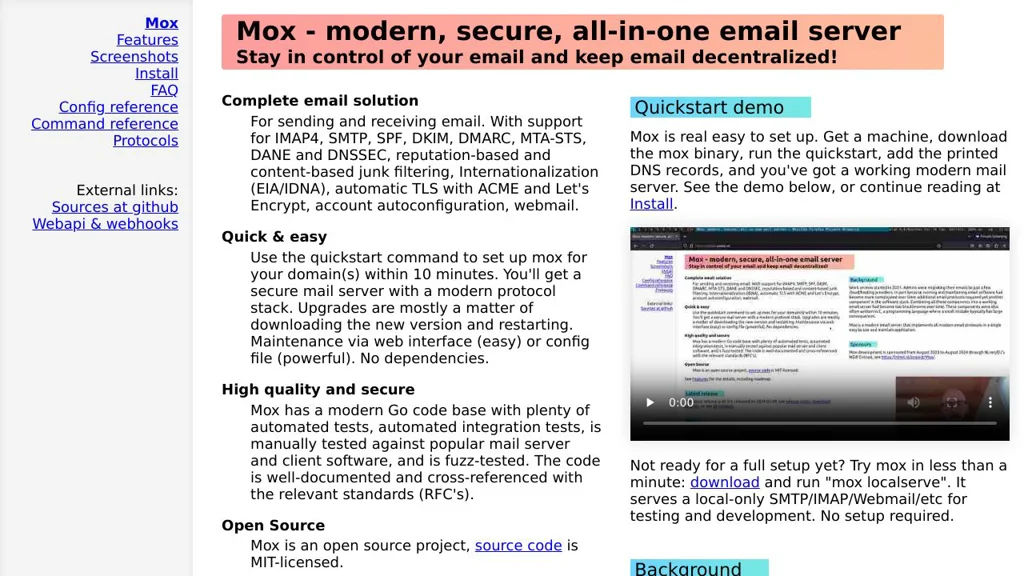
Mox screenshot

Mox is an all-in-one email server focused on being easier to run and safer by default than traditional “glue-it-together” mail stacks. It provides SMTP submission/receiving and IMAP access, a built-in admin web interface, and sensible defaults for modern email authentication and deliverability.

Key Features

  • Integrated SMTP server (incoming + submission) and IMAP server
  • Built-in admin web UI for managing domains, accounts, and operational settings
  • Automatic TLS certificate provisioning via ACME
  • Modern email authentication and policy support (DKIM signing, SPF/DMARC evaluation)
  • Spam filtering controls (including common DNSBL-style checks) and delivery safeguards
  • Mailbox storage and indexing handled by Mox (no external IMAP/SMTP components required)
  • Operational tooling for diagnostics/logging and safer configuration changes

Use Cases

  • Host email for a personal domain or small organization with a single, cohesive server
  • Replace a multi-component Postfix/Dovecot stack with an integrated setup
  • Run a mail server with modern authentication defaults for better deliverability

Limitations and Considerations

  • Not a full groupware suite (no calendars/contacts as a primary feature)
  • Self-hosted email deliverability depends on correct DNS and IP reputation

Mox aims to reduce complexity by shipping a cohesive mail server with an admin UI and modern defaults. It’s best suited for operators who want a straightforward, integrated email stack while retaining control over their domains and accounts.

5.3kstars
176forks
#7
Radicale

Radicale

A fast, lightweight CalDAV/CardDAV server for syncing calendars, contacts, and tasks with standard clients, featuring filesystem storage and flexible authentication.

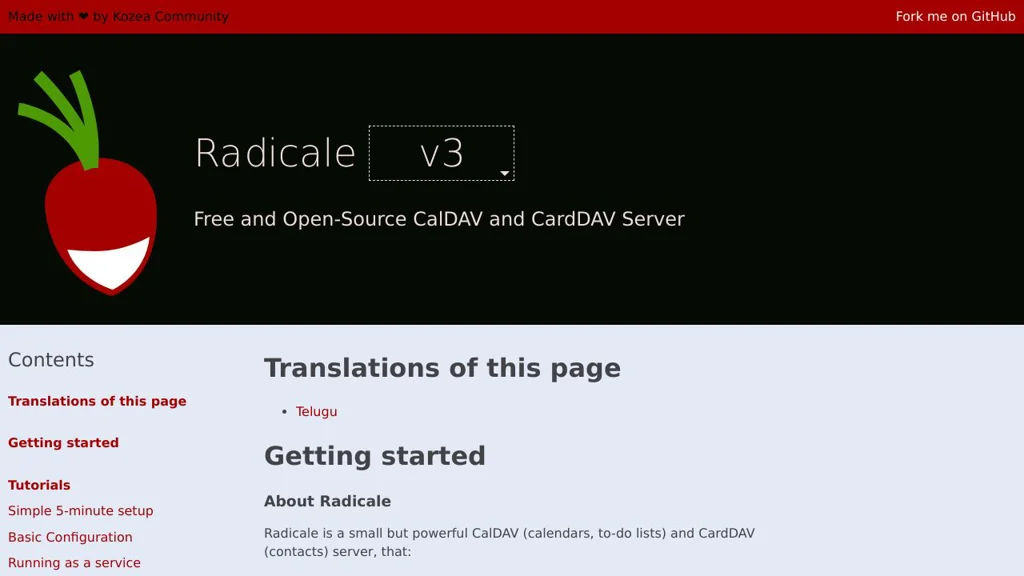
Radicale screenshot

Radicale is a minimalist CalDAV and CardDAV server that lets you sync calendars, address books, and tasks with standards-compliant clients (e.g., Thunderbird/Lightning, DAVx⁵, macOS/iOS, GNOME). It focuses on being easy to deploy and administer while still providing the core DAV features needed for personal or small team groupware.

Key Features

  • CalDAV and CardDAV support for calendars, contacts, and VTODO tasks
  • Stores data as plain files on disk (human-readable, easy to back up and version)
  • Built-in web interface for browsing collections (optional) and DAV discovery
  • Flexible authentication/authorization options (e.g., htpasswd, remote user, custom backends)
  • Per-user collections and permissions via configuration
  • Works behind reverse proxies; supports TLS via a fronting web server
  • Runs as a standalone WSGI application; integrates with common process managers

Use Cases

  • Sync a personal calendar/contacts/tasks across phones and desktops using DAV clients
  • Provide lightweight DAV groupware for a family or small organization
  • Host DAV data in a git-backed directory for audit/history and simple restores

Limitations and Considerations

  • Primarily targets DAV sync; it is not a full “groupware suite” (no email/chat modules)
  • Sharing/ACL capabilities depend on configuration and client support and may be less ergonomic than full suites

Radicale is a good fit when you want a small, standards-based DAV server that is easy to host, keeps data in straightforward files, and interoperates with many existing calendar/contact clients. It prioritizes simplicity and transparency over an all-in-one collaboration platform.

4.2kstars
491forks
#8
Baïkal

Baïkal

Baïkal is a lightweight CalDAV/CardDAV server for syncing calendars, tasks, and contacts with DAV clients, with a simple web admin UI and multi-user support.

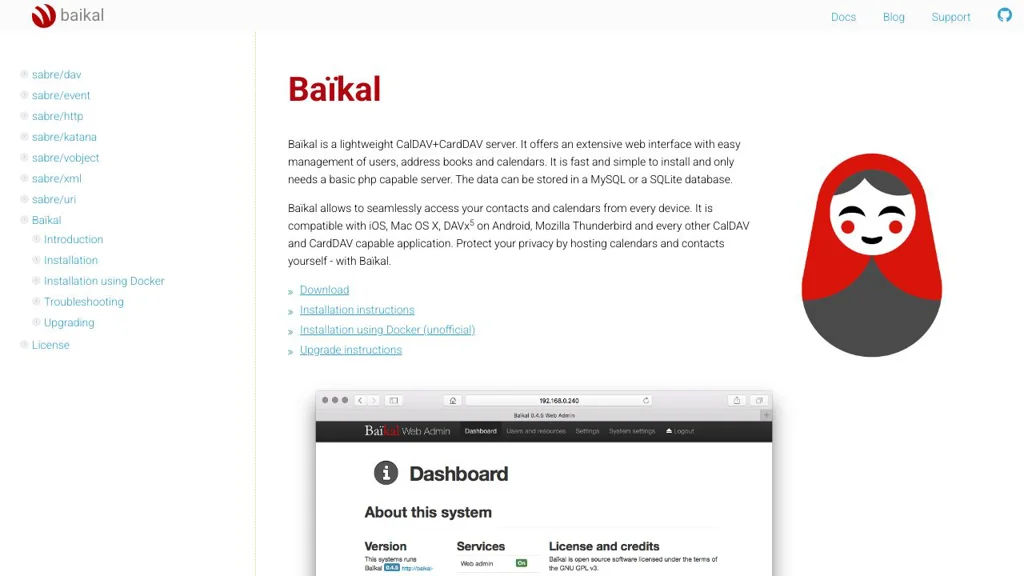
Baïkal screenshot

Baïkal is a small, self-hostable groupware backend that provides CalDAV and CardDAV services for syncing calendars, tasks, and contacts across devices and desktop/mobile clients. It is built on top of the SabreDAV stack and is designed to be easy to deploy and administer.

Key Features

  • CalDAV server for calendars and tasks (VTODO) compatible with common DAV clients
  • CardDAV server for contact sync using vCard
  • Web-based administration panel to create/manage users, address books, and calendars
  • Multi-user support with per-user collections (calendars/address books)
  • Uses an SQL database backend (SQLite by default; also supports MySQL and PostgreSQL)
  • Standards-based DAV interoperability via the SabreDAV library

Use Cases

  • Sync personal calendars/tasks between macOS/iOS, Android (DAVx⁵), and desktop clients
  • Provide shared calendars/contacts for a family or small team without a full groupware suite
  • Run a lightweight DAV endpoint behind an existing web server/reverse proxy

Limitations and Considerations

  • Focused specifically on CalDAV/CardDAV; it is not a full mail/chat/collaboration suite
  • Interoperability depends on client DAV support; some clients may require extra configuration

Baïkal is a good fit when you want standards-based calendar/contact synchronization with minimal overhead. Its simple admin UI and SabreDAV foundation make it practical for small deployments that need reliable DAV services without additional groupware components.

3kstars
304forks
#9
sabre/dav

sabre/dav

A PHP library for building WebDAV, CalDAV, and CardDAV servers with RFC-compliant protocol support, extensible plugins, and integration with existing authentication and storage backends.

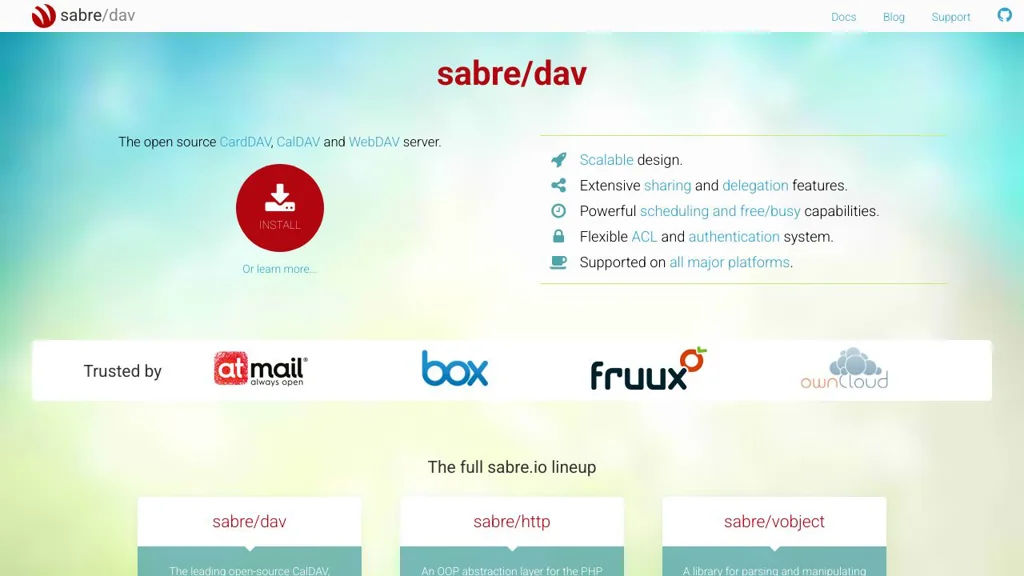
sabre/dav screenshot

sabre/dav is a PHP library for implementing WebDAV, CalDAV, and CardDAV servers. It provides the protocol handling, routing, and interoperability layers needed to expose files, calendars, and address books to standard clients while letting you plug in your own storage and authentication.

Key Features

  • WebDAV server framework with support for common clients (e.g., Windows/macOS/WebDAV tools)
  • CalDAV (calendar) and CardDAV (contacts) protocol implementations for sync to desktop/mobile clients
  • Pluggable architecture (server “plugins”) for adding features such as authentication, ACL, locks, sync reports, etc.
  • Backend abstraction: implement interfaces to connect calendars/contacts/files to your database or filesystem
  • Standards-focused design with broad RFC coverage and strong emphasis on interoperability
  • Ships as a Composer package for embedding into custom PHP applications

Use Cases

  • Add CalDAV/CardDAV sync (calendars/contacts) to an existing PHP product
  • Provide a WebDAV endpoint for document access/editing from desktop/mobile clients
  • Build a lightweight groupware sync layer backed by custom storage and auth

Limitations and Considerations

  • It is a developer-focused library rather than a complete “ready-to-run” end-user server; you typically need to implement storage backends and deploy within your own PHP application.

sabre/dav is best suited when you need standards-compliant DAV capabilities inside a PHP stack and want control over authentication, data models, and persistence. Its plugin system and backend interfaces make it adaptable to many architectures while retaining protocol correctness.

1.7kstars
362forks
#10
SnappyMail

SnappyMail

Fast, privacy-friendly webmail client with IMAP/SMTP, Sieve filters, PGP support, and a responsive UI. A community-driven continuation of RainLoop.

SnappyMail screenshot

SnappyMail is a self-hosted webmail client designed to provide a fast, modern email interface for existing mail servers via IMAP and SMTP. It is a community-driven continuation/fork of RainLoop, focusing on performance, security improvements, and compatibility with common mail setups.

Key Features

  • IMAP mail access and SMTP sending (works with most existing mail providers/servers)
  • Responsive, single-page web UI with keyboard shortcuts and conversation/thread view
  • Sieve filtering support (manage server-side mail filtering rules where supported)
  • PGP/GPG message encryption and signing support (via OpenPGP integration)
  • Multiple accounts/identities and folder management
  • Attachment handling, message search, and rich message viewing
  • Admin panel for domain/account configuration and application settings
  • Plugin/extension mechanism (feature set depends on enabled plugins)

Use Cases

  • Provide a modern webmail UI for Postfix/Dovecot (or any IMAP/SMTP) mailboxes
  • Offer browser-based email access for small teams without adopting a full groupware suite
  • Replace hosted webmail UIs while keeping the existing mail server stack

Limitations and Considerations

  • Not a mail server: requires external IMAP/SMTP services to function
  • Some advanced capabilities depend on server support (e.g., Sieve availability)

SnappyMail is a good fit when you want a modern, performant webmail experience while retaining your current mail infrastructure. It targets practical administration and end-user usability without the operational overhead of a full email/groupware platform.

1.5kstars
174forks
#11
Cypht

Cypht

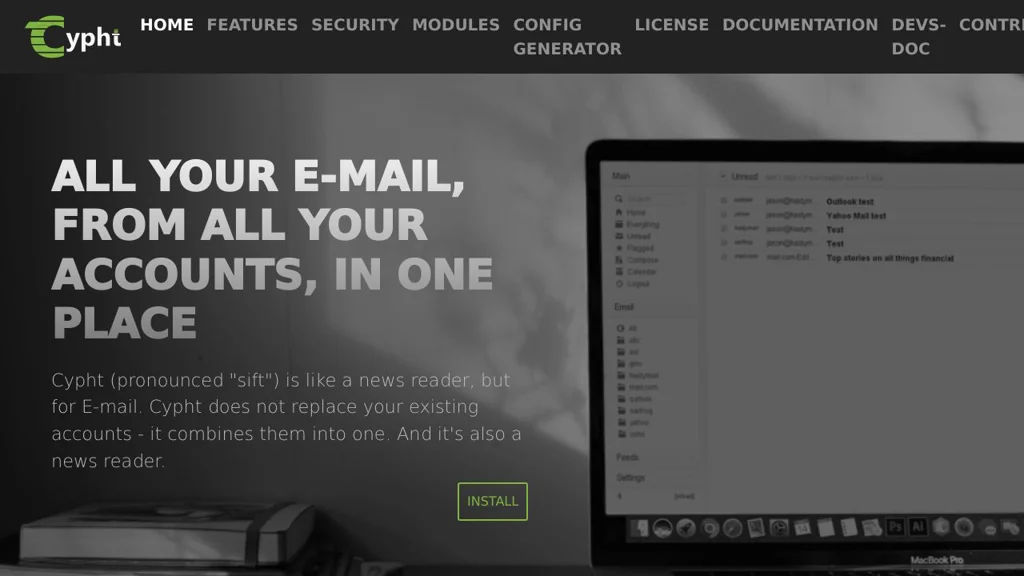
Cypht is a lightweight, extensible webmail client that aggregates IMAP mailboxes and provides a fast, minimal UI with optional modules such as SMTP sending and Sieve filtering.

Cypht screenshot

Cypht is an open-source webmail client designed to provide a fast, minimal interface for reading email from one or more IMAP accounts. It focuses on being lightweight and modular, with optional components that can extend functionality while keeping the core UI simple.

Key Features

  • IMAP webmail interface with mailbox/message browsing and message viewing
  • Multi-account support (aggregate multiple IMAP accounts into one web UI)
  • Modular architecture (features provided via modules/plugins rather than a monolith)
  • Optional SMTP support for sending mail (depends on deployment configuration)
  • Optional Sieve support for server-side mail filtering (where supported by your mail server)
  • Theming/customization via templates/assets (project includes UI assets and templates)

Use Cases

  • Provide webmail access for users with existing IMAP mailboxes
  • Consolidate multiple IMAP accounts into a single web interface
  • Deploy a minimal webmail UI for constrained servers or internal-only access

Limitations and Considerations

  • Feature set and polish can be more minimal than “groupware-style” webmail suites (e.g., advanced calendar/contacts are not a primary focus)
  • Some capabilities (sending mail, Sieve filtering) depend on server support and configuration rather than being purely client-side

Cypht fits deployments that want a straightforward, extensible webmail client with multi-IMAP aggregation and a lightweight footprint. Its modular design makes it suitable when you want to enable only the features you need and keep the interface simple.

1.4kstars
200forks
#12
Dovecot

Dovecot

Dovecot is an IMAP/POP3 mail server focused on performance, security, and standards compliance, commonly used for mailbox access in Postfix/Exim-based email stacks.

Dovecot screenshot

Dovecot is a high-performance IMAP and POP3 server used to provide mailbox access for email users and clients. It is widely deployed with MTAs such as Postfix or Exim and supports common mailbox formats and authentication backends.

Key Features

  • IMAP4rev1 and POP3 server with TLS/SSL support
  • High-performance mailbox index/cache architecture for fast access
  • Supports Maildir and mbox (and can integrate with other storage via plugins)
  • Authentication framework with multiple backends (e.g., PAM, LDAP, SQL) and pluggable mechanisms
  • SASL integration commonly used by Postfix for SMTP authentication
  • Quota and ACL support (IMAP ACL) for shared mailboxes and access control
  • Sieve mail filtering via Pigeonhole (separate but commonly paired component)
  • Replication and high-availability options (dsync-based replication)

Use Cases

  • Provide IMAP/POP3 access for a self-managed email domain (paired with Postfix/Exim)
  • Centralized authentication for mail services (LDAP/SQL/PAM) with per-user mail storage
  • Shared mailboxes and delegated access scenarios (teams/support mailboxes)

Limitations and Considerations

  • Not a full email stack by itself: you typically pair it with an MTA (e.g., Postfix) and optional anti-spam/AV components
  • Some advanced functionality (e.g., Sieve filtering) is delivered via companion projects/plugins (not strictly in the core daemon)

Dovecot is a mature, widely used mailbox-access server emphasizing speed, interoperability, and flexible authentication/storage integrations. It fits well in production mail setups where IMAP/POP3 reliability and performance are critical components.

1.2kstars
322forks

Why choose an open source alternative?

  • Data ownership: Keep your data on your own servers
  • No vendor lock-in: Freedom to switch or modify at any time
  • Cost savings: Reduce or eliminate subscription fees
  • Transparency: Audit the code and know exactly what's running