
MyChart

Best Self Hosted Alternatives to MyChart

A curated collection of the 3 best self hosted alternatives to MyChart.

MyChart (by Epic) is a secure patient portal that gives patients online access to medical records, appointment scheduling, test results, messaging with clinicians, prescription refills, and billing management to simplify personal health care interactions.

Alternatives List

#1
wger

wger

Self-hosted fitness manager for workouts, exercises, nutrition, and body measurements with calendars, routines, and an API for integrations.
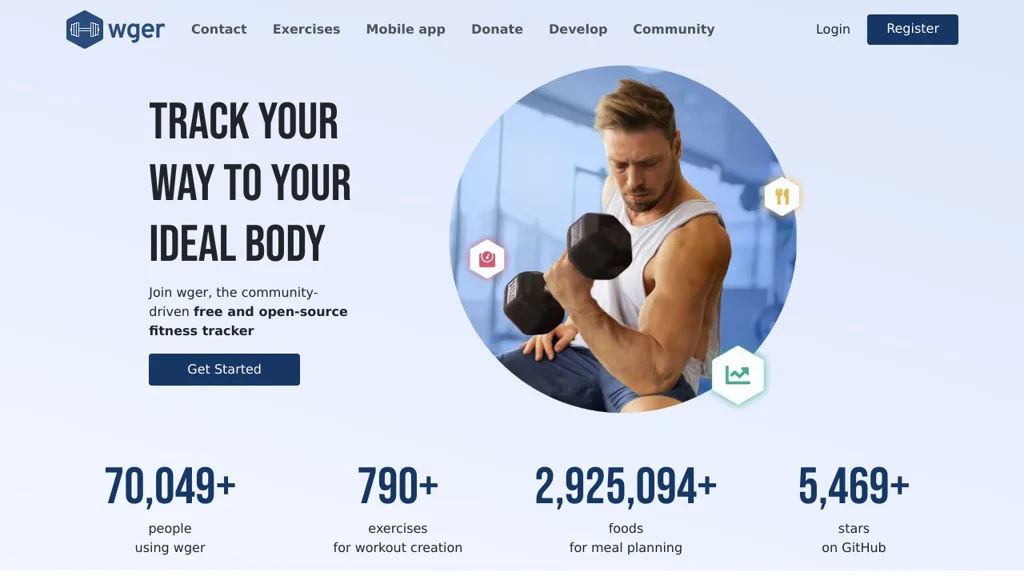
wger screenshot

wger is a self-hosted fitness management web app for planning and tracking workouts, exercises, nutrition, and body measurements. It provides structured training plans and logging, along with a large exercise database and an API for integrations.

Key Features

  • Workout planning with routines/schedules and training logs
  • Exercise database (with muscles, equipment, and images) and the ability to add custom exercises
  • Nutrition logging with foods, meals, and nutritional values (macro/micro nutrients depending on data)
  • Body measurement tracking (e.g., weight, waist, body fat) and progress visualization
  • Calendar views for workouts and planning
  • Multi-user support with user accounts and permissions
  • REST API for integrating with other apps and automations
  • Internationalization (multiple languages supported)

Use Cases

  • Personal training diary to plan cycles and track progression over time
  • Small gym/club instance to maintain shared exercise definitions and member tracking
  • Fitness data hub integrated via API with dashboards, mobile clients, or automation tools

Limitations and Considerations

  • Exercise and nutrition datasets depend on what you import/configure; completeness varies by region/source

wger is a practical option for individuals or groups who want a structured training and nutrition tracker under their own control. Its combination of planning tools, an extensible exercise database, and an API makes it suitable for both standalone use and integrations.

5.5kstars
801forks

#2
OpenEMR

OpenEMR

A full-featured EHR/EMR and medical practice management system with scheduling, e-prescribing integrations, billing/claims support, patient portal, and reporting.

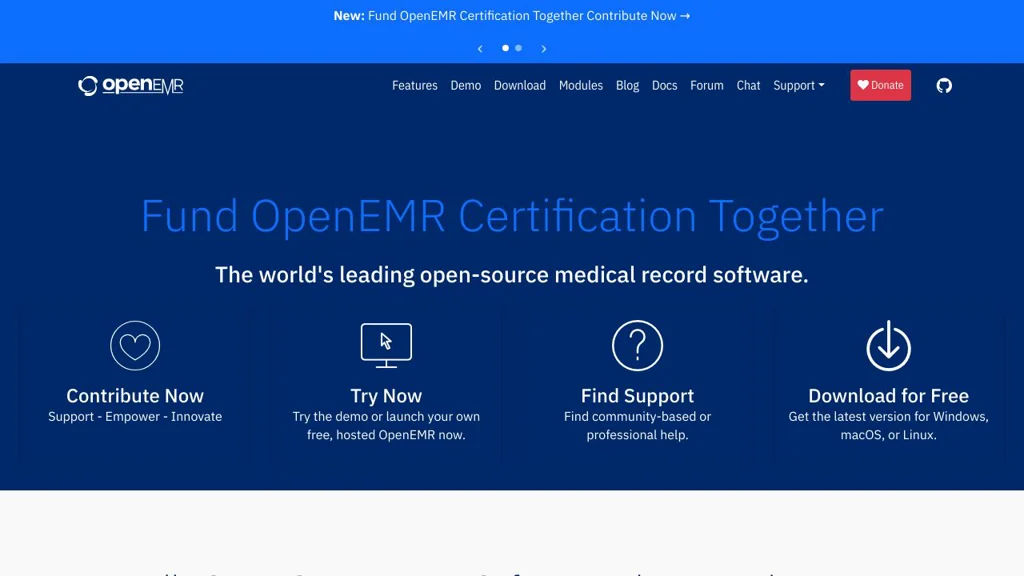
OpenEMR screenshot

OpenEMR is an electronic medical record (EMR/EHR) and practice management application used by clinics and healthcare providers to manage patients, clinical documentation, scheduling, and administrative workflows. It combines charting, orders, billing/claims-related workflows, and patient engagement tools in a single web application with an extensible module ecosystem.

Key Features

  • Patient charting: demographics, encounters, problems, allergies, medications, labs, documents, and clinical notes
  • Appointment scheduling with calendar views and clinic/provider/resource scheduling
  • Patient portal for messaging, document sharing, forms, and viewing clinical information (deployment dependent)
  • E-prescribing support via integrations (availability varies by region/vendor)
  • Billing and revenue-cycle features including CPT/ICD coding, fee sheets, and claims workflow support
  • Reporting and analytics (clinical, operational, and financial reports; export options)
  • Interoperability options including HL7/FHIR-oriented capabilities (configuration and modules may be required)
  • Role-based access controls and audit logging to support healthcare compliance workflows
  • Multilingual UI and configurable forms/templates
  • Extensible architecture with modules/plugins and a large community ecosystem

Use Cases

  • Small-to-mid clinics running end-to-end operations (appointments → encounters → billing)
  • Multi-provider practices needing centralized scheduling, charting, and reporting
  • Community/low-cost clinics seeking a customizable EHR with broad feature coverage

Limitations and Considerations

  • Some capabilities (e.g., eRx, clearinghouse/claims, patient portal options, interoperability workflows) depend on third-party services, local regulations, and site configuration
  • Feature breadth can increase setup/maintenance complexity; production deployments typically require careful hardening and operational processes

OpenEMR is a mature, widely adopted EHR platform with a broad clinical and practice-management feature set and strong extensibility. It is best suited for organizations that can invest in proper configuration, workflow design, and ongoing maintenance to match local clinical and regulatory requirements.

4.6kstars
2.7kforks
#3
Fasten Health

Fasten Health

A self-hosted personal health record (PHR) that connects to healthcare providers via FHIR to import, normalize, and browse your medical records in one place.

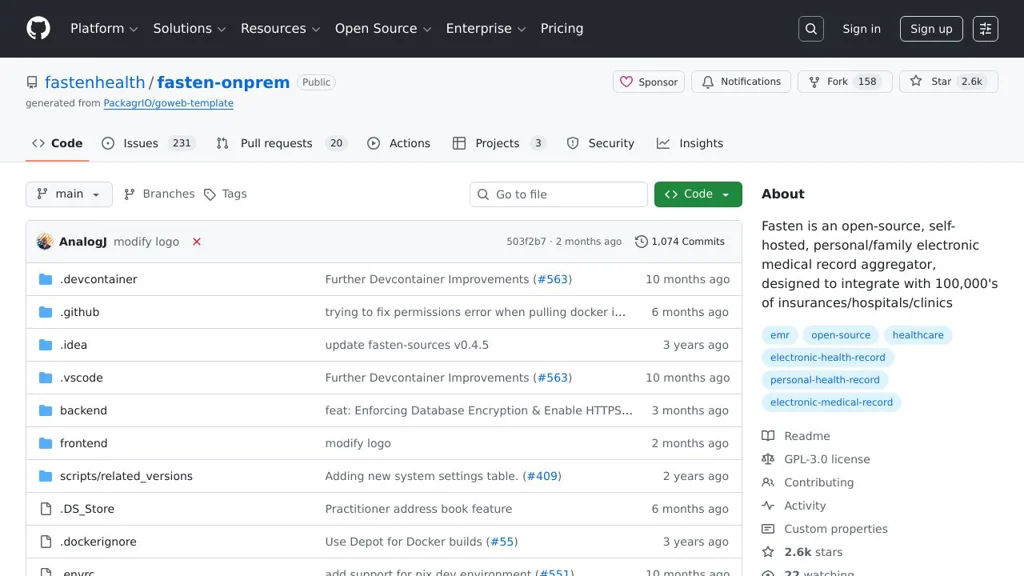
Fasten Health screenshot

Fasten Health is a personal health record (PHR) you run yourself to aggregate and view your medical data in one place. It connects to supported provider portals/APIs (FHIR) to import clinical records and presents them in a unified, searchable timeline.

Key Features

  • Connects to healthcare systems using FHIR to import patient records
  • Consolidates data from multiple providers into a single patient-centric view
  • Browsable medical timeline (encounters, conditions, medications, immunizations, labs, etc., depending on source)
  • Local database for storing normalized health resources for faster browsing
  • Web UI for exploring and filtering your medical history
  • Containerized “on-prem” deployment workflow (Docker-based)

Use Cases

  • Maintain a unified record when you visit multiple clinics/hospitals
  • Track medications, immunizations, and lab results over time
  • Export/consult your history when changing providers or preparing for appointments

Limitations and Considerations

  • Data availability and completeness depends on each provider’s FHIR implementation and what they expose
  • Initial setup requires provider connectivity and may vary by supported institutions

Fasten Health is suited for individuals who want a consolidated view of their health records without relying on a third-party PHR vendor. Its core value is pulling FHIR-based records into a single local interface for longitudinal browsing across providers.

2.6kstars
158forks

Why choose an open source alternative?

  • Data ownership: Keep your data on your own servers
  • No vendor lock-in: Freedom to switch or modify at any time
  • Cost savings: Reduce or eliminate subscription fees
  • Transparency: Audit the code and know exactly what's running