
Optimizely

Best Self Hosted Alternatives to Optimizely

A curated collection of the 2 best self hosted alternatives to Optimizely.

Optimizely is a digital experience platform offering A/B testing, multivariate experimentation, feature flagging, personalization, and analytics to optimize websites, apps, and digital products for increased conversions and improved user experiences.

Alternatives List

#1
PostHog

PostHog

Self-hostable product analytics platform with event capture, funnels, session replay, feature flags, A/B testing, and data pipelines.
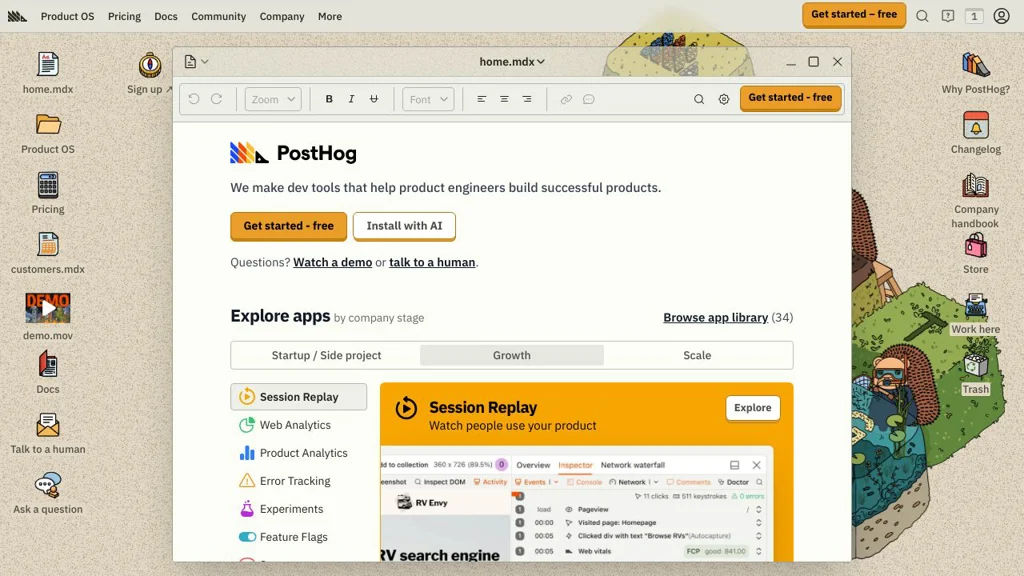
PostHog screenshot

PostHog is a self-hostable product analytics platform for capturing product usage events and turning them into insights and experiments. It combines behavioral analytics, user experience tooling, and rollout controls so teams can measure, debug, and improve products in one place.

Key Features

  • Event capture via web/mobile SDKs and server-side APIs, with schema-free events and properties
  • Product analytics: trends/insights, funnels, retention, cohorts, paths, and user/person profiles
  • Session Replay to diagnose UX issues with event timelines and playback
  • Feature Flags for controlled rollouts, targeting, and multivariate releases
  • A/B testing/experimentation with metrics and analysis tied to captured events
  • Dashboards and saved insights for sharing across teams
  • Data warehouse/export options (e.g., external destinations) and integrations for ingestion and activation
  • Privacy controls (e.g., data minimization and masking options) and team access management

Use Cases

  • Analyze activation and conversion funnels and improve onboarding
  • Debug user-reported issues by correlating events with session replays
  • Safely roll out and test new features using feature flags and experiments

PostHog is well-suited for teams that want a unified, developer-friendly analytics stack that can run on their own infrastructure while supporting common product growth and reliability workflows.

30.7kstars
2.2kforks

#2
Matomo

Matomo

Self-hosted web analytics platform with dashboards, event tracking, and privacy controls, offering an alternative to Google Analytics for websites and apps.

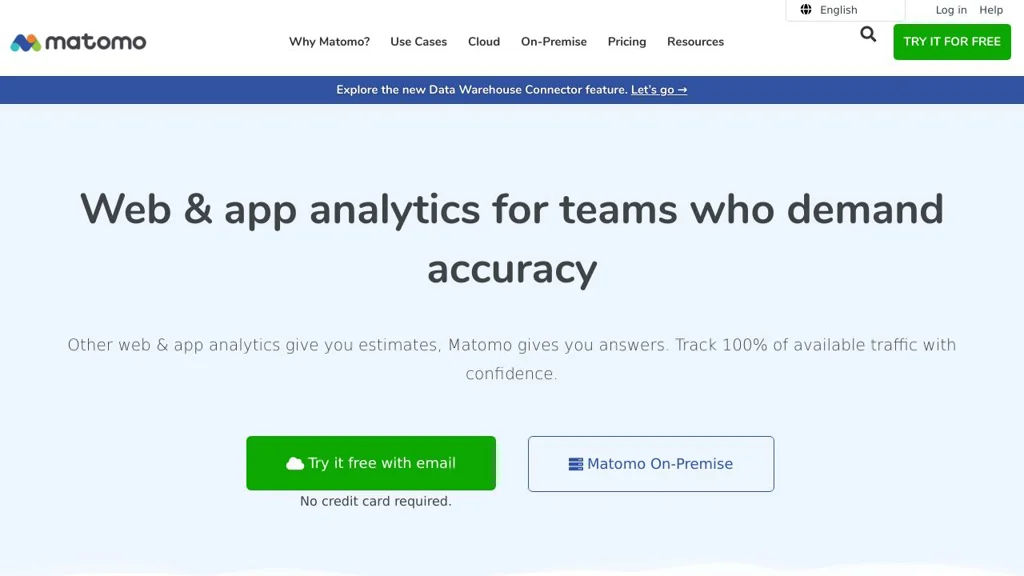
Matomo screenshot

Matomo is a web analytics platform that helps you measure website and app traffic, user behavior, and conversions while keeping full ownership of your analytics data. It provides a full reporting UI, customizable dashboards, and advanced tracking features commonly used in product and marketing analytics.

Key Features:

  • JavaScript tracking and server-side tracking via HTTP APIs for pageviews, events, goals, and ecommerce
  • Custom dashboards and a broad set of built-in reports (traffic sources, pages, campaigns, devices, locations)
  • Goals and conversion tracking, including funnels and ecommerce analytics
  • Tag Manager to deploy and manage marketing/analytics tags without editing site code
  • Heatmaps and session recording (available as Matomo features/add-ons in the ecosystem)
  • Privacy tooling such as IP anonymization, consent management support, and Do Not Track handling
  • Extensible plugin architecture for adding reports, widgets, and integrations

Use Cases:

  • Replace Google Analytics for privacy-conscious website measurement and compliance needs
  • Track marketing campaigns and conversions (UTM campaigns, goals, funnels, ecommerce)
  • Provide internal stakeholders with role-based access to analytics dashboards and exports

Limitations and Considerations:

  • Some advanced capabilities (e.g., heatmaps/session recording) may require additional Matomo components/add-ons and increase storage/compute needs

Matomo fits teams that want a mature analytics suite with strong privacy controls, flexible tracking options, and extensibility through plugins. It is widely used for both content sites and conversion-driven properties where data ownership and configurability matter.

21.2kstars
2.8kforks

Why choose an open source alternative?

  • Data ownership: Keep your data on your own servers
  • No vendor lock-in: Freedom to switch or modify at any time
  • Cost savings: Reduce or eliminate subscription fees
  • Transparency: Audit the code and know exactly what's running