
Pushbullet

Best Self Hosted Alternatives to Pushbullet

A curated collection of the 3 best self hosted alternatives to Pushbullet.

Pushbullet connects your phone, tablet and computer to send and receive notifications, SMS, files, links and clipboard content across devices. It provides notification mirroring, file/link sharing and quick replies to streamline workflows.

Alternatives List

#1
ntfy

ntfy

Self-hostable publish/subscribe notification service with HTTP API, web UI, and mobile apps for push alerts from scripts, CI, monitoring, and automations.
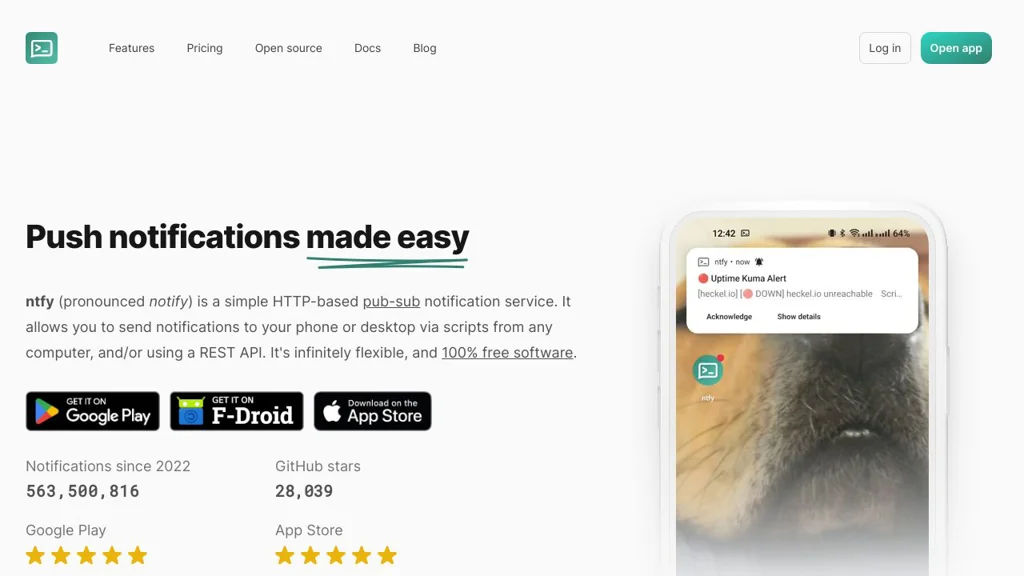
ntfy screenshot

ntfy is a lightweight publish/subscribe notification service that lets you send messages to topics via simple HTTP calls and receive them on phones, desktops, or the web. It is designed for automation-friendly alerts from scripts and systems, with optional authentication and multiple delivery integrations.

Key Features

  • Publish/subscribe topics with simple HTTP API (POST/PUT) and topic URLs
  • Web app and dedicated mobile apps for receiving notifications
  • Push notifications to Android (FCM) and iOS (APNs) when configured
  • Multiple subscription methods: web UI, mobile, and programmatic streaming (e.g., SSE/WebSockets)
  • Authentication and access control options (including users/roles and topic permissions)
  • Message options such as titles, priorities, tags, click actions, attachments, and icons (client-dependent)
  • Integrations for delivering outbound notifications (e.g., email, chat/webhooks) and acting as a relay/gateway
  • Docker-friendly deployment and configuration with support for reverse proxies and TLS

Use Cases

  • Monitoring/observability alerts (uptime checks, Prometheus Alertmanager-style notifications)
  • CI/CD and cron job outcomes (build failures, backup completion)
  • Smart home and automation events (doorbell/motion, device state changes)

Limitations and Considerations

  • Some advanced push capabilities (especially iOS/Android background delivery) depend on configuring platform push services (APNs/FCM) and may vary by client/device policies.

ntfy provides a practical “curl-to-phone” workflow while still supporting richer notification features and access controls for team or multi-service use. It fits well as a general-purpose notification backbone for homelabs and production automation where you want a simple, standards-based API and multiple client options.

28.1kstars
1.1kforks
#2
Apprise

Apprise

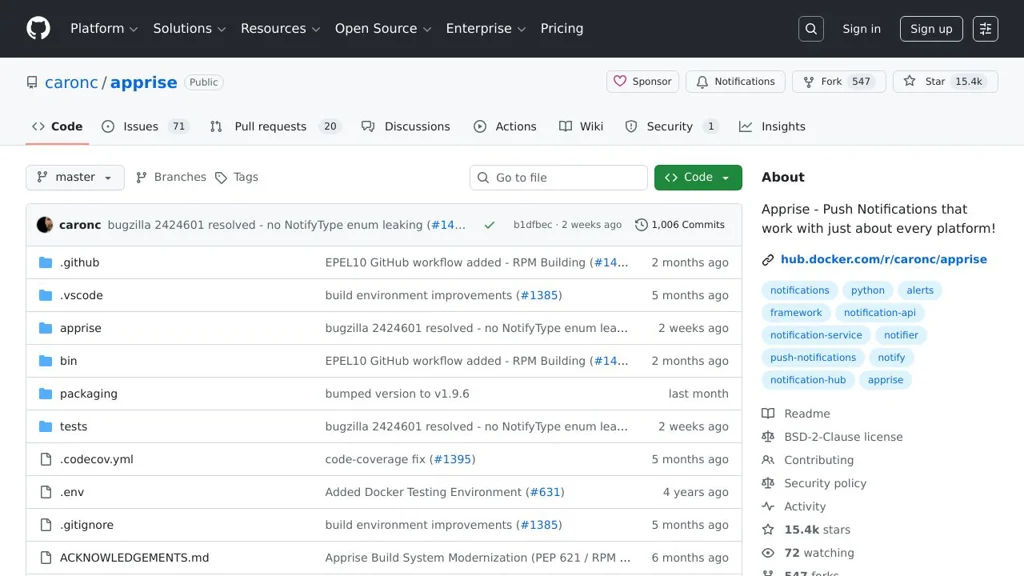
A notification gateway that routes alerts to 60+ services via CLI, Python API, and webhooks, with a unified URL syntax for configuration.

Apprise screenshot

Apprise is a notification library and CLI that lets applications send messages to many popular notification services using a single, consistent configuration format. It acts as a “notification gateway” you can embed in Python apps, scripts, monitoring tools, and automation workflows.

Key Features

  • Large notification provider catalog (email, chat, push, SMS, incident/alerting tools, and more) with a unified configuration URL syntax
  • Multiple interfaces: Python library/API, command-line tool, and plugin-style integrations
  • Notification URL parsing/validation and service discovery to simplify configuration management
  • Attachments support for providers that allow it (files/URLs) and rich message formatting where supported
  • Tag-based targeting and grouping to route messages to specific destinations
  • Config file support for managing multiple notification endpoints and reuse across scripts

Use Cases

  • Send monitoring and uptime alerts from scripts or tools to Slack/Discord/Email/SMS
  • Add a single notification layer to automation jobs (backups, CI tasks, cron jobs)
  • Centralize alert routing for self-hosted services by mapping events to multiple destinations

Limitations and Considerations

  • Provider capabilities vary (formatting, attachments, priority) and depend on each service’s API constraints
  • Some integrations require third-party credentials/tokens and may break when upstream APIs change

Apprise is well-suited when you want one notification implementation that can be retargeted to many services without rewriting integrations. Its URL-based configuration and broad provider support make it practical for both small scripts and larger systems needing consistent alert delivery.

15.4kstars
548forks
#3
Gotify

Gotify

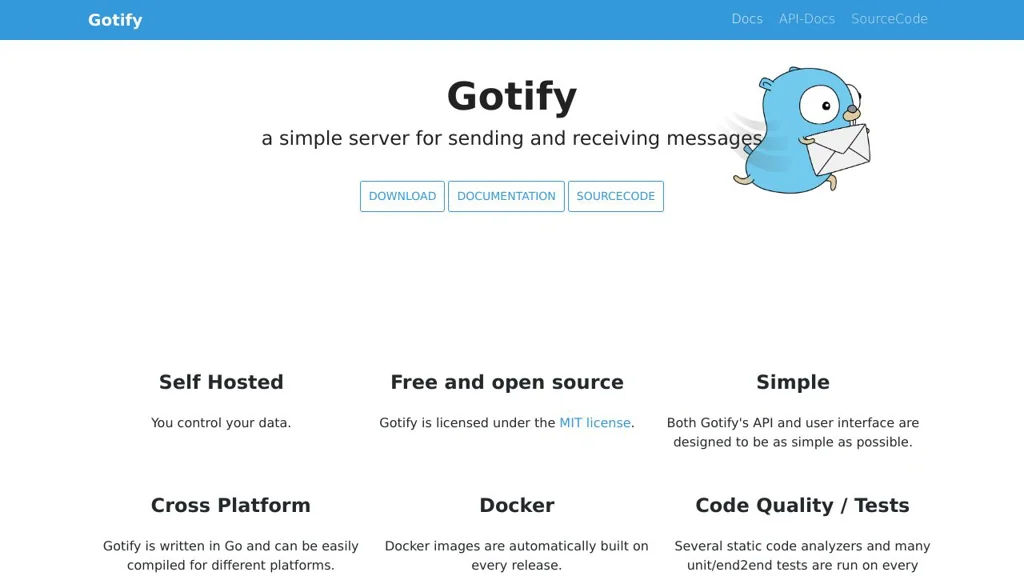
Gotify is a self-hosted push notification server with a web UI, Android client, and REST API for sending messages from scripts, services, and monitoring tools.

Gotify screenshot

Gotify is a lightweight push-notification server you run yourself, designed for reliably delivering messages from applications, scripts, and infrastructure tools to end-user devices. It provides a web interface for managing users and “applications” (senders), plus client apps that receive notifications.

Key Features

  • REST API to send messages to specific applications/users using tokens
  • Web UI for managing users, clients, and applications (message sources)
  • Android client for instant push notifications (with optional notification channels)
  • Web client for viewing messages and receiving live updates
  • Priority support for messages (client-side handling/visibility)
  • Plugins system (server-side) to extend functionality
  • Docker images and straightforward deployment options

Use Cases

  • Send alerts from monitoring/uptime tools and homelab services
  • Push notifications from scripts/CI jobs (backup finished, deploy done)
  • Replace third-party push services for internal apps and teams

Limitations and Considerations

  • iOS support is not first-party (primarily Android + web clients)
  • Delivery to phones depends on the platform/client capabilities (e.g., Android background restrictions)

Gotify is well-suited for self-managed notification delivery with simple primitives (apps, tokens, messages) and minimal operational overhead. It’s commonly used as a Pushover/Pushbullet-style endpoint for homelab and DevOps notifications.

14.4kstars
800forks

Why choose an open source alternative?

  • Data ownership: Keep your data on your own servers
  • No vendor lock-in: Freedom to switch or modify at any time
  • Cost savings: Reduce or eliminate subscription fees
  • Transparency: Audit the code and know exactly what's running