
#1
Zammad
Self-hosted helpdesk for email and multichannel ticketing with SLA, automation, knowledge base, and integrations for support teams.
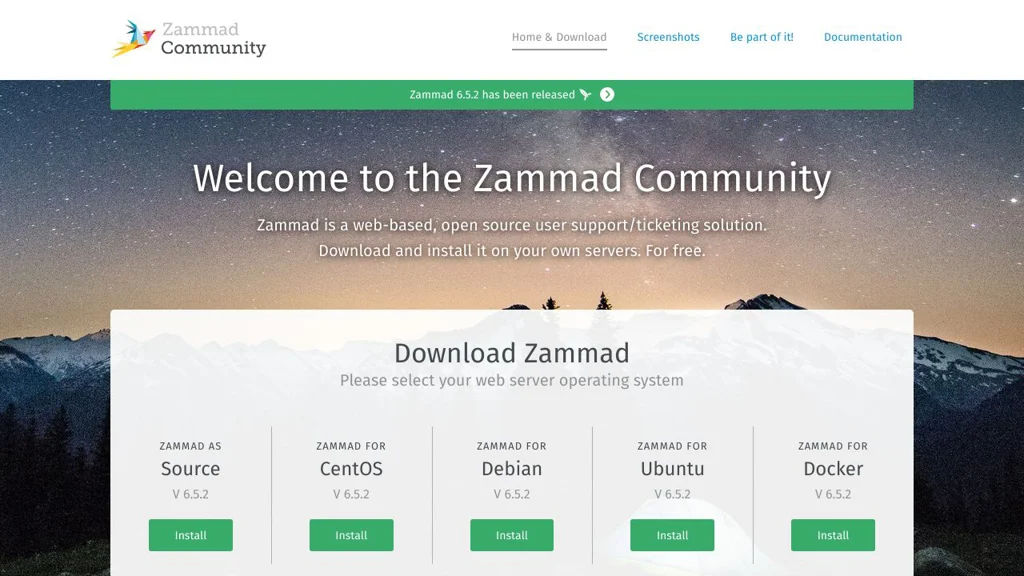
Zammad is an open-source helpdesk and customer support platform for managing customer inquiries as tickets across email and other channels. It combines ticketing, automation, knowledge management, and reporting in a web-based interface designed for support desks of many sizes.
Key Features
- Multichannel ticket creation and handling (email plus additional channels via integrations)
- Flexible ticket workflows with groups/roles, assignments, tags, priorities, and states
- SLA management with escalation handling and time tracking
- Automation and macros (triggers/schedulers) to route and act on tickets automatically
- Integrated knowledge base and text modules for consistent replies
- Full-text search and fast filtering for ticket discovery
- Customer and organization management with history/context on interactions
- Integrations and APIs for connecting external systems (REST API, webhooks, and apps)
Use Cases
- Customer support desk for SaaS/IT services managing inbound email and requests
- Internal IT/helpdesk handling incidents, service requests, and SLA-based queues
- Support operations needing automation rules, canned responses, and knowledge articles
Zammad is a strong choice when you need a modern, extensible ticketing system with automation, SLAs, and a built-in knowledge base. It is widely used as a self-managed alternative to commercial helpdesk platforms and integrates well into existing infrastructure via APIs and connectors.
5.3kstars
919forks