

Sanity

Best Self Hosted Alternatives to Sanity

A curated collection of the 2 best self hosted alternatives to Sanity.

Sanity is a headless CMS and content platform that provides a customizable content studio, structured content datastore, real-time collaboration, APIs and CDN-backed delivery to manage and deliver content to websites and apps.

Alternatives List

#1
Payload

Payload

Open-source TypeScript headless CMS with a React admin UI, powerful access control, media handling, and first-class Next.js integration for modern content-driven apps.
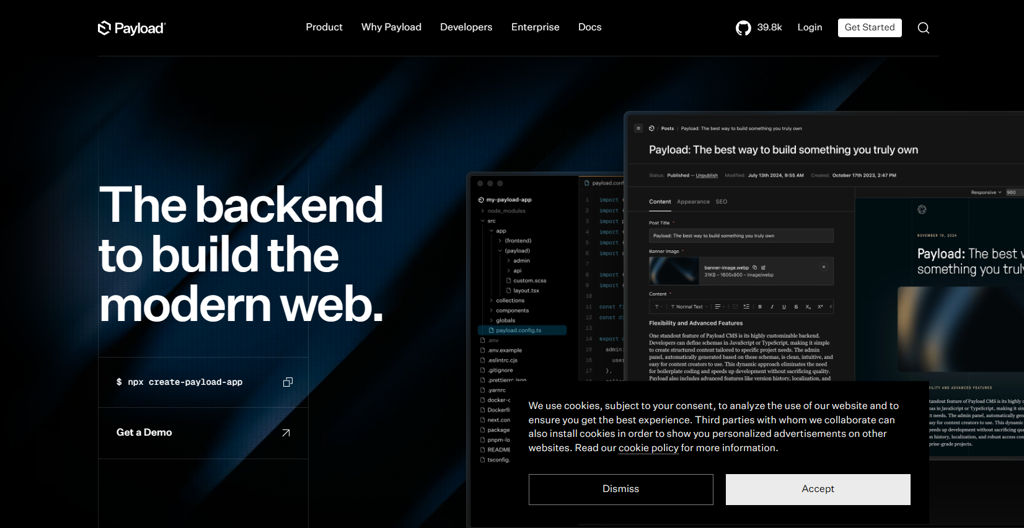
Payload screenshot

Payload is a TypeScript-first headless CMS and application framework built on Node.js, designed to power content-driven websites and products with a fully customizable admin UI and developer-friendly APIs. It models your data as code, generates REST/GraphQL endpoints, and supports rich content editing, media, and granular access control.

Key Features

  • TypeScript-first configuration with schema-driven Collections/Globals
  • Auto-generated REST and GraphQL APIs from your content models
  • React-based Admin UI with extensible fields, custom views, and role-aware controls
  • Authentication and authorization with granular, field-level access control
  • Drafts, versions, autosave, and scheduled publishing (via jobs/workflows depending on setup)
  • Media management with upload storage adapters and image processing integrations
  • Relationship fields, localization (i18n), and rich content editing blocks
  • First-class Next.js integration for live preview and modern app routing patterns

Use Cases

  • Headless CMS for marketing sites, documentation, and multi-page web properties
  • Content backend for Next.js applications (blogs, ecommerce content, directories)
  • Internal tools/content operations portal with custom admin workflows

Limitations and Considerations

  • Requires Node.js/TypeScript proficiency; configuration is code-centric rather than purely UI-driven
  • Some advanced workflows (e.g., background jobs, complex publishing flows) may require additional setup/plugins

Payload is well-suited for teams that want strong typing, code-defined content models, and a customizable admin experience. It provides both API-first delivery and tight integration with modern React/Next.js stacks, making it a practical foundation for bespoke content platforms and products.

39.8kstars
3.3kforks
#2
WordPress

WordPress

WordPress is a PHP/MySQL CMS for building and managing websites, blogs, and content-rich applications with themes, plugins, and a built-in editor.

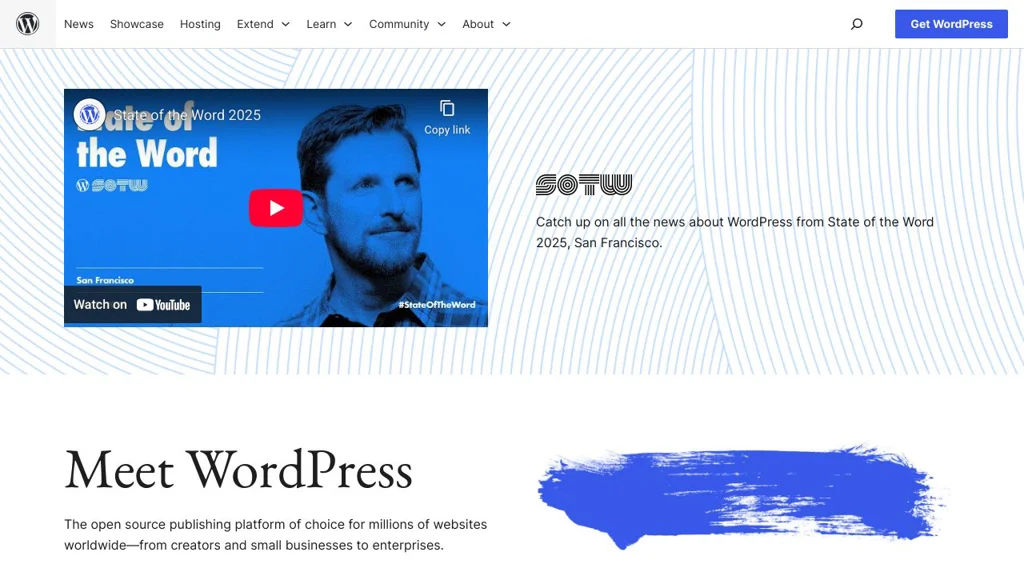
WordPress screenshot

WordPress is an open-source content management system (CMS) for creating and managing websites, blogs, and other content-driven experiences. It provides an admin interface, a block-based editor, and an extensible architecture built around themes and plugins.

Key Features

  • Block editor (Gutenberg) for composing pages and posts with reusable content blocks
  • Theme system for controlling site appearance, including custom themes and template hierarchy
  • Plugin architecture enabling site functionality extensions (SEO, forms, e-commerce, caching, etc.)
  • Media library for managing images and other uploads, with built-in image handling
  • User roles and capabilities for multi-user publishing workflows
  • Built-in comments system with moderation tools
  • Permalinks and URL routing for human-readable URLs
  • REST API for integrating WordPress content with external services and headless/front-end apps
  • Multisite mode to run multiple sites from a single installation (optional)

Use Cases

  • Company websites, marketing sites, and landing pages managed by non-technical editors
  • Blogging and online publishing with editorial workflows and scheduled posts
  • Headless CMS back end powering a separate front-end (e.g., SPA/static site)

Limitations and Considerations

  • Security and performance depend heavily on theme/plugin choices and update hygiene
  • Complex sites can accumulate plugin dependencies that increase maintenance overhead

WordPress is widely used for both simple sites and complex publishing platforms due to its mature ecosystem and extensibility. With careful theme/plugin selection and regular updates, it can serve as a flexible foundation for many web publishing needs.

20.8kstars
12.9kforks

Why choose an open source alternative?

  • Data ownership: Keep your data on your own servers
  • No vendor lock-in: Freedom to switch or modify at any time
  • Cost savings: Reduce or eliminate subscription fees
  • Transparency: Audit the code and know exactly what's running