#1
LubeLogger
Track vehicle maintenance, fuel, and costs with service reminders, reports, and multi-vehicle support in a self-hosted web app.
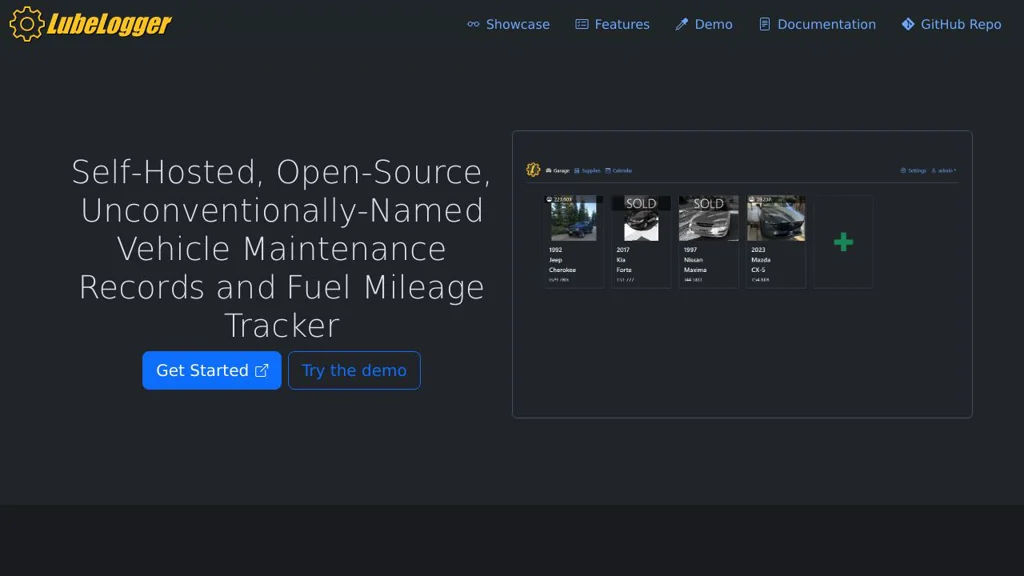
LubeLogger is a web-based logbook for tracking vehicle ownership data such as maintenance, repairs, fuel-ups, and costs across one or more vehicles. It’s designed for individuals or small fleets that want a searchable service history, scheduled reminders, and summaries without relying on a proprietary cloud account.
Key Features
- Multi-vehicle garage with per-vehicle service history and cost tracking
- Log maintenance/repairs with dates, mileage/odometer, parts, notes, and attachments (e.g., receipts)
- Fuel tracking (fuel-ups) with mileage and cost to calculate consumption and trends
- Service schedules and reminders based on time and/or mileage intervals
- Dashboards and reporting for spend, category breakdowns, and intervals
- Import/export options for backing up or migrating data
- User authentication and multi-user support for shared tracking
Use Cases
- Maintain a complete service record for personal cars, motorcycles, or equipment
- Track fuel economy and operating cost trends over time
- Manage preventive maintenance schedules for a small business or family fleet
LubeLogger is a straightforward choice if you want a practical, self-managed vehicle maintenance tracker with fuel and cost reporting, plus reminders to keep on top of service intervals. It fits well for users who value ownership history, expense visibility, and simple multi-vehicle organization.
2.2kstars
117forks