
Synology Surveillance Station

Best Self Hosted Alternatives to Synology Surveillance Station

A curated collection of the 3 best self hosted alternatives to Synology Surveillance Station.

Synology Surveillance Station is a video management system for Synology NAS that manages IP cameras for live view, recording, playback, motion detection, alerts and centralized storage for on‑premise surveillance.

Alternatives List

#1
Frigate

Frigate

Self-hosted NVR that uses real-time object detection (TensorRT/Coral/CPU) with camera restreaming, recording, snapshots, a web UI, and strong Home Assistant integration.
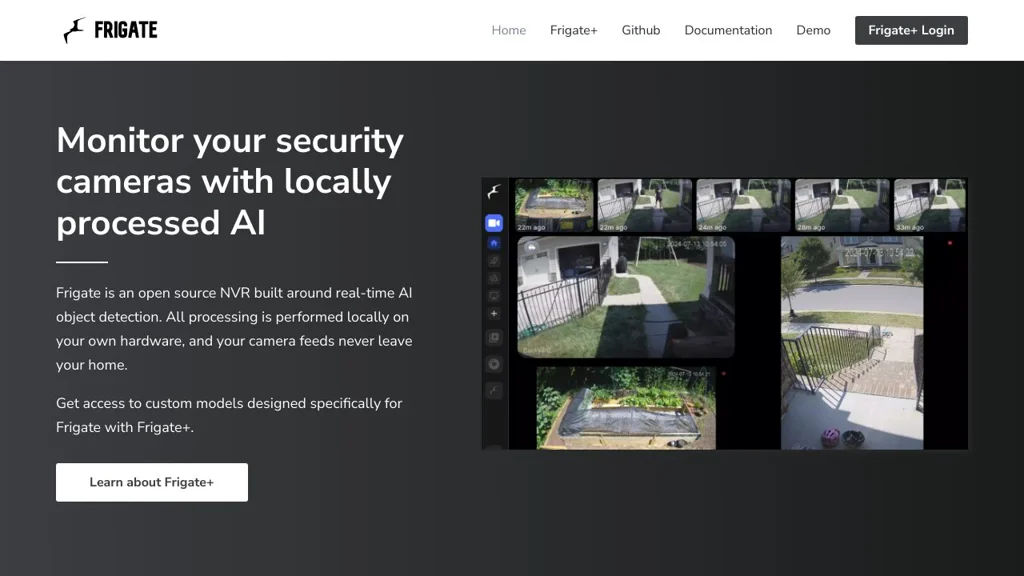
Frigate screenshot

Frigate is a self-hosted network video recorder (NVR) focused on real-time AI object detection for IP cameras. It combines efficient video processing with event-based recording and a web UI so you can review live views, detections, and recordings with minimal manual triage.

Key Features

  • Real-time object detection pipeline designed for low-latency and low CPU usage
  • Hardware acceleration support, including Google Coral (Edge TPU) and NVIDIA TensorRT (where available)
  • Uses FFmpeg for camera ingest and decoding with configurable roles (detect/record/audio)
  • Restreaming and multi-camera management with configurable streams and recording retention
  • Motion-based and object-based event handling with snapshots and clip recording
  • Web UI for live views, event timeline, clips, snapshots, and per-camera configuration visibility
  • MQTT integration for publishing events and states (commonly used with Home Assistant)
  • Config-driven setup (YAML) with per-camera zones, masks, and object filters

Use Cases

  • Smart home security NVR with person/vehicle detection and automated alerts via MQTT/Home Assistant
  • Reduce false alarms by filtering motion events through object detection and zones
  • Local recording and review for multiple RTSP cameras with efficient retention policies

Limitations and Considerations

  • Initial setup requires careful stream selection and FFmpeg tuning per camera model/codec
  • Best performance typically depends on supported accelerators (e.g., Coral/TensorRT) and compatible hardware

Frigate is a strong choice for users who want an NVR that prioritizes fast, accurate detections and automation-friendly event output. Its architecture is optimized for continuous camera workloads while keeping review and alerting centered on meaningful objects rather than raw motion.

28.7kstars
2.7kforks

#2
ZoneMinder

ZoneMinder

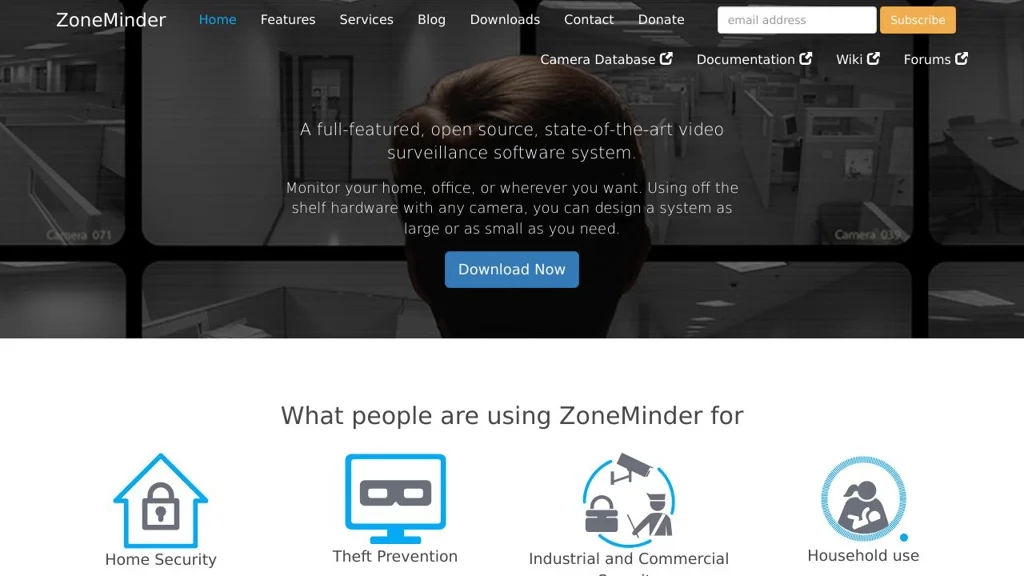
ZoneMinder is a Linux-based video surveillance/NVR platform for IP and analog cameras with motion detection, recording, events, and a web interface.

ZoneMinder screenshot

ZoneMinder is a free, open-source video surveillance and network video recorder (NVR) application for Linux. It manages video streams from IP, analog, and USB cameras, providing live viewing, motion detection, event recording, and centralized monitoring through a browser-based interface.

Key Features

  • Supports multiple camera sources (IP/RTSP, analog capture devices, USB webcams) with per-camera “Monitor” configurations
  • Motion detection and event-based recording with configurable zones, sensitivity, and alarm triggers
  • Multiple recording modes (continuous, motion/event, pre/post event buffering) and event archiving
  • Web UI for live multi-camera viewing, event review, and system administration
  • User authentication and role-based permissions for multi-user deployments
  • PTZ support (via compatible camera/control integrations) and camera control from the UI
  • Event notifications and integrations via filters/scripts (commonly used with email, MQTT, or automation tools)
  • Mobile access via the web UI and third-party mobile clients commonly used in the community

Use Cases

  • Home or small-business CCTV/NVR for mixed camera fleets (older analog plus newer IP cameras)
  • Recording and reviewing motion-triggered events (driveways, entrances, storage areas)
  • Multi-camera monitoring wall for labs, workshops, or server rooms

Limitations and Considerations

  • Primarily targets Linux; performance and stability depend heavily on storage/CPU and camera encoding settings
  • Setup can be more involved than turnkey appliances, especially for hardware capture devices and tuning motion detection

ZoneMinder is a mature, widely-deployed NVR stack with a long community history and broad device compatibility. It is best suited for users who want a flexible, configurable surveillance system and are comfortable tuning camera and recording settings for their environment.

5.7kstars
1.3kforks
#3
Viseron

Viseron

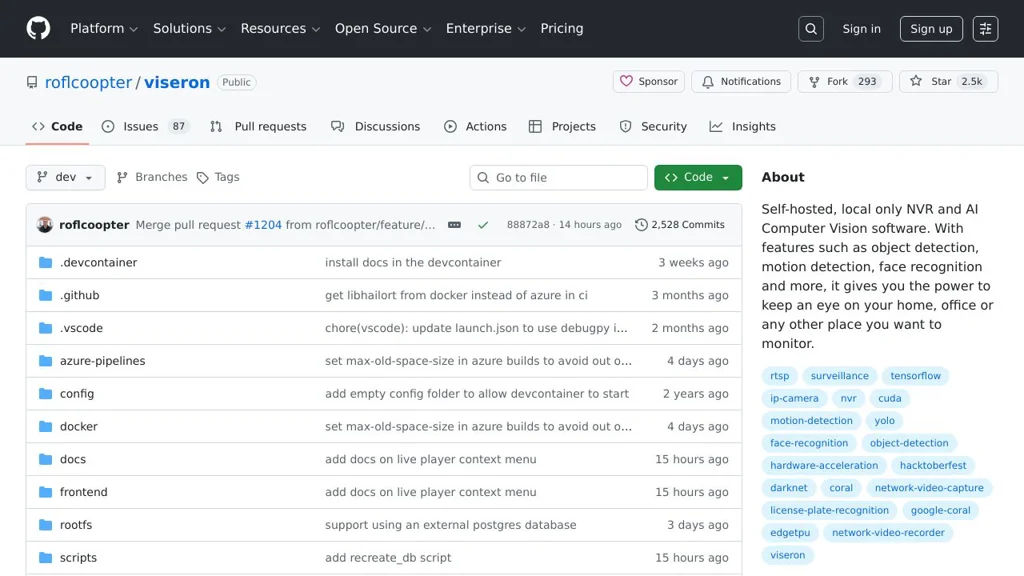
Self-hosted network video recorder (NVR) that runs local object detection and motion detection on camera streams, with a web UI, recordings, and event timelines.

Viseron screenshot

Viseron is a self-hosted network video recorder (NVR) focused on local video processing and computer-vision-based events. It ingests IP camera streams, detects motion and objects, and organizes recordings and snapshots in a web interface with searchable event history.

Key Features

  • NVR pipeline for IP cameras (ingestion, recording, snapshots, event history)
  • Motion detection and object detection to generate events and reduce irrelevant recordings
  • Web UI for live view, timelines/events, and reviewing recordings
  • Config-driven setup (YAML) designed for reproducible deployments
  • Runs common video processing components locally (e.g., FFmpeg-based pipeline)

Use Cases

  • Home CCTV/NVR for RTSP/IP cameras with event-based recording
  • Local, privacy-oriented person/vehicle detection alerts and review workflow
  • Lightweight “smart security” setup that keeps video processing on your own hardware

Limitations and Considerations

  • Hardware requirements can increase significantly when enabling object detection on multiple high-resolution streams
  • Compatibility and features depend on camera stream formats and the chosen pipeline settings

Viseron is a strong fit when you want a modern, event-driven NVR experience and prefer on-prem object detection over cloud-based camera ecosystems. It’s particularly useful for multi-camera setups where motion/object events and an integrated review UI matter more than vendor-specific features.

2.5kstars
293forks

Why choose an open source alternative?

  • Data ownership: Keep your data on your own servers
  • No vendor lock-in: Freedom to switch or modify at any time
  • Cost savings: Reduce or eliminate subscription fees
  • Transparency: Audit the code and know exactly what's running