
Tally

Best Self Hosted Alternatives to Tally

A curated collection of the 6 best self hosted alternatives to Tally.

Tally is a no-code online form and survey builder for creating forms, quizzes and payment-enabled surveys. It provides customizable templates, conditional logic, integrations and embeddable forms to collect responses and payments.

Alternatives List

#1
Formbricks

Formbricks

Self-hosted surveys and feedback forms for web apps with targeting, links, webhooks, and analytics to collect product and customer insights.
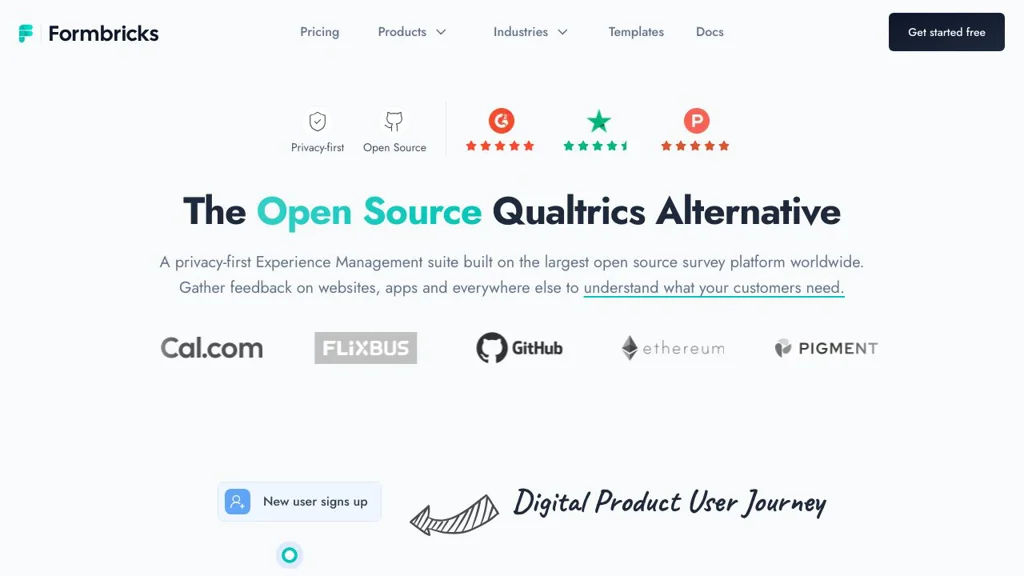
Formbricks screenshot

Formbricks is a self-hostable survey and product-feedback platform focused on collecting user insights inside your product or via shareable links. It provides form creation, targeting, and integrations so teams can run NPS, onboarding, and feature feedback loops while keeping control of their data.

Key Features

  • In-app (website) surveys via embeddable SDK/widget and link-based surveys
  • Survey editor with common question types and logic for product feedback workflows
  • Targeting and timing controls to show surveys to specific users/segments
  • NPS/CSAT-style feedback collection and basic results analytics
  • Team/workspace features for collaborating on surveys and responses
  • Webhooks and API/integrations for sending responses to other systems
  • GDPR/privacy-oriented deployment options (self-hosting, EU/own infrastructure)

Use Cases

  • Run in-product NPS/CSAT to measure satisfaction over time
  • Collect onboarding feedback and identify friction points in a SaaS app
  • Validate feature ideas with targeted micro-surveys to specific user groups

Limitations and Considerations

  • Advanced analytics/reporting and experimentation features may be less extensive than mature enterprise survey suites.

Formbricks is well-suited for product teams that want a lightweight, developer-friendly survey tool that can be embedded directly into their apps. It prioritizes ownership and integration flexibility for continuous user feedback collection.

11.7kstars
2.1kforks

#2
Typebot

Typebot

Open-source builder for conversational forms and chatbots with logic, integrations, and embeddable widgets for lead capture, support, and onboarding.

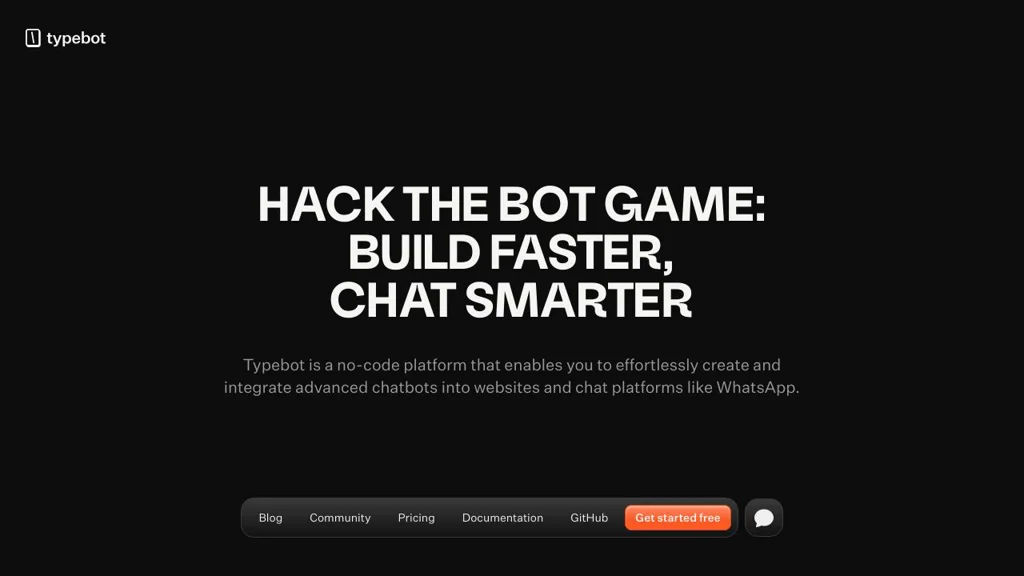
Typebot screenshot

Typebot is an open-source platform to create conversational forms (chatbot-like flows) that can be embedded on websites or shared via link. It focuses on a visual builder for designing multi-step conversations, collecting structured data, and integrating with external tools via webhooks and APIs.

Key Features

  • Visual flow builder with blocks/steps to design conversational forms
  • Conditional logic and branching to personalize paths based on answers
  • Multiple input types for data collection (e.g., text, choices, etc.)
  • Embeddable web widget and shareable public links for distribution
  • Integrations via webhooks/API calls to send collected data to other systems
  • Result storage and conversation analytics/exports for submissions
  • Workspaces/organizations and team collaboration features (project dependent)

Use Cases

  • Lead qualification and contact capture on marketing sites
  • Product onboarding questionnaires and guided signup flows
  • Customer support triage forms that route requests based on answers

Limitations and Considerations

  • Advanced enterprise features (e.g., extensive RBAC/audit controls) may require additional setup or may be limited depending on deployment and edition

Typebot is a strong fit when you want a conversational UX instead of classic forms, while keeping control of hosting and data. Its builder-centric workflow and embed options make it practical for marketing, onboarding, and support automation flows.

9.5kstars
2.9kforks
#3
HeyForm

HeyForm

Self-hostable, Typeform-style form builder with logic, themes, integrations, and embeddable forms for surveys, feedback, and lead capture.

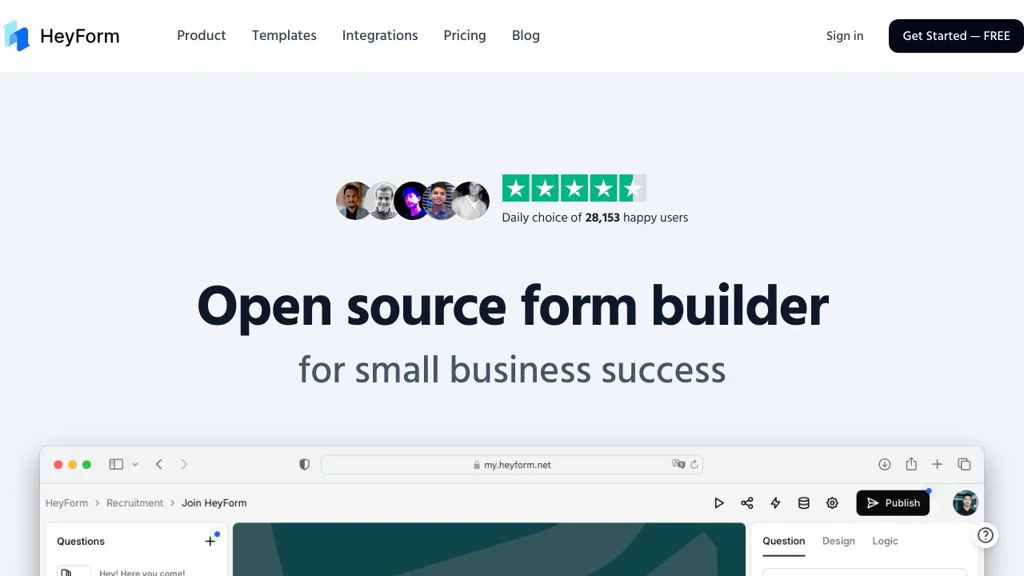
HeyForm screenshot

HeyForm is an open-source, self-hostable online form builder for creating surveys, questionnaires, and data-collection forms with a modern, Typeform-like experience. It provides a web UI to design forms, publish them via share links or embeds, and manage responses.

Key Features

  • Drag-and-drop form builder with multiple question types
  • Conditional logic to show/hide questions based on answers
  • Custom themes and branding options for published forms
  • Shareable form links and embeddable forms for websites
  • Response management and basic analytics/insights in the dashboard
  • Team/workspace-style collaboration and access control (project dependent)
  • Webhook/integration capabilities for automations (where configured)
  • Multi-language/UI localization support (project dependent)

Use Cases

  • Customer feedback and NPS-style surveys embedded on product pages
  • Lead capture forms for marketing sites with webhook-based routing
  • Internal request/intake forms (IT, HR, operations) with structured responses

Limitations and Considerations

  • Advanced enterprise features (e.g., deep BI reporting, complex permission models, or broad native integrations) may require custom integration work depending on your deployment and version.

HeyForm fits teams that want ownership of form data and a customizable form experience without relying on hosted SaaS platforms. It is particularly useful when you need embeddable forms and basic logic while keeping infrastructure under your control.

8.5kstars
656forks
#4
LimeSurvey

LimeSurvey

Self-hosted survey software for building questionnaires with branching logic, multilingual support, quotas, and exportable results for research and feedback.

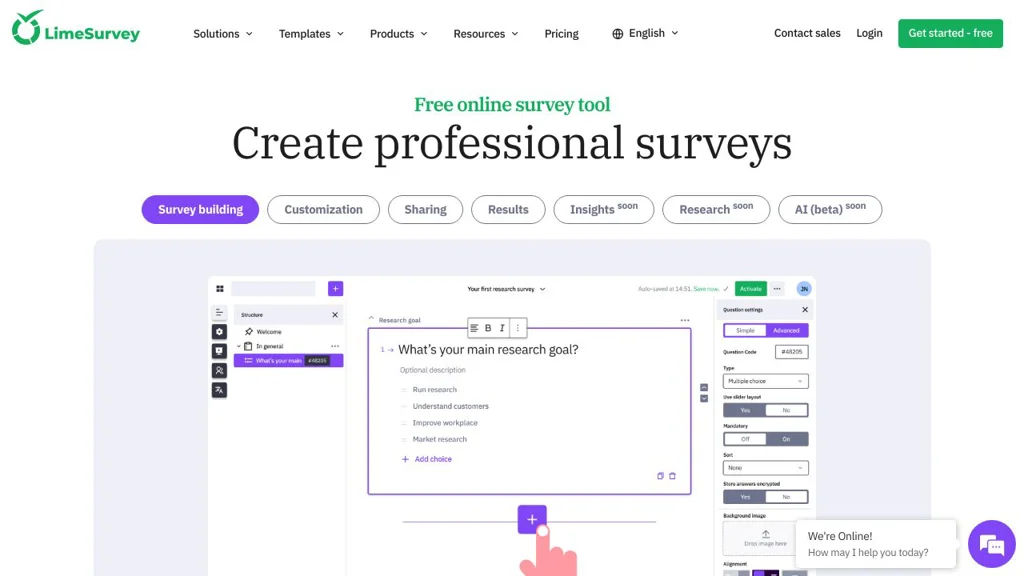
LimeSurvey screenshot

LimeSurvey is a web-based survey and questionnaire platform used to design, publish, and analyze online forms ranging from quick feedback polls to complex research instruments. It focuses on advanced survey logic, rich question types, and practical data handling for organizations that need full control over their survey infrastructure.

Key Features

  • Survey editor with templates and extensive question types (single/multiple choice, arrays, text, numerical, date/time, file upload, etc.)
  • Advanced logic: conditional branching/relevance, validation rules, and piping (using previous answers)
  • Participant management (token-based invitations), email invitations/reminders, and tracking of responses
  • Quotas and survey flow controls to manage sampling and completion criteria
  • Multi-language surveys with per-language translations
  • Multiple modes: anonymous surveys, open-access surveys, and restricted access via tokens
  • Export of responses and survey structure to common formats (e.g., CSV/Excel-compatible, SPSS, R/Stata-like exports depending on configuration)
  • Plugin system for extending functionality and integrations

Use Cases

  • Academic or market research surveys requiring branching, quotas, and clean exports
  • HR/employee engagement, training evaluations, and internal audits
  • Customer feedback and NPS-style programs with controlled invitations and reminders

Limitations and Considerations

  • Administration and theming can be complex for large deployments; advanced customization often requires familiarity with templates/plugins.
  • Some enterprise capabilities are offered via LimeSurvey’s paid offerings/hosted services; verify required features against the Community Edition.

LimeSurvey is well-suited for teams that need robust questionnaire logic and strong data export options rather than lightweight form builders. It is commonly used in research and organizational feedback scenarios where repeatable survey operations and participant tracking matter.

3.5kstars
1.1kforks
#5
OpnForm

OpnForm

OpnForm is a self-hostable open-source form builder for creating online forms with custom domains, integrations, file uploads, and response analytics.

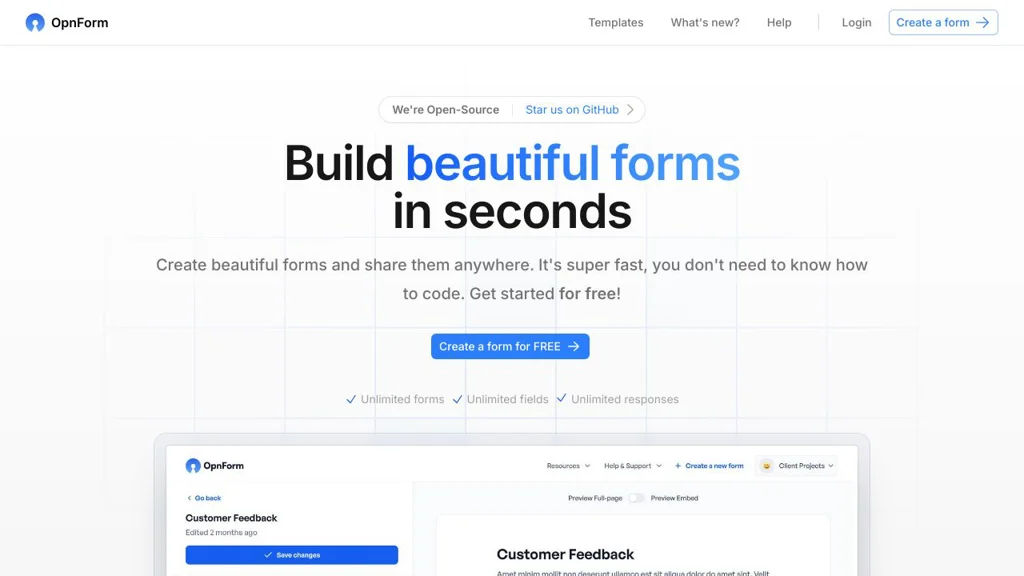
OpnForm screenshot

OpnForm is an open-source web application for building and sharing online forms, collecting submissions, and managing responses. It aims to provide a modern alternative to hosted form tools with a clean builder, theming, and integrations.

Key Features

  • Form builder with multiple field types and configurable form settings
  • Shareable form pages and embeddable forms for websites
  • Custom domains and branding options for published forms
  • Spam protection features (e.g., CAPTCHA/anti-bot options depending on setup)
  • File uploads on form submissions (storage depends on deployment configuration)
  • Submission management with export options (e.g., CSV) and basic analytics
  • Email notifications and webhook-based integrations for automations
  • Team/workspace features and access control (plan/edition dependent)

Use Cases

  • Collect leads and contact requests on a marketing or company website
  • Run surveys, registrations, and internal data collection workflows
  • Replace hosted form products while keeping data under your control

Limitations and Considerations

  • Some features and collaboration capabilities may differ by edition/plan and deployment configuration.
  • Advanced reporting and deep workflow automation may require external tools via webhooks/integrations.

OpnForm is a strong fit for individuals and teams that need a polished, customizable forms product with common integrations and ownership of form data. It provides core form-building and response-handling features while remaining extensible through webhooks and configuration.

3.1kstars
441forks
#6
Docassemble

Docassemble

Docassemble is a platform for building guided interviews that collect data, generate documents, and deliver web-based legal and administrative workflows.

Docassemble screenshot

Docassemble is an open-source platform for building web-based “guided interviews” that ask users questions, apply rules/logic, and produce documents and outputs. It is widely used for legal aid and court forms, but can support any data-collection workflow that benefits from branching logic and document assembly.

Key Features

  • Author interviews in YAML with Python code/hooks for complex logic and integrations
  • Powerful branching logic (conditional questions, loops, validations, computations)
  • Document generation using templates (e.g., DOCX) with automatic assembly from collected answers
  • Web UI for running interviews, reviewing answers, and downloading generated documents
  • Multi-user deployment with authentication options and role-based administration
  • Package system for distributing/reusing interviews and components
  • Background task processing for long-running jobs and integrations
  • Internationalization support for multilingual interviews

Use Cases

  • Court/self-help portals that guide users through forms and produce filings
  • Legal aid intake and triage with eligibility logic and document outputs
  • Any compliance or administrative workflow that requires structured Q&A and generated PDFs/DOCX

Limitations and Considerations

  • Building non-trivial interviews typically requires comfort with YAML plus Python and templating
  • Production deployments may require tuning multiple services (app, workers, database) for scale

Docassemble fits teams that need repeatable, logic-driven questionnaires and automated document assembly with full control over hosting and customization. Its interview/package model makes it practical to iterate on complex workflows and share reusable components across projects.

915stars
294forks

Why choose an open source alternative?

  • Data ownership: Keep your data on your own servers
  • No vendor lock-in: Freedom to switch or modify at any time
  • Cost savings: Reduce or eliminate subscription fees
  • Transparency: Audit the code and know exactly what's running