Twitch (for live streaming)

Best Self Hosted Alternatives to Twitch (for live streaming)

A curated collection of the 4 best self hosted alternatives to Twitch (for live streaming).

Twitch is a live-streaming platform that enables gamers, creators and communities to broadcast real-time video, interact via live chat, and monetize content through subscriptions, donations (Bits), and ads for audience engagement and discovery.

Alternatives List

#1
PeerTube

PeerTube

PeerTube is a self-hosted, federated video platform using ActivityPub and BitTorrent/WebTorrent to publish, stream, and share videos across interconnected instances.

PeerTube screenshot

PeerTube is a decentralized video hosting and streaming platform where anyone can run their own server (“instance”) and federate with others. It combines ActivityPub federation with peer-to-peer video delivery (WebTorrent) to reduce bandwidth costs and avoid a single central platform.

Key Features

  • ActivityPub federation: follow channels, interact and discover videos across instances
  • P2P-assisted delivery with WebTorrent (viewers can help seed while watching)
  • Full video publishing workflow: upload, transcode, manage channels, playlists, and metadata
  • Live streaming support (with HLS playback) for broadcasting events
  • Built-in moderation and safety tools: reporting, account/channel management, blocklists/allowlists
  • Embeddable player and sharing options for external websites
  • Plugin and theme system to extend functionality and customize UI
  • REST API for automation and integrations; supports third-party clients

Use Cases

  • Community- or organization-run “YouTube alternative” for publishing public video content
  • Educational institutions hosting lecture recordings and live streams under their own rules
  • Creators federating with like-minded instances while keeping control over policies and branding

Limitations and Considerations

  • Bandwidth and storage needs can be significant, especially without enough P2P participation
  • Federation features depend on other instances’ policies and uptime; discovery can vary by network

PeerTube fits teams and communities that want a modern video platform with federation, extensibility, and reduced centralized dependency. It is especially useful when governance, moderation rules, and hosting control need to remain in the hands of the publisher rather than a single global provider.

14.4kstars
1.7kforks

#2
Owncast

Owncast

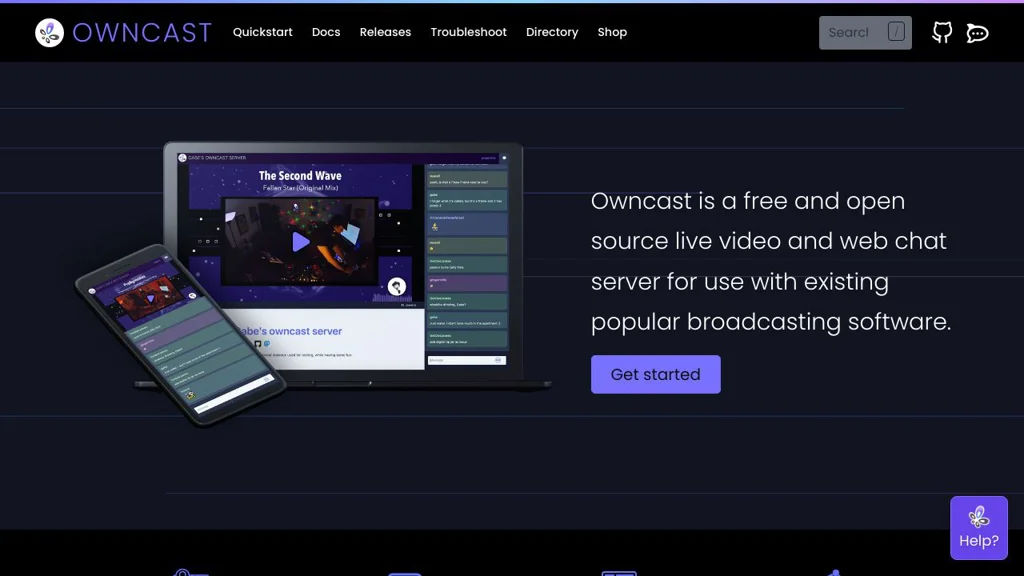
Owncast is a self-hosted live streaming server for broadcasting RTMP to a web player with built-in chat, moderation tools, embeddable stream pages, and theming.

Owncast screenshot

Owncast is a self-hosted live video and audio streaming server that lets you run your own “Twitch-like” site. It accepts an RTMP ingest from common streaming tools and publishes a web-based player with integrated chat and a customizable stream page.

Key Features

  • RTMP ingest for live broadcasts (works with OBS, Streamlabs, etc.)
  • Built-in web player and stream page you can host under your own domain
  • Integrated real-time chat with moderation tools (ban/timeout, message deletion, etc.)
  • Viewer authentication options and configurable chat/stream settings
  • Admin dashboard for configuring the instance, stream metadata, and appearance
  • Embeddable player/chat to integrate streams into other websites
  • Recording/archiving support and basic file/media handling for stream assets
  • Theming/customization for the viewer-facing page (branding, layouts)

Use Cases

  • Creators hosting independent live streams without relying on Twitch/YouTube
  • Organizations running internal live events (town halls, training sessions)
  • Communities streaming meetups or conferences with moderated chat

Limitations and Considerations

  • Feature set is intentionally lighter than large platforms (e.g., discovery, recommendations, and large-scale creator monetization are out of scope).

Owncast is a pragmatic option for running a private or public live stream with chat using familiar broadcast tooling and a simple web experience. It prioritizes ease of deployment and ownership of your streaming platform over platform-scale social features.

10.8kstars
1.2kforks
#3
Restreamer

Restreamer

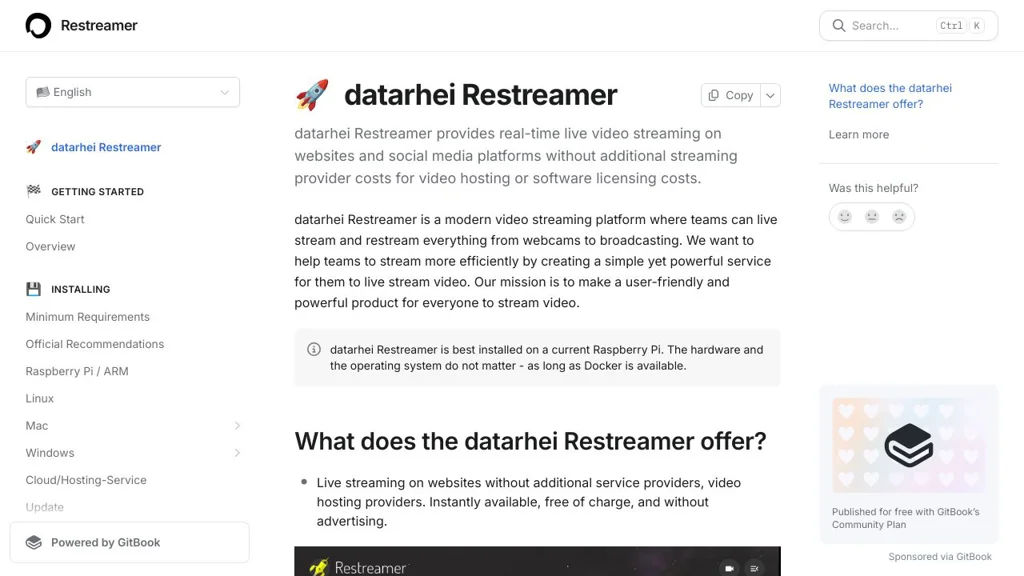
Restreamer is a web UI for ingesting live video (RTMP/SRT/HTTP), optionally transcoding with FFmpeg, and restreaming to platforms like YouTube, Twitch, or custom RTMP targets.

Restreamer screenshot

Restreamer (by datarhei) is a self-hosted live streaming relay that receives a live input stream, optionally transcodes it, and forwards it to one or more outputs. It focuses on making common streaming workflows easy through a browser-based UI while still exposing an API and Docker-first deployment.

Key Features

  • Ingest live streams via RTMP and other supported protocols (via the underlying streaming engine)
  • Restream/relay to multiple destinations (e.g., YouTube Live, Twitch, Facebook Live, custom RTMP endpoints)
  • Optional transcoding and re-encoding using FFmpeg (e.g., bitrate/codec changes)
  • Browser-based management UI for configuring inputs/outputs and monitoring status
  • Docker-based deployment with persistent configuration and simplified updates
  • HTTP API for automation and integration with external systems
  • Designed to run on modest servers and edge devices, depending on transcoding load

Use Cases

  • Mirror one live stream to multiple platforms simultaneously
  • Receive RTMP from OBS and forward it to a CDN/ingress point over a controlled network path
  • Centralize live stream routing/transcoding for events, churches, classrooms, or community broadcasters

Limitations and Considerations

  • Transcoding is CPU/GPU intensive; capacity depends heavily on FFmpeg settings and available hardware acceleration

Restreamer is a practical option when you need a controllable, web-managed live streaming “hub” that can ingest a stream once and distribute it to many destinations. It is especially useful for simple restreaming setups and small-to-medium live production workflows that benefit from Docker deployment and API control.

4.8kstars
513forks
#4
AzuraCast

AzuraCast

All-in-one web radio suite for managing stations, scheduling shows, and streaming to listeners via a modern web UI and APIs.

AzuraCast screenshot

AzuraCast is an open-source, self-hosted web radio management suite that helps you run one or more online radio stations from a web interface. It bundles streaming, automation, media management, and listener-facing pages into a Docker-based platform.

Key Features

  • Multi-station management with per-station configuration, users, and permissions
  • Built-in automation via Liquidsoap and DJ tools; supports playlists, scheduling, and time-based rotations
  • Icecast and SHOUTcast (via Shoutcast-compatible endpoints) streaming support with mountpoints/ports
  • Web-based media library with uploads, organization, and playlist assignment
  • Station public pages with embedded web player, stream URLs, and basic station metadata
  • Live broadcasting support for external encoders (e.g., BUTT, Mixxx) with source/DJ authentication
  • Listener analytics and reports (e.g., listener counts, peak listeners, song history)
  • REST API for station data/now playing integration plus webhooks for event-driven integrations
  • Docker and Docker Compose-based deployment with guided installer and upgrades

Use Cases

  • Running a community or campus radio station with scheduled shows and live DJ sets
  • 24/7 “automated radio” for a brand, venue, or hobby project with rotating playlists
  • Hosting multiple niche stations (different genres/languages) on a single server

Limitations and Considerations

  • Streaming/encoding and storage needs scale with concurrent listeners and media size; large stations may require careful resource planning.
  • Some advanced broadcast workflows may still require external encoder/DJ software for live shows.

AzuraCast is best suited for individuals and organizations that want an integrated, web-managed radio stack without assembling separate streaming, automation, and management components. Its Docker-first approach and mature ecosystem make it a common choice for modern self-hosted web radio deployments.

3.7kstars
687forks

Why choose an open source alternative?

  • Data ownership: Keep your data on your own servers
  • No vendor lock-in: Freedom to switch or modify at any time
  • Cost savings: Reduce or eliminate subscription fees
  • Transparency: Audit the code and know exactly what's running