

Wialon

Best Self Hosted Alternatives to Wialon

A curated collection of the 2 best self hosted alternatives to Wialon.

Wialon is a cloud-based GPS tracking and fleet management platform by Gurtam that provides real-time vehicle and asset tracking, telematics data processing, geofencing, route optimization, driver behavior monitoring, and reporting to improve fleet efficiency and security.

Alternatives List

#1
Traccar

Traccar

Open-source GPS tracking server with web/mobile apps, maps, alerts, geofencing, reports, and support for hundreds of GPS protocols for fleet and asset tracking.
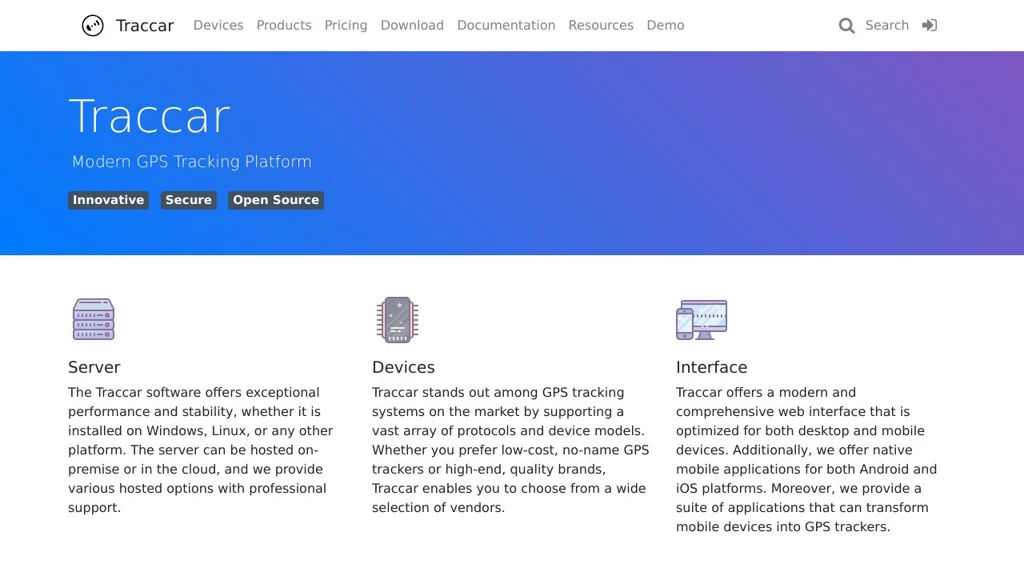
Traccar screenshot

Traccar is a self-hosted GPS tracking platform for monitoring vehicles, fleets, and mobile assets in real time. It includes a device protocol server, a web UI for live tracking and reporting, and mobile apps that can act as GPS trackers.

Key Features

  • Supports a large number of GPS tracker protocols (hundreds) and device types
  • Live tracking with map views, device status, and historical playback
  • Geofencing with enter/exit events and configurable notifications
  • Alerts and event rules (e.g., overspeed, ignition, movement, battery, maintenance)
  • Reporting and exports (trips, stops, routes, events; common formats like CSV)
  • User/device management with permissions and multi-user support
  • Mobile apps (Android/iOS) for tracking phones and sending location to the server
  • Extensible integrations via API/webhooks and push notification channels

Use Cases

  • Fleet operations: dispatch oversight, driver behavior monitoring, and trip history
  • Asset/security tracking: geofence alerts for trailers, equipment, or stolen vehicles
  • Personal tracking: monitor family vehicles or phones with historical routes

Limitations and Considerations

  • Full device compatibility depends on tracker firmware/protocol correctness; some devices may require custom configuration
  • Map/Geocoding features depend on external map providers or configured map tiles/geocoder

Traccar is widely used for fleet and asset tracking due to its broad protocol support, practical web UI, and mature alerting/reporting. It is a good fit when you need an on-prem GPS tracking server with mobile tracking options and integrations.

6.8kstars
3.1kforks

#2
OwnTracks Recorder

OwnTracks Recorder

A lightweight backend for OwnTracks that records location updates and geofence transitions, provides a web UI and an API for querying tracks and events.

OwnTracks Recorder is the server-side component of the OwnTracks ecosystem for collecting and storing location updates published by the OwnTracks mobile apps (typically via MQTT/HTTP). It persists location points and transition events so you can review historical movement, audit geofence enter/leave activity, and integrate location data into other systems.

Key Features

  • Ingests OwnTracks location publishes and stores them for later retrieval
  • Records geofence transition events (enter/leave) alongside location history
  • Web interface for browsing users/devices and viewing recorded data
  • HTTP API for querying stored locations/events for automation and integrations
  • Works with common OwnTracks deployments using MQTT brokers for transport
  • Designed as a focused “recorder” backend (separate from the mobile clients)

Use Cases

  • Personal/family location history archive with geofence activity logging
  • Fleet/asset track logging for small deployments (vehicles, bikes, devices)
  • Feeding recorded location data into dashboards or home-automation workflows

Limitations and Considerations

  • UI and analytics are intentionally minimal compared to full fleet-tracking suites; many users pair it with other visualization tools.

Recorder is a good fit when you want a simple, controllable store for OwnTracks data with basic browsing and programmatic access. It complements an MQTT-based OwnTracks setup by keeping durable history and events you can query or export as needed.

1.1kstars
134forks

Why choose an open source alternative?

  • Data ownership: Keep your data on your own servers
  • No vendor lock-in: Freedom to switch or modify at any time
  • Cost savings: Reduce or eliminate subscription fees
  • Transparency: Audit the code and know exactly what's running