
Workplace from Meta

Best Self Hosted Alternatives to Workplace from Meta

A curated collection of the 2 best self hosted alternatives to Workplace from Meta.

Workplace from Meta is an enterprise collaboration platform that connects employees through chat, groups, News Feed, live video, and meetings, plus integrations and admin tools to improve internal communication and teamwork.

Alternatives List

#1
HumHub

HumHub

Self-hosted social networking and intranet software with spaces, activity streams, user profiles, and a module marketplace for collaboration.
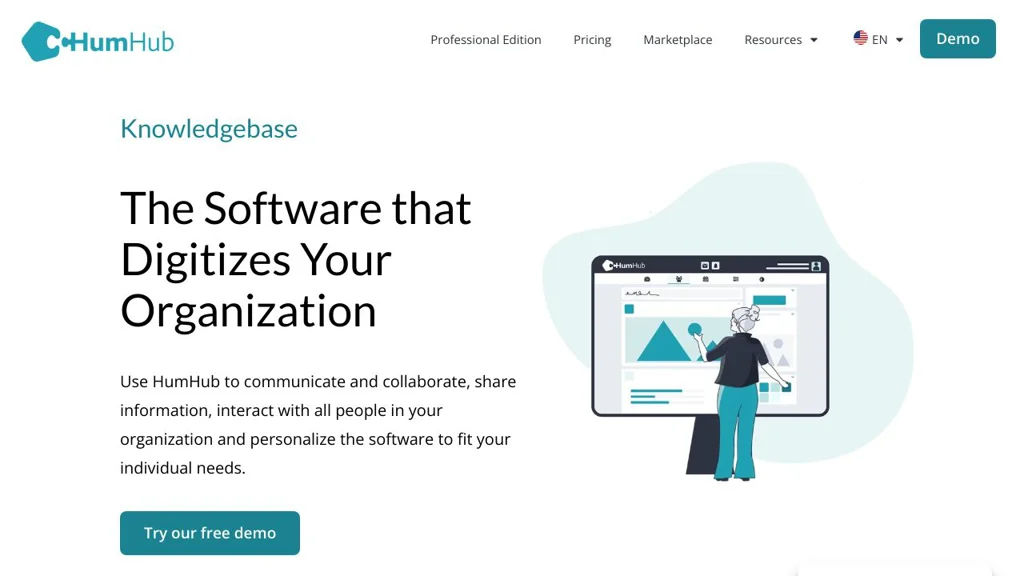
HumHub screenshot

HumHub is a self-hosted social networking platform designed for building private social networks, team intranets, and community portals. It centers collaboration around “Spaces” (groups) with an activity stream, posts, and integrated apps via a modular extension system.

Key Features

  • Space-based structure (teams/projects/groups) with configurable permissions and visibility
  • Activity stream with posts, comments, likes, mentions, and notifications
  • Built-in collaboration modules such as tasks, calendar, files, polls, and wiki/knowledge features (via modules)
  • Extensible module system and marketplace for adding functionality without forking core
  • User profiles, directory, and social features (following, messaging depending on modules)
  • Administration tools for users, spaces, modules, theming, and system settings
  • REST API support for integrations (where enabled/available in the platform)

Use Cases

  • Company intranet for internal announcements, knowledge sharing, and team coordination
  • Private community portal for associations, schools, or member groups
  • Project hubs using dedicated Spaces to coordinate updates, tasks, and files

Limitations and Considerations

  • Many capabilities are delivered through optional modules; required features may depend on selecting and maintaining specific extensions.

HumHub fits organizations that want a customizable, Space-centric social intranet with an app/module ecosystem. It is especially suitable when you want a familiar social feed UX combined with structured group workspaces and extensibility.

6.6kstars
1.7kforks

#2
Friendica

Friendica

Self-hostable federated social network for long-form posts, groups, forums, and cross-network connectivity via ActivityPub and other protocols.

Friendica screenshot

Friendica is a self-hostable, decentralized social networking server that lets you run your own community while still interacting with people across the Fediverse. It focuses on privacy controls, rich social features (profiles, groups, events), and broad federation/bridge support.

Key Features

  • Federates with other networks via ActivityPub and additionally supports legacy protocols (where available) such as OStatus/DFRN for wide interoperability
  • Granular privacy controls for posts (public, friends, circles/ACLs) and per-contact permissions
  • Groups and community spaces, including forum-style “groups” accounts for discussions
  • Rich content: long-form posts, attachments/media, link previews, and threading/conversations
  • Built-in directory/discovery features (server/user directories, contact discovery)
  • Extensible via addons/plugins and themes; supports multiple languages

Use Cases

  • Host a private community that can still follow/interact with Mastodon/other Fediverse users
  • Replace centralized social platforms for organizations, clubs, or interest groups
  • Provide a “social hub” server to aggregate conversations across multiple federated services

Limitations and Considerations

  • Interoperability varies by protocol/remote platform features; not every feature maps cleanly across the Fediverse
  • Some bridge/protocol capabilities depend on addons and may require additional configuration

Friendica is a strong option if you want a feature-rich social network with fine-grained privacy controls and broad federation support. It suits both small private communities and public instances that want to participate in the wider Fediverse.

1.6kstars
367forks

Why choose an open source alternative?

  • Data ownership: Keep your data on your own servers
  • No vendor lock-in: Freedom to switch or modify at any time
  • Cost savings: Reduce or eliminate subscription fees
  • Transparency: Audit the code and know exactly what's running