
Commerce Cloud (Salesforce)

Best Self Hosted Alternatives to Commerce Cloud (Salesforce)

A curated collection of the 3 best self hosted alternatives to Commerce Cloud (Salesforce).

Salesforce Commerce Cloud is a cloud-based e-commerce platform that enables brands to create unified, scalable online and omnichannel shopping experiences with tools for storefronts, merchandising, AI personalization, and order management.

Alternatives List

#1
Medusa

Medusa

Open-source, modular commerce backend for building custom eCommerce stores with APIs, admin dashboard, plugins, and integrations.
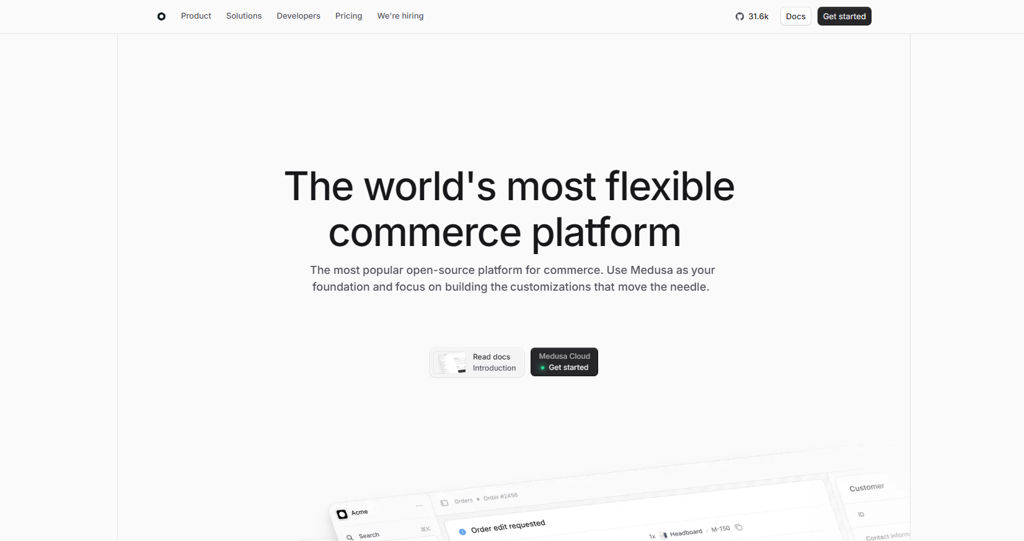
Medusa screenshot

Medusa is a developer-focused, modular commerce platform for building custom online stores and marketplaces. It provides a ready-made commerce backend (products, carts, checkout, orders, customers, taxes, shipping, payments) that can be extended through modules and integrations while allowing full control over the storefront.

Key Features

  • Modular architecture with pluggable modules and integrations (payments, shipping, tax, fulfillment, etc.)
  • Headless APIs for commerce resources (store, admin) designed for custom storefronts
  • Admin dashboard for managing products, orders, customers, inventory, and promotions
  • Extensible data model and business logic via customizations and plugins
  • Multi-region / multi-currency support for international selling
  • Promotion/discount tooling (e.g., discount codes and rules)
  • Cart and checkout primitives with payment provider integrations
  • Event-driven workflows/hooks for extending core commerce flows

Use Cases

  • Build a fully custom headless storefront (Next.js/React/Vue) backed by a commerce API
  • Implement B2B or marketplace-like commerce flows requiring custom logic and integrations
  • Create a commerce backend for multiple storefront channels (web, mobile, POS)

Limitations and Considerations

  • Requires engineering effort to assemble a full solution (storefront, hosting, integrations) compared to all-in-one SaaS platforms
  • Some advanced enterprise features may depend on specific modules/integrations or custom development

Medusa fits teams that want a flexible commerce core without being locked into a hosted SaaS. Its modular approach makes it suitable for bespoke commerce implementations that need to evolve over time.

31.6kstars
4kforks

#2
WooCommerce

WooCommerce

A WordPress eCommerce plugin for selling products, managing orders, payments, shipping, taxes, and store operations with a large extension ecosystem.

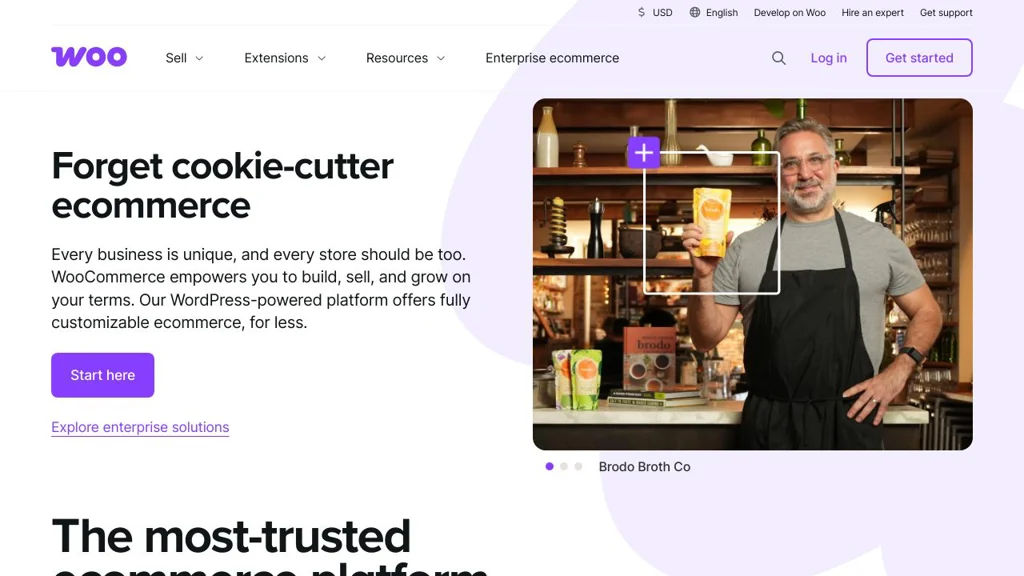
WooCommerce screenshot

WooCommerce is a WordPress plugin that turns a WordPress site into a full eCommerce store. It provides core storefront, product, cart/checkout, order management, and a configurable platform that can be extended via themes and plugins.

Key Features

  • Product catalog for physical and digital goods, including variants and downloadable products
  • Cart and checkout flow with configurable payments and shipping methods
  • Order management with statuses, refunds, notes, and customer management
  • Tax configuration and shipping calculations, with extensible integrations
  • Store administration inside WordPress (settings, reports/analytics depending on setup)
  • Extensibility via a large ecosystem of extensions and themes, plus a developer REST API
  • Internationalization support and multi-currency/multi-language via extensions

Use Cases

  • Small to mid-sized online stores that want to run commerce within WordPress
  • Content-driven sites (blogs/publishers) adding merchandise or digital downloads
  • Businesses needing a customizable checkout and integrations via plugins or APIs

Limitations and Considerations

  • Requires WordPress and is affected by WordPress hosting quality, theme/plugin compatibility, and update management
  • Many advanced features (subscriptions, memberships, some payment/shipping options) typically require additional extensions

WooCommerce is a widely adopted eCommerce option for WordPress sites that need a flexible, plugin-based approach. It fits best when you want commerce tightly integrated with WordPress content and are comfortable managing WordPress updates and extensions.

10.1kstars
10.7kforks
#3
PrestaShop

PrestaShop

PrestaShop is a PHP-based eCommerce platform for building and managing online stores with product, order, payment, shipping, tax, and multilingual features plus themes and modules.

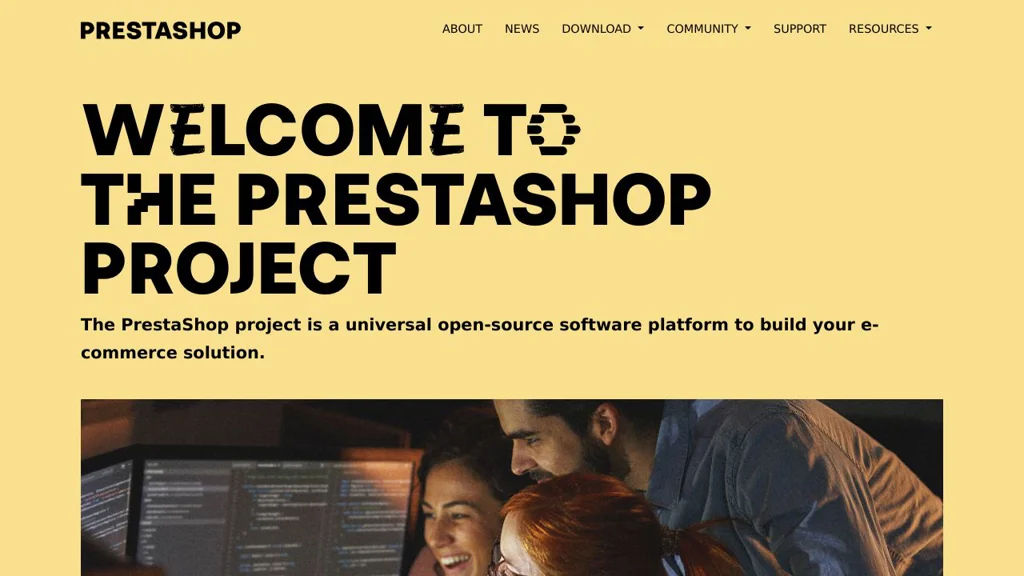
PrestaShop screenshot

PrestaShop is an open-source eCommerce application for creating and operating online stores. It provides a back office to manage catalog, orders, customers, and storefront presentation, and it can be extended through a large ecosystem of themes and modules.

Key Features

  • Storefront + back office for managing products, categories, attributes/variants, pricing, and inventory
  • Order lifecycle management (carts, checkout, payments, invoices/credit slips, returns/RMA depending on configuration)
  • Customer management with groups, addresses, and account features
  • Multi-store support to run multiple shops from one back office
  • Multilingual and multi-currency capabilities with localization for taxes and regions
  • Shipping and carrier configuration, taxes, and promotions (vouchers/discount rules)
  • Extensible architecture via modules/add-ons and theme system
  • REST/Webservice API for integrating products, orders, and customers

Use Cases

  • Small-to-mid sized retail store needing full control of catalog, checkout, and operations
  • Multi-brand operator managing several storefronts from one admin
  • Merchants integrating an eCommerce backend with external ERP/PIM/fulfillment via API

Limitations and Considerations

  • Many advanced capabilities (specific payment providers, marketplace connectors, SEO tools) are typically provided by modules and may be paid
  • Major upgrades can require careful planning due to theme/module compatibility

PrestaShop is a mature, widely-used eCommerce stack with a feature-rich admin and a strong extension ecosystem. It fits teams that want a customizable PHP-based storefront and operational tooling without relying on a hosted commerce provider.

8.9kstars
5kforks

Why choose an open source alternative?

  • Data ownership: Keep your data on your own servers
  • No vendor lock-in: Freedom to switch or modify at any time
  • Cost savings: Reduce or eliminate subscription fees
  • Transparency: Audit the code and know exactly what's running