
SavvyCal

Best Self Hosted Alternatives to SavvyCal

A curated collection of the 2 best self hosted alternatives to SavvyCal.

SavvyCal is a scheduling SaaS that syncs calendars and creates customizable booking links to remove back-and-forth. It provides flexible availability controls, time-zone handling, group and round-robin scheduling, and integrations (Google/Outlook, Zoom, Slack) to streamline meetings.

Alternatives List

#1
Cal.com

Cal.com

Open-source scheduling platform for booking meetings with availability, team routing, integrations, and embeddable booking pages.
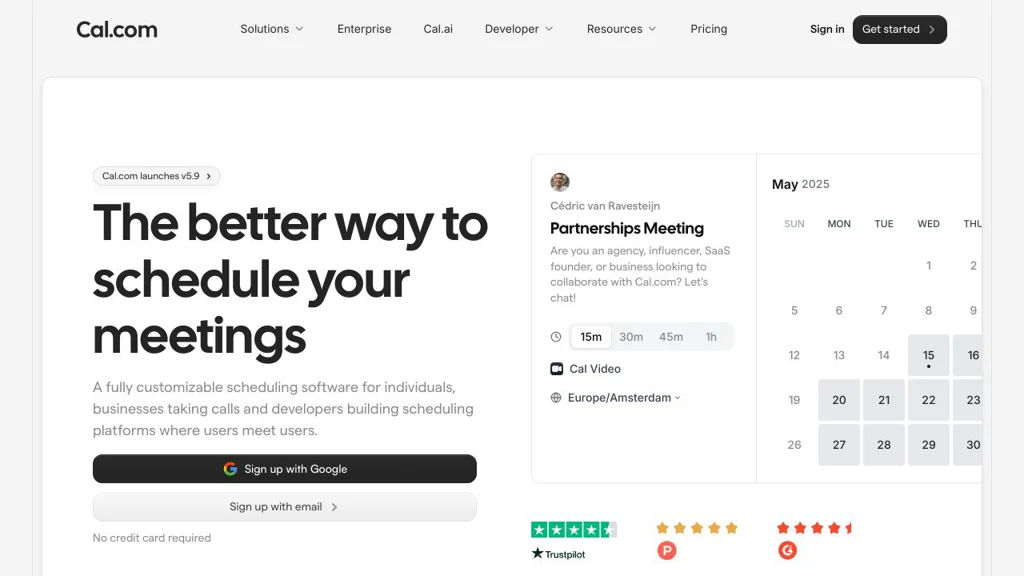
Cal.com screenshot

Cal.com is an open-source scheduling and appointment booking platform for individuals and teams. It provides customizable booking pages, calendar availability, and workflows to coordinate meetings across multiple participants and organizations.

Key Features

  • Public booking pages with event types, buffers, limits, and configurable availability
  • Team scheduling features such as round-robin/collective scheduling and managed availability
  • Integrations for calendars and conferencing tools (e.g., Google Calendar, Microsoft, Zoom/Meet), plus webhooks
  • Embeddable booking components for websites and products (embed/iframe options)
  • Routing and intake forms to qualify requests and direct bookings to the right person/event
  • Payments support for paid bookings (via Stripe integration)
  • Multi-user and organization support with admin controls and role-based access options

Use Cases

  • Customer-facing appointment booking for sales, support, and professional services
  • Internal team scheduling (1:1s, interviews, office hours) with shared availability
  • Product-embedded scheduling for marketplaces or SaaS onboarding flows

Limitations and Considerations

  • Some advanced enterprise capabilities and managed services are offered as paid features; self-hosted deployments may require additional configuration for SSO, email, and integrations.

Cal.com is well-suited for organizations that want full control over scheduling UX and data while integrating with existing calendar and conferencing ecosystems. Its embeddable approach and team scheduling options make it useful both as a standalone scheduler and as scheduling infrastructure inside other products.

39.6kstars
11.5kforks

#2
Easy!Appointments

Easy!Appointments

Open-source appointment scheduling software with provider services, working plans, email notifications, and Google Calendar sync for online bookings.

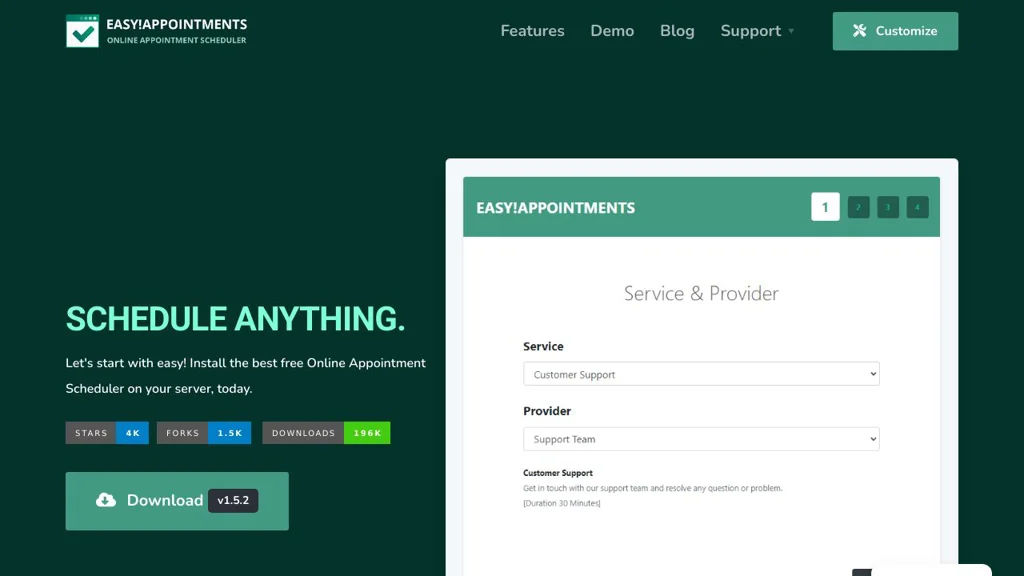
Easy!Appointments screenshot

Easy!Appointments is a web-based appointment scheduling application designed for businesses that need online bookings with staff/provider availability. It lets you define services, providers, and working plans, then exposes a booking page customers can use to reserve time slots.

Key Features

  • Public booking page for customers to schedule appointments based on real availability
  • Management backend for services, providers, customers, and appointments
  • Working plans, breaks, and time-slot rules to control provider availability
  • Email notifications for bookings and changes (SMTP-based)
  • Google Calendar synchronization (two-way sync via Google API) for providers
  • Multi-user administration with roles (e.g., admin/provider) and user management
  • Multi-language UI support (translations) and configurable date/time formats
  • REST API endpoints for integrating bookings with external systems

Use Cases

  • Service businesses (salons, clinics, consultants) offering online appointment booking
  • Teams with multiple staff/providers needing centralized availability management
  • Organizations integrating scheduling into an existing website/app via API

Limitations and Considerations

  • Focused on appointment booking; it is not a full CRM or payments/invoicing system
  • Google Calendar sync requires Google API credentials and configuration

Easy!Appointments provides a practical, lightweight booking workflow that can be embedded into a website and managed through an admin panel. It is well-suited for small to mid-sized organizations that want control over scheduling data and straightforward integrations.

4kstars
1.5kforks

Why choose an open source alternative?

  • Data ownership: Keep your data on your own servers
  • No vendor lock-in: Freedom to switch or modify at any time
  • Cost savings: Reduce or eliminate subscription fees
  • Transparency: Audit the code and know exactly what's running