
Braze

Best Self Hosted Alternatives to Braze

A curated collection of the 5 best self hosted alternatives to Braze.

Braze is a customer engagement platform that enables personalized, multi-channel messaging (email, push, in-app, SMS, web) and lifecycle automation with segmentation and analytics to drive user engagement, retention, and conversion.

Alternatives List

#1
Novu

Novu

A self-hostable notification infrastructure to build, manage, and send multi-channel product notifications with templates, provider integrations, and a unified API.
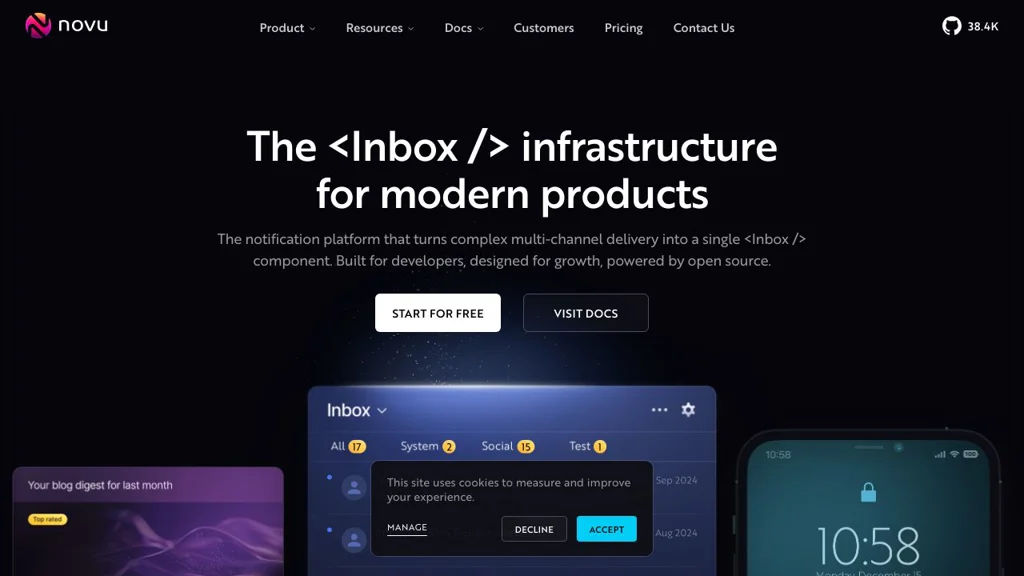
Novu screenshot

Novu is an open-source notification infrastructure platform for building and managing product notifications across multiple channels (email, SMS, push, chat). It provides a unified API and an admin UI to create notification workflows, manage templates, and route messages through many third-party providers.

Key Features

  • Multi-channel notifications (e.g., email, SMS, push, chat) from a single API
  • Template management with a web-based UI for creating and maintaining notification content
  • Provider abstraction layer to switch between delivery providers without changing application code
  • Event-triggered workflows to orchestrate notification steps and channel fallbacks
  • Subscriber/user management for targeting and routing notifications
  • Preference management concepts for controlling which notifications users receive
  • Integrations for popular messaging/notification providers (varies by channel)
  • Developer-focused SDKs and APIs for embedding notification delivery into apps

Use Cases

  • Shipping transactional notifications (sign-up, password reset, receipts) across email/SMS
  • Product alerts and lifecycle messaging with channel fallback and centralized templates
  • Building an internal notification hub to standardize delivery providers across teams

Limitations and Considerations

  • Running the full platform typically requires multiple backing services (e.g., database, cache/queue), increasing operational complexity.

Novu fits teams that want control over notification logic and templates while keeping provider integrations modular. It is especially useful when multiple apps/services need consistent notification workflows and governance from one place.

38.4kstars
4.2kforks

#2
listmonk

listmonk

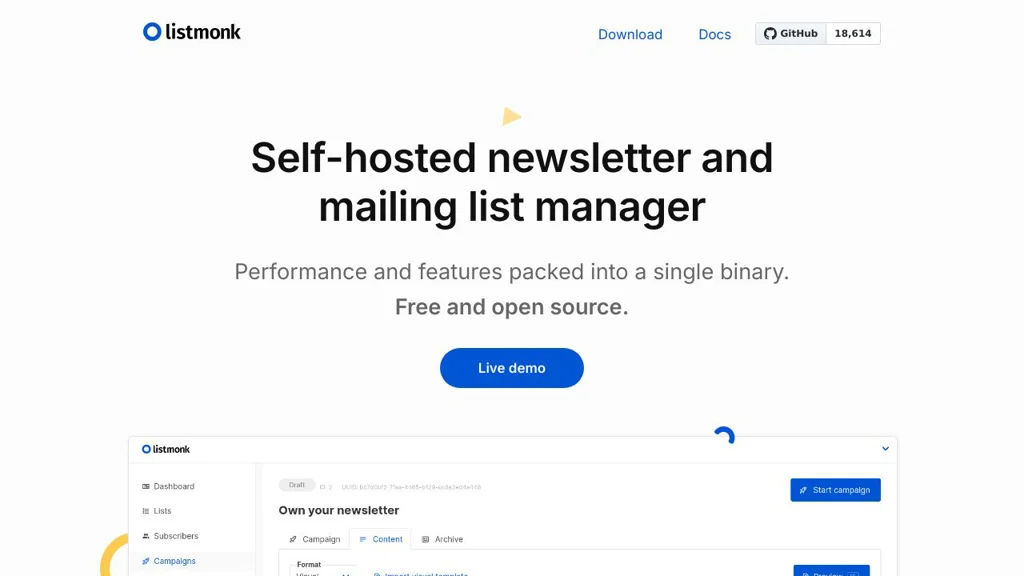
Self-hosted newsletter and email list manager with templating, segmentation, campaigns, and PostgreSQL-backed performance.

listmonk screenshot

listmonk is a self-hosted mailing list manager and newsletter platform designed for high performance and simple operations. It provides a web UI and APIs to manage subscribers, lists, and campaigns, backed by PostgreSQL for scalable storage and querying.

Key Features

  • Subscriber management with custom attributes/fields and import/export (e.g., CSV)
  • List and segment-based targeting using PostgreSQL queries for flexible filtering
  • Campaign creation with HTML templates, previews, and personalization variables
  • Transactional email and newsletter sending via SMTP and third-party email gateways
  • Bounce handling and basic list hygiene workflows (depending on mail setup)
  • Built-in admin web UI plus REST-style APIs for automation and integrations
  • Metrics/reporting for campaigns (opens/clicks) via tracking mechanisms

Use Cases

  • Send periodic newsletters to product users, communities, or customers
  • Run segmented email campaigns (e.g., onboarding, announcements) from internal data
  • Operate a privacy-controlled mailing system for organizations that can’t use SaaS

Limitations and Considerations

  • Deliverability, bounce processing, and reputation management depend heavily on your SMTP/provider configuration
  • Email template building is developer-oriented compared to drag-and-drop marketing suites

listmonk is a solid fit for teams that want a fast, PostgreSQL-driven newsletter system with a clean UI and automatable APIs. It focuses on dependable list and campaign operations rather than heavyweight marketing-automation features.

18.7kstars
1.9kforks
#3
Mautic

Mautic

Self-hosted marketing automation for email campaigns, segmentation, lead scoring, forms, landing pages, and multi-channel customer journeys.

Mautic screenshot

Mautic is a self-hosted marketing automation platform for creating, delivering, and measuring multi-channel campaigns across email and other customer touchpoints. It combines contact management, segmentation, and campaign orchestration to help teams run personalized journeys and track engagement over time.

Key Features

  • Visual Campaign Builder to design automated customer journeys with decisions/actions
  • Email marketing with template/asset management, scheduling, and performance reporting
  • Segmentation and dynamic contact lists based on behavior and attributes
  • Forms and Landing Pages for lead capture (including progressive profiling)
  • Lead scoring and lead nurturing tools to qualify and route contacts
  • Multi-channel messaging support via plugins/integrations (e.g., SMS, webhooks)
  • REST API and webhooks for integrations with CRMs, e-commerce, and data pipelines
  • Role-based access control and multi-user administration

Use Cases

  • Automate onboarding/drip sequences for product trials and SaaS signups
  • Run segmented newsletters and targeted lifecycle campaigns based on behavior
  • Capture leads via forms/landing pages and sync them to a CRM for sales follow-up

Limitations and Considerations

  • Some channels/connectors are provided via plugins and may require additional configuration/maintenance
  • Deliverability depends heavily on correct SMTP setup, DNS (SPF/DKIM/DMARC), and reputation management

Mautic is well-suited for teams that need full control over marketing automation infrastructure while keeping strong campaign capabilities. Its combination of segmentation, journey automation, and integration options makes it a flexible alternative to many hosted marketing automation suites.

9kstars
3.1kforks
#4
Dittofeed

Dittofeed

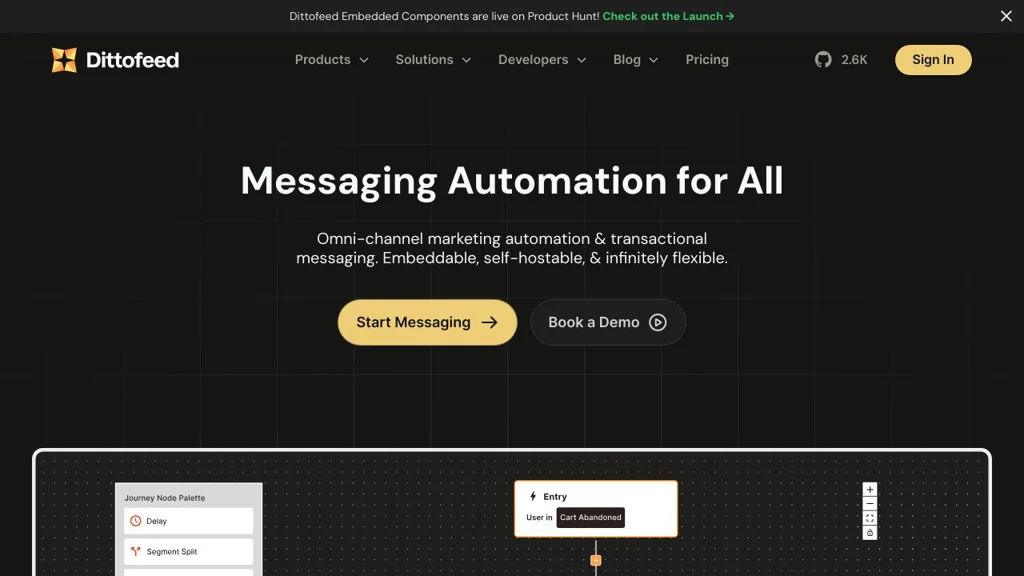
Self-hostable customer engagement platform to send email and other campaigns, build user journeys, segment audiences, and track messaging performance.

Dittofeed screenshot

Dittofeed is a self-hostable customer engagement and marketing automation platform for building data-driven messaging and lifecycle campaigns. It focuses on segmentation, event-based automation, and multi-step journeys so teams can orchestrate customer communications from their own infrastructure.

Key Features

  • Visual journey/workflow builder for multi-step, event-driven messaging
  • Audience segmentation based on user traits and events
  • Campaign creation and sending (email-focused; other channels depend on integrations)
  • Triggered messages and scheduled/batch campaigns
  • Templates and content management for message composition
  • Analytics/reporting for campaign and journey performance
  • Integrations via API/webhooks for ingesting events and syncing user data

Use Cases

  • Onboarding and activation sequences triggered by product events
  • Retention and re-engagement campaigns based on behavioral segments
  • Transactional and lifecycle email automation for SaaS products

Limitations and Considerations

  • Channel breadth and deliverability features can be less extensive than mature commercial CEP tools; production setups typically rely on external email providers for sending and reputation management.

Dittofeed is a good fit for teams that want an auditable, customizable engagement stack and prefer to keep customer data and automation logic in-house. It provides core building blocks for segmentation and journeys while remaining adaptable through integrations and self-managed infrastructure.

2.6kstars
312forks
#5
Keila

Keila

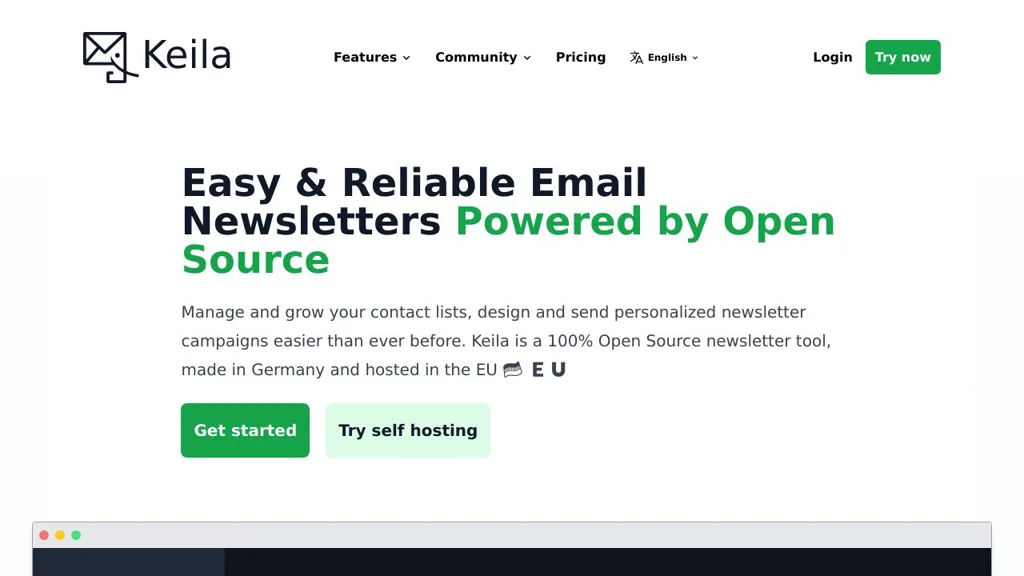
Keila is a self-hosted newsletter tool for creating campaigns, managing audiences, and automating email sends with templates, segmentation, and analytics.

Keila screenshot

Keila is an open-source, self-hosted email newsletter and marketing email platform. It helps teams and creators build mailing lists, design email campaigns, schedule/automate sending, and track engagement.

Key Features

  • Audience management with lists and subscriber attributes (including imports)
  • Campaign editor with reusable templates and drag-and-drop style blocks (email builder)
  • Segmentation to target subsets of subscribers based on attributes/filters
  • Automations for triggered or scheduled sends (e.g., onboarding/drip sequences)
  • Email delivery via SMTP and support for transactional sending flows
  • Analytics for campaign performance (e.g., opens/clicks) and delivery status
  • Multi-user/team oriented workflows (accounts/projects) suitable for organizations

Use Cases

  • Publish recurring newsletters for communities, products, or internal updates
  • Run lifecycle email sequences (welcome/onboarding/drip campaigns)
  • Replace hosted email marketing tools where data/control must remain in-house

Limitations and Considerations

  • Email analytics accuracy depends on client-side tracking behavior (e.g., image blocking/privacy features)
  • Deliverability depends heavily on correct DNS (SPF/DKIM/DMARC) and SMTP provider configuration

Keila is a practical alternative to hosted newsletter tools for organizations that need list management, campaign creation, and automation in one place. It focuses on the core newsletter workflow—create, segment, send, and measure—while keeping operations under your control.

1.9kstars
134forks

Why choose an open source alternative?

  • Data ownership: Keep your data on your own servers
  • No vendor lock-in: Freedom to switch or modify at any time
  • Cost savings: Reduce or eliminate subscription fees
  • Transparency: Audit the code and know exactly what's running